Exclusive sponsor
North Atlanta’s Retail Divide: Sales Range From $8,909 to $49,222 Per Resident
Retail sales per resident in North Atlanta cities highlight different commercial focuses. Alpharetta leads with strong retail districts, while Johns Creek and Milton have lower sales despite high incomes, showing varied shopping patterns across the region.
Major local stories and useful updates, once a week.
North Atlanta’s wealthiest communities are not necessarily the places where residents do the most shopping.
Alpharetta businesses generated $49,222 in retail sales per resident during 2022, the highest meaningful city-level figure across the North Atlanta Star coverage area. Johns Creek, despite having a slightly higher median household income, recorded only $8,909 per resident.
The difference does not describe how much each community’s residents spend. It reveals where stores are concentrated—and how frequently shoppers cross city lines.
The latest comparable local figures come from the Census Bureau’s 2022 Economic Census, its comprehensive five-year measurement of American businesses. They show Alpharetta, Suwanee and Roswell operating as regional shopping destinations while Johns Creek and Milton remain predominantly residential.
Where North Atlanta’s retail sales happen
| Community | Total 2022 retail sales | Sales per resident |
|---|---|---|
| Alpharetta | $3.31 billion | $49,222 |
| Suwanee | $915.4 million | $40,654 |
| Roswell | $3.49 billion | $37,561 |
| Duluth | $906.5 million | $28,281 |
| Georgia | $216.84 billion | $19,869 |
| Forsyth County | $5.22 billion | $19,519 |
| Sugar Hill | $378.1 million | $14,873 |
| Peachtree Corners | $581.7 million | $13,798 |
| Milton | $423.8 million | $10,140 |
| Johns Creek | $734.0 million | $8,909 |
Retail sales cover businesses primarily engaged in selling merchandise to the public. Restaurants, hotels, health care and many service businesses are measured separately, so the figures do not represent total local economic activity.
South Forsyth is represented by the countywide figure rather than Cumming’s incorporated city limits. Most people with Cumming addresses live outside the city, and the area’s retail corridors serve the entire county. Dividing retail sales inside the unusually small municipality by its city population creates a number that does not meaningfully describe the South Forsyth market.
Forsyth County’s broader geography provides the more useful comparison, although readers should remember that it is being placed beside city-level figures as a regional benchmark rather than as an identical jurisdiction.
Alpharetta’s commercial districts draw shoppers across city lines
Alpharetta retailers generated approximately $3.31 billion in 2022, producing a per-capita figure of $49,222.
That was two and a half times Georgia’s statewide rate and more than five times the figure for Johns Creek.
Avalon, North Point, Windward Parkway, downtown Alpharetta and the commercial corridors surrounding Ga. 400 all contribute to the city’s role as a regional destination. Those districts attract shoppers from Johns Creek, Milton, South Forsyth and other parts of metro Atlanta.
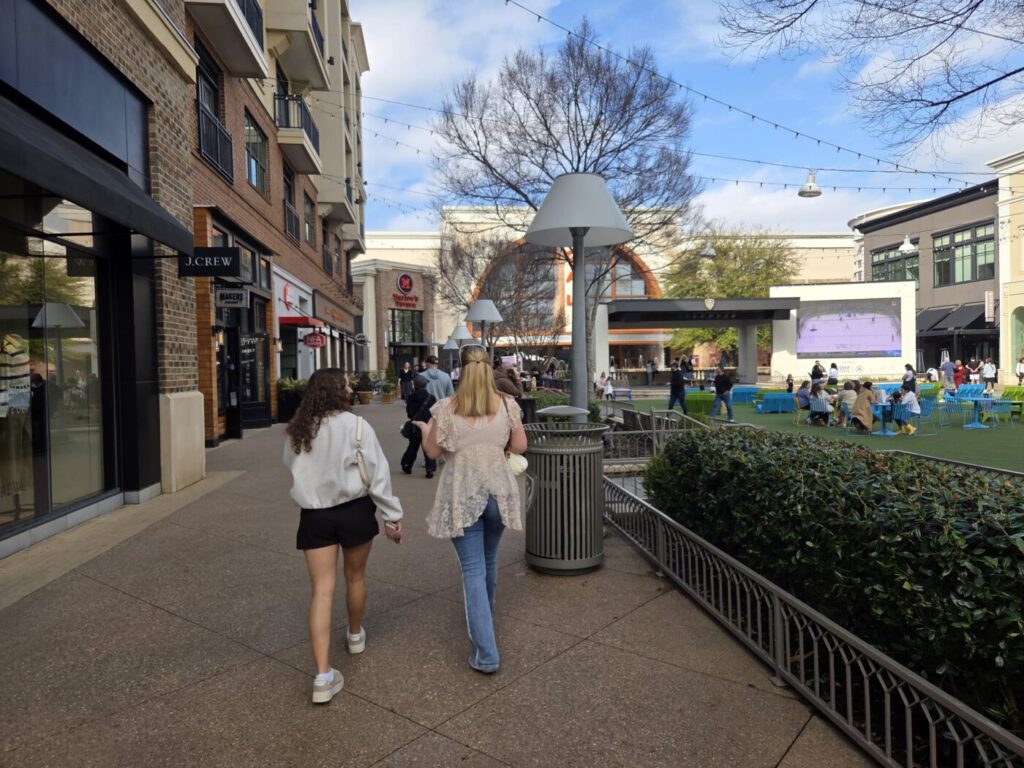
Alpharetta also receives substantial daytime traffic from employees working in its corporate and technology centers. Purchases made near the workplace are credited to the city where the store operates, not to the shopper’s home community.
The Alpharetta Census profile illustrates the result: Alpharetta generated more than four times Johns Creek’s retail sales despite having fewer residents.
Roswell leads in total sales
Roswell recorded approximately $3.49 billion in retail sales, the largest total among the cities in the comparison.
Its population is also larger, reducing the per-capita figure to $37,561. That still placed Roswell well above Georgia’s $19,869 rate.
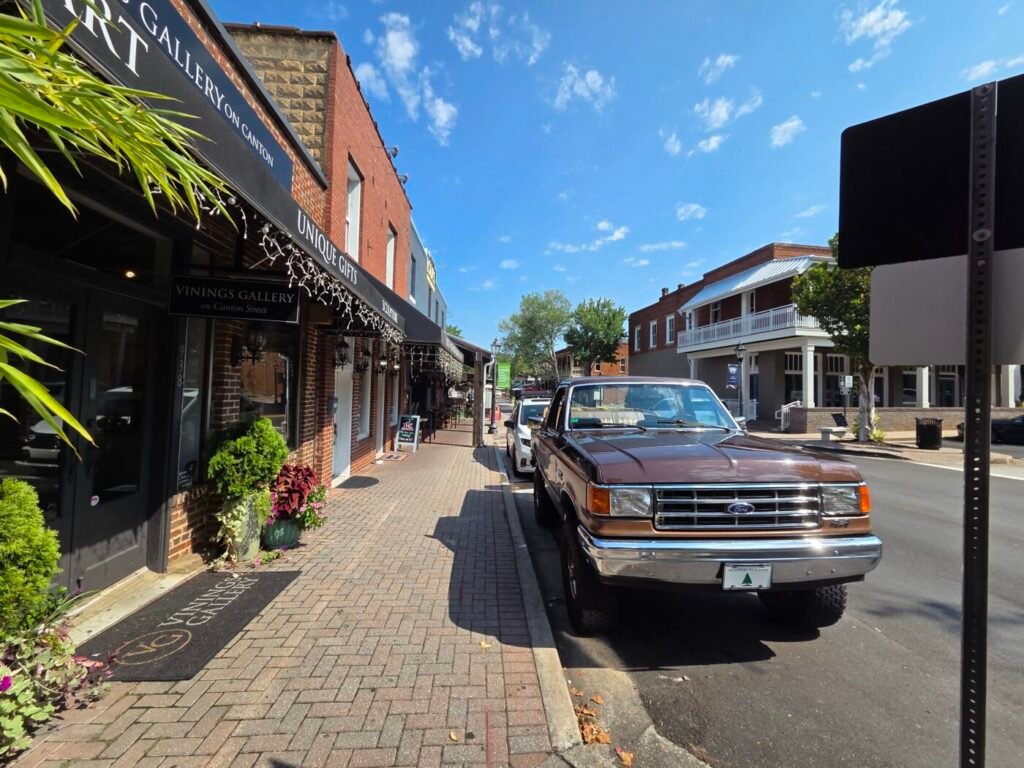
The city contains extensive commercial development along Holcomb Bridge Road, Alpharetta Highway, Mansell Road and the Ga. 400 corridor. Unlike a city built primarily around subdivisions, Roswell has multiple shopping districts serving both residents and neighboring communities.
The Roswell Census profile shows that the city’s retail economy is larger than its restaurant and hospitality activity alone might suggest. Merchandise sales—not dining or hotel revenue—produced the $3.49 billion total.
Suwanee sells far beyond its population
Suwanee generated $915.4 million in retail sales, slightly more than Duluth, despite having a substantially smaller population.
That lifted its per-capita figure to $40,654, second only to Alpharetta among the cities included.
Suwanee benefits from commercial areas along Lawrenceville-Suwanee Road, Peachtree Industrial Boulevard and the I-85 corridor. Town Center contributes to the city’s visibility, but much of the retail total comes from larger shopping centers and conventional commercial corridors.
The Suwanee Census profile demonstrates how a relatively small city can develop a retail market serving customers well beyond its municipal boundaries.
Duluth generated $906.5 million, or $28,281 per resident. Its total was close to Suwanee’s, but Duluth’s larger population produced a lower per-capita figure. The city nevertheless remained comfortably above the statewide rate, according to the Duluth profile.
Forsyth County sits near the Georgia rate
Forsyth County businesses generated approximately $5.22 billion in retail sales during 2022.
Spread across the county’s much larger population, that produced a per-capita figure of $19,519—almost identical to Georgia’s $19,869 rate.
The countywide number includes established shopping areas around Cumming, South Forsyth’s Peachtree Parkway and Ga. 400 corridors, and smaller commercial districts throughout the county. It also includes large residential areas with relatively little retail development.
That combination makes the figure a useful measure of the complete Forsyth market. It shows that the county has substantial retail activity in total dollars without appearing unusually retail-heavy after its full population is included.
Forsyth has continued growing quickly since the Economic Census was conducted. Its estimated population reached 282,805 in July 2025, up 12.5% from the adjusted 2020 base. Future retail growth will need to keep pace with that expanding customer base for the per-capita figure to rise.
The complete Forsyth County profile reports $5.22 billion in retail sales, $530.4 million in accommodation and food-service sales and more than 8,200 employer establishments.
Wealth does not guarantee a large retail base
Johns Creek and Milton have the highest household incomes in the comparison, but the lowest retail-sales rates.
Johns Creek recorded $734 million in retail sales, or $8,909 per resident. Milton generated $423.8 million, or $10,140 per resident.
Median household income reaches $160,093 in Johns Creek and $171,295 in Milton. Their low retail figures therefore do not indicate weak consumer demand. They reflect land use.
Both cities are dominated by residential neighborhoods and contain relatively few large commercial districts. Neither has a regional mall or a shopping concentration comparable with Avalon, North Point or Roswell’s major retail corridors.
A Johns Creek resident shopping at Avalon contributes to Alpharetta’s total. A Milton household visiting Windward Parkway does the same. Purchases made in South Forsyth become part of Forsyth County’s total.
The Johns Creek figures therefore measure the city’s commercial footprint, not its residents’ purchasing power. The Milton profile reflects a similar pattern.
Sugar Hill and Peachtree Corners also fall below the statewide retail rate. Sugar Hill’s $14,873 figure reflects a fast-growing residential city whose major commercial areas remain limited. Peachtree Corners has a substantial employment base, but offices, technology companies and service businesses do not count as retail sales.
What the numbers mean for development debates
Retail sales are not interchangeable with city revenue. Georgia’s sales taxes are distributed through state, county and local systems, so a dollar spent inside a municipality does not simply become revenue for that city’s general fund.
The figures still help explain why cities take different approaches to commercial land.
Regional shopping centers create jobs and broaden the economic base, but they also generate traffic and require roads, public safety and other infrastructure. Predominantly residential cities may avoid some of that commercial congestion while relying on neighboring communities for shopping.
Alpharetta and Johns Creek provide the clearest contrast. The cities border one another and contain similarly affluent households, yet Alpharetta generated approximately $2.57 billion more in retail sales.
That gap is not about consumer wealth. It is the result of decades of development decisions that made Alpharetta a regional commercial center and Johns Creek a city of neighborhoods.
North Atlanta residents routinely live in one community, work in another and shop in a third. The retail numbers follow them only to the place where the purchase occurs.
If you’ve been following growth and change around here, these stories are worth a look too.
Community Voice
A snapshot of reader views, not a scientific survey.
Explore Community Voice →About the Author


In North Atlanta

Alpharetta’s NHL Arena Study Forecasts 1.2 Million Visitors—but Leaves Key Questions Unanswered

What North Atlanta Should Know Today, Tuesday, Sept. 1, 2026

Shipley Do-Nuts Plans North Atlanta Comeback Near Johns Creek
8 of the Best Mexican Restaurants in North Atlanta

More North Atlanta Residents Are Working, Yet Unemployment Rose
North Point Redevelopment Will Not Move Forward Without NHL Team, Jamestown Says
IN NORTH ATLANTA