Where North Atlanta Comes to Stay: The Rise of Third Places in the Suburbs
Get major local stories and development updates.
People don’t always plan to stay at Avalon. They come for dinner, a quick errand, a meeting—and then something shifts. They linger a little longer than expected. They walk instead of heading straight back to the car. They sit, watch, talk. Time stretches in a way that feels unforced.
That quiet shift is the mark of what sociologists call a “third place”—a setting that is neither home nor work, but something in between. In suburban communities, where daily life often revolves around driving from one destination to another, these places have taken on new importance. They are where routine becomes social, where familiarity builds, and where a sense of place begins to form.
The Third Place, Reimagined in the Suburbs
For decades, the classic third places were easy to identify. Corner cafés, local diners, neighborhood bars, and public squares provided spaces where people could gather without much structure. Suburbs, by contrast, were designed around privacy and movement. You lived in one place, worked in another, and passed through everything in between.
That model is changing.
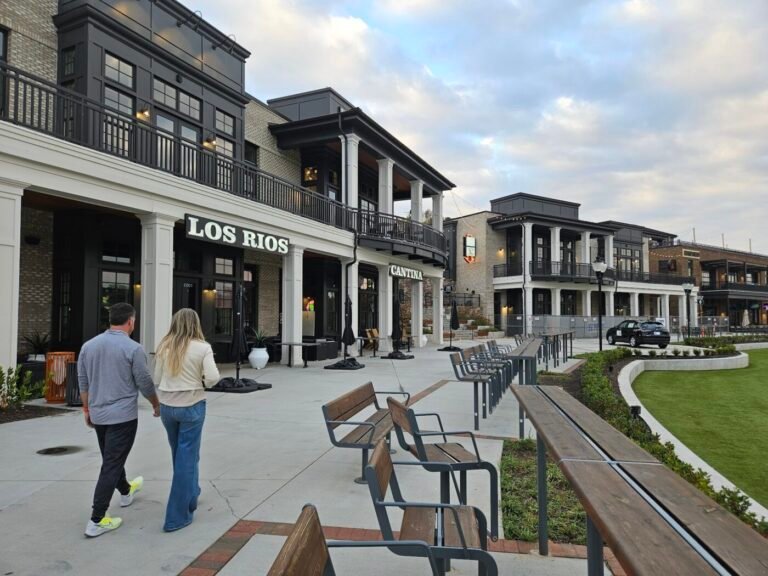
Across North Fulton, South Forsyth, and nearby Gwinnett communities, a different pattern has begun to emerge. New developments are being designed not just for transactions, but for time. Sidewalks are wider. Seating is intentional. Open lawns invite people to pause. Restaurants spill into shared spaces. The goal is no longer simply to attract visitors—it is to give them a reason to stay.
Where It’s Happening Now
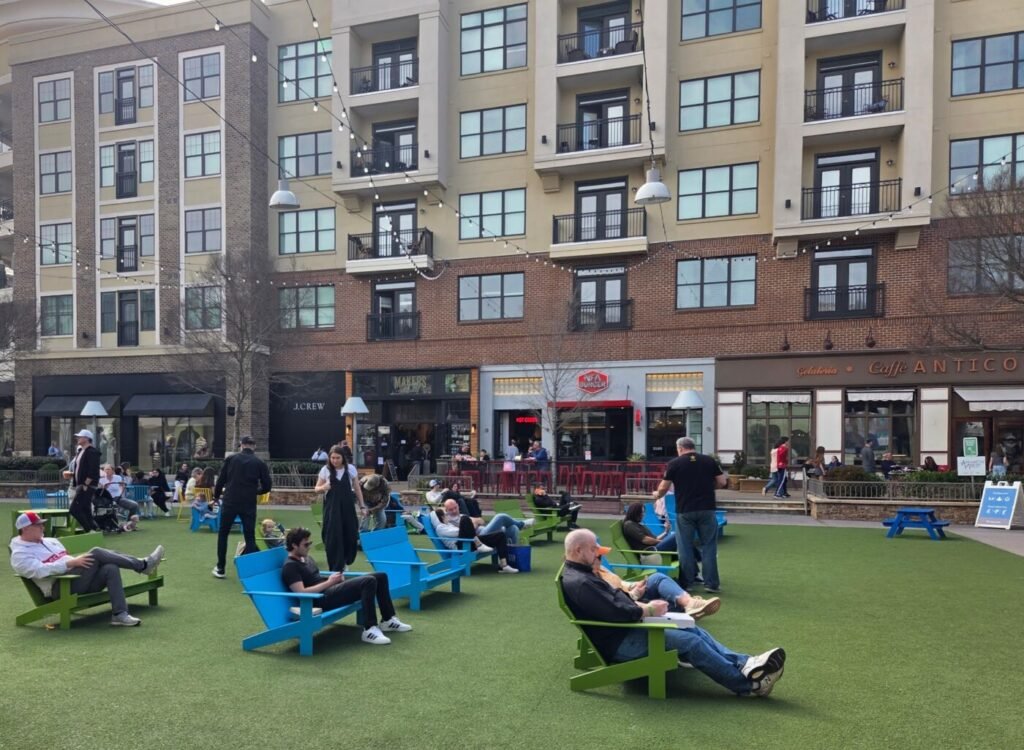
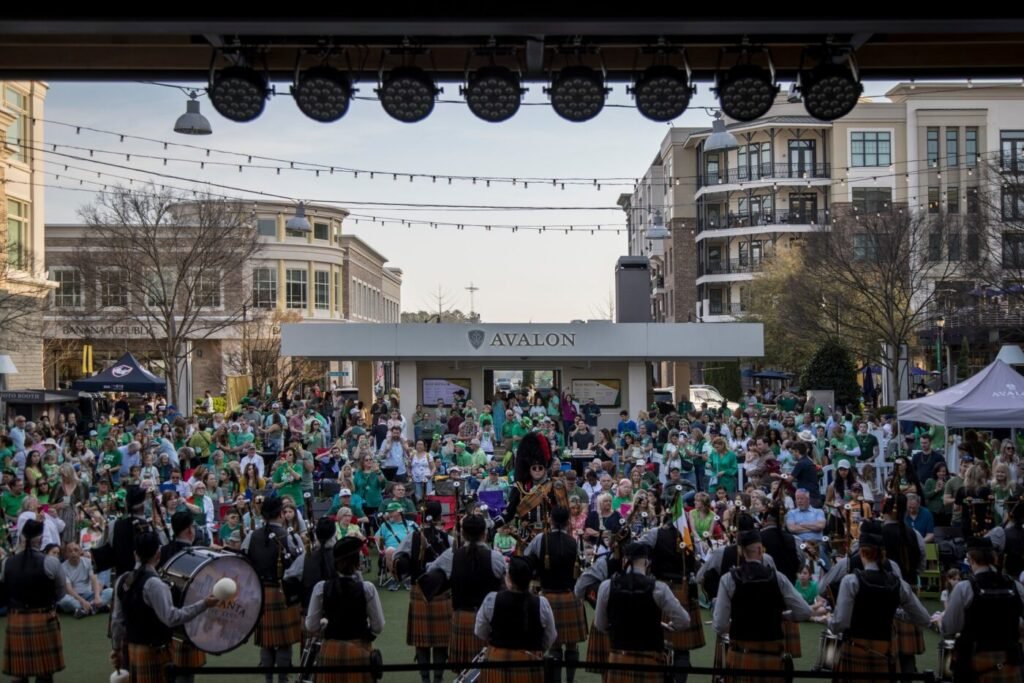
At Avalon, the idea is carefully orchestrated. The streets are clean and walkable, the seating areas are placed exactly where people tend to slow down, and the central plaza acts almost like a living room for the community. Even on ordinary weeknights, people gather without any single event drawing them in. The environment does the work quietly.
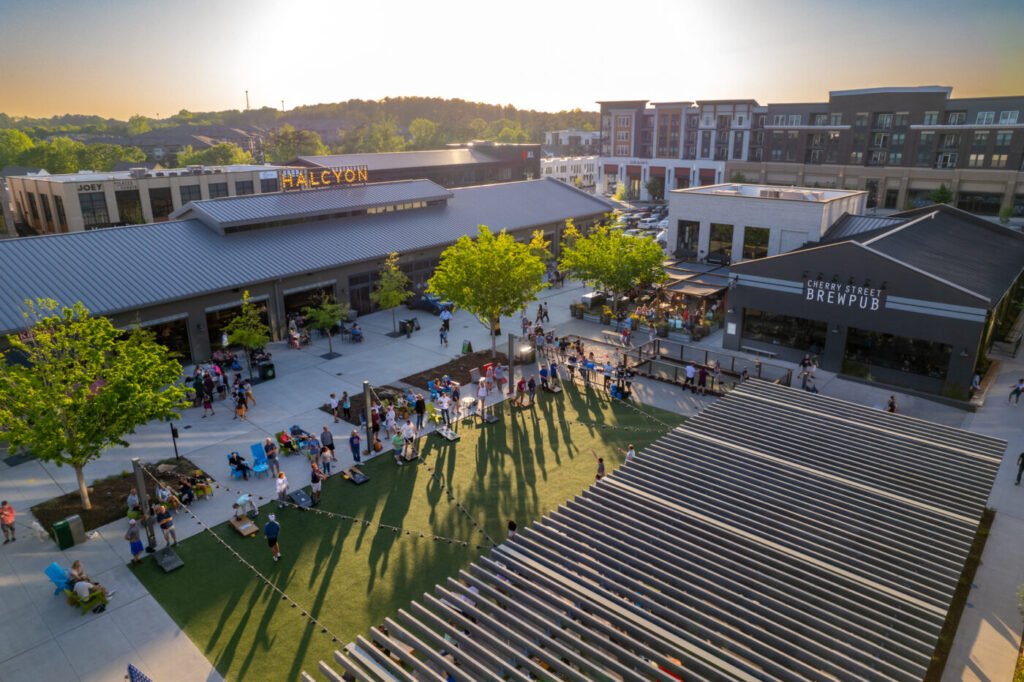
A few miles north, Halcyon offers a slightly different rhythm. The green space at its center feels more relaxed, less structured. Families spread out on the lawn, children move between open areas, and the edges blur between dining, entertainment, and simply being present. It feels less like a designed experience and more like something that unfolds on its own.
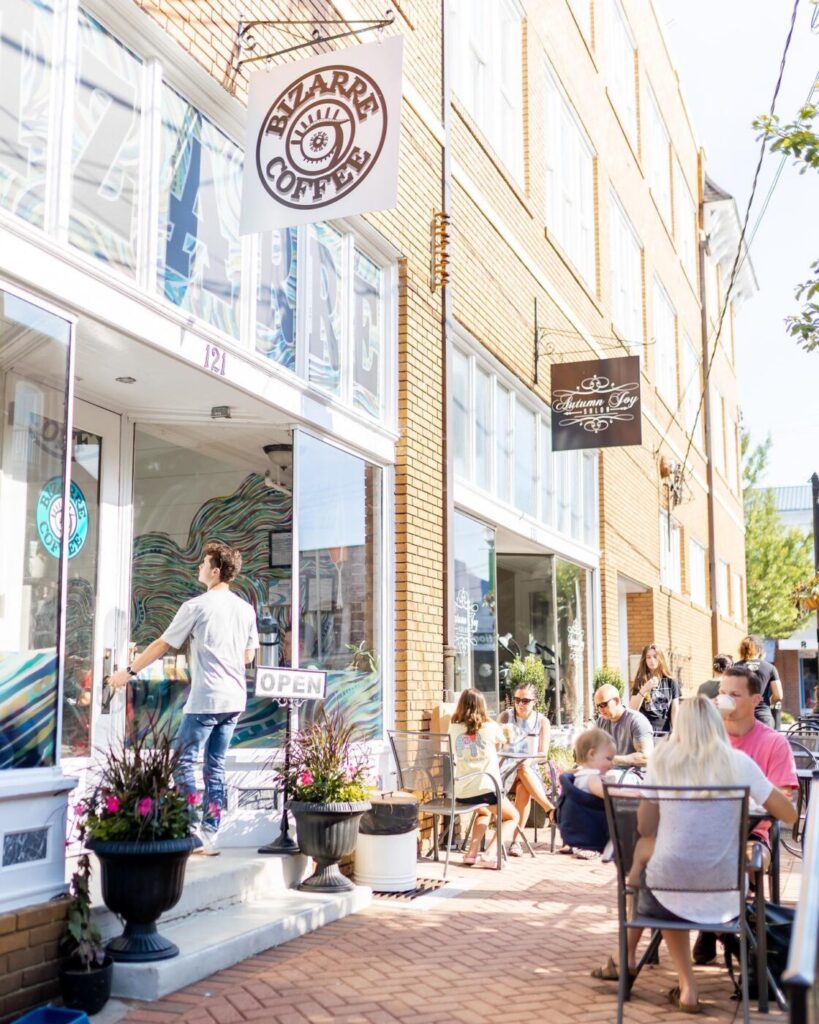
In Canton Street, the third place is not new—it evolved. The street carries a sense of history, and its cafés and restaurants extend naturally into the sidewalk. There is no central “plaza,” yet the entire stretch functions as one. People move slowly, stopping where they choose, creating their own version of a shared space.
Further east, Suwanee Town Center shows how a planned civic space can become part of everyday life. The open lawn, amphitheater, and surrounding businesses create a setting where community events blend into daily routines. Even without a festival or concert, the space holds people.
The Everyday Version: Coffee Shops as Third Places
Not all third places are large or carefully planned. In many cases, they are small and almost invisible until you notice how people use them.
A coffee shop becomes a third place the moment someone opens a laptop and stays for two hours, or when two neighbors run into each other and sit down without checking the time. The details matter: comfortable seating, a welcoming atmosphere, the quiet permission to remain.
Across Alpharetta, Johns Creek, and Duluth, these smaller spaces are doing much of the work that suburban design once overlooked. They offer a kind of flexibility that larger developments can’t always replicate. You don’t need an occasion to be there.
What’s Still Missing
Not every city in the area supports this kind of space equally.
Some places still feel defined by movement rather than pause. You arrive, complete what you came to do, and leave. There is little reason to linger, and even fewer spaces designed for it. In those areas, the absence of a true third place is noticeable—not as something dramatic, but as a quiet lack of connection.
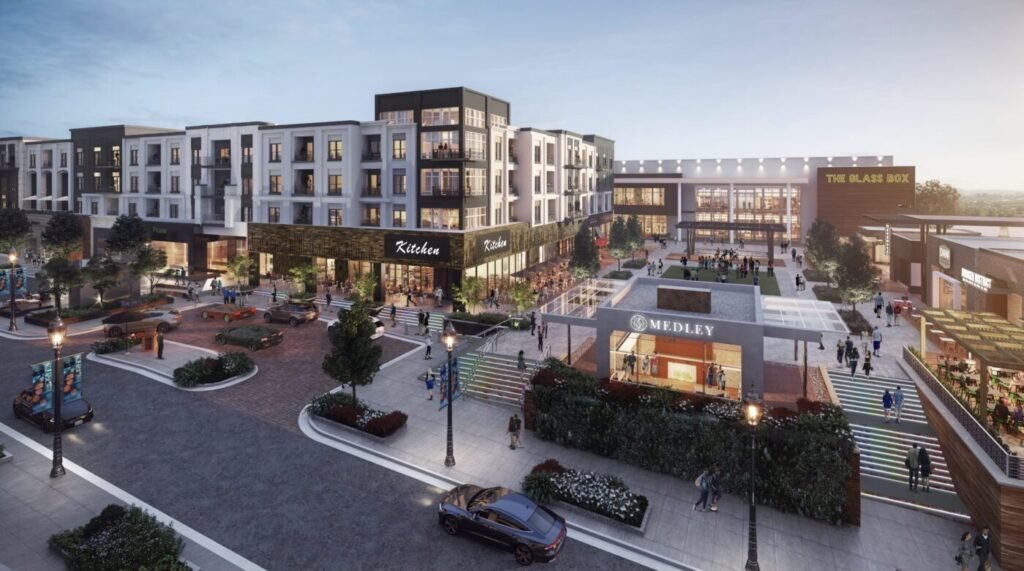
Projects like Medley in Johns Creek suggest where things may be heading. The intention behind them is clear: to create a center where none fully existed before, a place that invites people to spend time rather than simply pass through.
Why It Matters More Now
The renewed focus on third places is not accidental. Remote work has changed daily routines. Social life no longer revolves as tightly around offices or traditional schedules. People are looking for places that offer both structure and freedom—spaces where they can be around others without obligation.
In suburban communities, this need is especially visible. The distances are longer, the routines more isolated. A well-designed third place can quietly reshape that experience, turning a series of separate errands into something that feels connected.
A Subtle Shift in Daily Life
The most interesting thing about third places is how easily they blend into ordinary life. They are not destinations in the traditional sense. You don’t always plan to go there. You simply find yourself staying.
And in that extra half hour—sitting on a bench, finishing a conversation, watching the movement around you—something small but important happens. The place begins to feel familiar. Over time, it begins to feel like part of you.
That is what North Atlanta’s evolving landscape is starting to offer. Not just places to go, but places to be.
Tell Us Yours
Every community has its own version of a third place, and often the most meaningful ones are not the most obvious.
We’d love to hear what that place is for you.
Tell us about your favorite third place in Johns Creek, Alpharetta, Roswell, Milton, Duluth, Suwanee, or South Forsyth. What makes you stay? What does it feel like to be there?
Your responses may be featured in a follow-up piece highlighting the places locals return to again and again.
Read Also:
About the Author

In North Atlanta
Dervish Plans 200-Seat Turkish Restaurant in Johns Creek
Simple Man Distillery Hiring Ahead of Cumming City Center Opening
Roswell Approves Champions Place Expansion for Adults With Physical Disabilities
Tavern Off the Green Opens at Cumming City Center With Cajun Menu and Late-Night Hours

Johns Creek Native to Lead Medley’s Concierge Team Ahead of October Opening

At Read It Again, the Bookstore Comeback Is About Community
IN NORTH ATLANTA