 Exclusive sponsor
Why Alpharetta Keeps Winning National Rankings — And What It Means Locally
Major local stories and useful updates, once a week.
A steady stream of national rankings has put Alpharetta in a familiar spotlight. Lists focused on career growth, quality of life, and economic opportunity continue to place the city near the top, drawing attention from both prospective residents and companies looking to expand.
The latest recognition, highlighted in a recent New York Times real estate piece, reflects a broader pattern rather than a one-time result. Alpharetta’s position as a leading “small city for big careers” comes from a combination of factors that have been building for years, and the impact is increasingly visible across the community.
A Pattern, Not a One-Off Ranking
Alpharetta’s appearance in national rankings is not new. Over the past decade, the city has consistently been included in lists evaluating job markets, livability, and suburban growth. What stands out now is the frequency and consistency of those rankings.
The recent analysis cited by the New York Times places Alpharetta at the top among smaller U.S. cities, based on metrics such as wage growth, employment opportunities, and overall quality of life. While rankings can vary depending on methodology, the underlying data points tend to align: strong job creation, relatively high household incomes, and proximity to a major metro without the daily friction of urban living.
The Job Market Behind the Rankings
One of the clearest drivers of Alpharetta’s national attention is its job market. The city has evolved into a major employment center within the North Atlanta suburbs, particularly in technology, finance, and professional services.
Large employers and regional offices have clustered along the GA-400 corridor, creating a local ecosystem where many residents can work close to home. That shift matters. It reduces commute times, increases daytime economic activity, and supports a network of restaurants, cafés, and service businesses that rely on a steady weekday population.
The presence of these jobs also has a ripple effect. Higher wages support local spending, which in turn encourages more business openings and continued investment in commercial areas.
Quality of Life That Feels Immediate
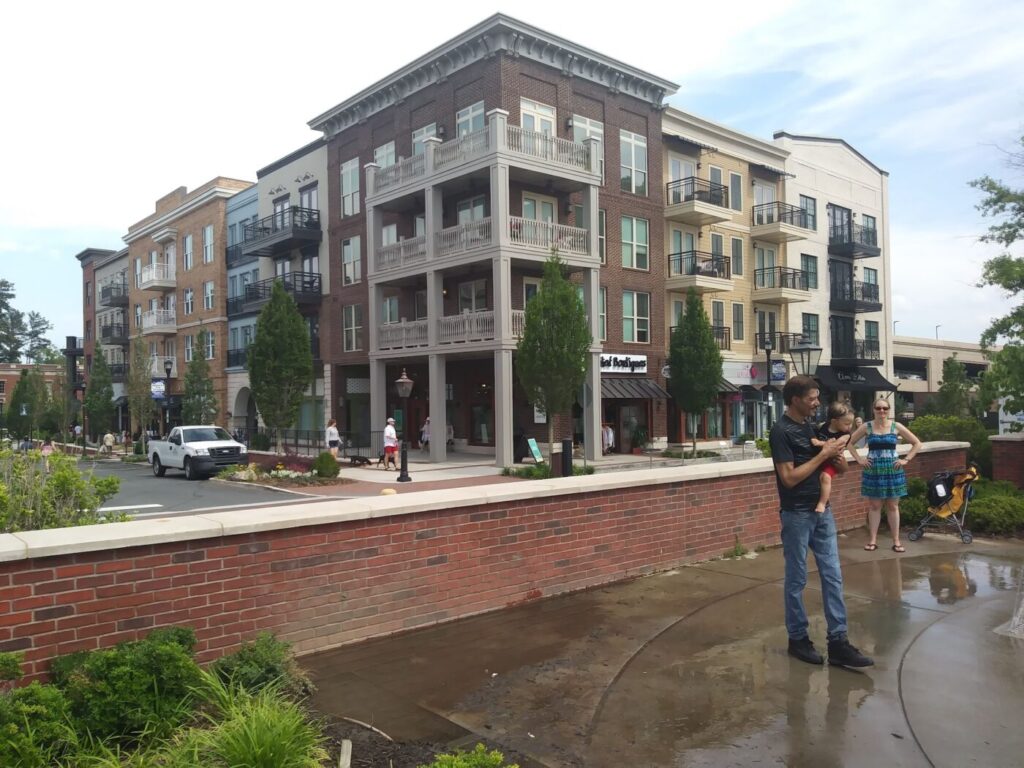
Rankings often use the phrase “quality of life,” but in Alpharetta, that concept is visible in everyday routines. Walkable districts like Avalon and downtown Alpharetta create a rhythm that blends residential and commercial life. Trails, parks, and well-maintained public spaces contribute to a sense of accessibility that is not always easy to find in suburban environments.

Schools, both public and private, play a role as well. While not always the focus of national rankings, they remain a key factor for families deciding where to move, and they reinforce Alpharetta’s long-term appeal.
What distinguishes the city is not any single feature, but how these elements work together.
The Pressure That Comes With Recognition
Success brings attention, and attention brings pressure. As Alpharetta continues to rank highly, demand for housing has increased, contributing to rising home prices and tighter inventory in certain neighborhoods.
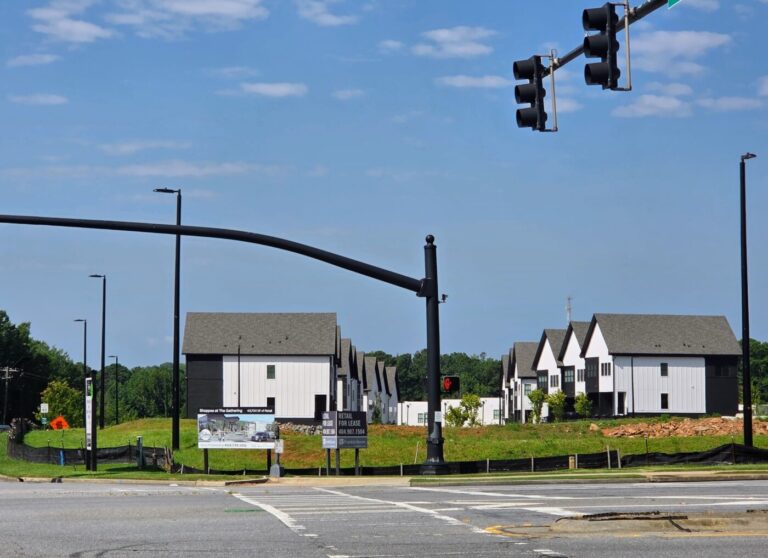
New development is responding to that demand, but not always in ways that align with every resident’s expectations. Townhome communities, mixed-use projects, and higher-density housing are becoming more common, particularly in areas near major roads and commercial centers.
Traffic is another visible effect. While the local job base reduces some long-distance commuting, population growth still adds volume to already busy corridors, especially along GA-400 and key east-west connectors.
These shifts are not unique to Alpharetta, but the city’s visibility accelerates them.
What It Means for Nearby Communities
Alpharetta’s rise does not exist in isolation. Nearby cities including Johns Creek, Milton, and parts of South Forsyth are experiencing related growth, often benefiting from proximity while maintaining slightly different development patterns.
For some residents, that creates options. Alpharetta offers a more built-out, amenity-rich environment, while neighboring areas may feel quieter or less dense. The balance between those choices is part of what defines the broader North Atlanta suburban landscape.
At the same time, Alpharetta’s success raises expectations across the region. New developments, retail projects, and infrastructure investments are increasingly measured against the standards set there.
A Reputation That Reinforces Itself
Rankings can sometimes feel disconnected from daily life, but in Alpharetta’s case, they tend to reinforce trends that are already underway. Recognition attracts attention. Attention brings new residents and businesses. That growth, in turn, strengthens the factors that led to the rankings in the first place.
The cycle is not guaranteed to continue indefinitely, but for now, it remains firmly in motion.
For residents, the question is less about whether Alpharetta deserves the recognition and more about how the city manages what comes next. Growth, once it reaches a certain point, becomes less about momentum and more about balance.
Read Also:
Community Voice
A snapshot of reader views, not a scientific survey.
Explore Community Voice →About the Author


In North Atlanta

Why So Many International Families Choose North Atlanta

Where Are Buyers Coming From? Are South Forsyth and Johns Creek Still Seeing Northeast and West Coast Relocation?

Moving to Johns Creek: What Pet Owners Should Know

North Atlanta’s Retail Divide: Sales Range From $8,909 to $49,222 Per Resident

The Companies Moving Into North Atlanta — And What They Actually Bring With Them

North Atlanta Sketch: The Public Pool
IN NORTH ATLANTA