Why Some Chains Thrive in North Atlanta—and Others Quietly Fade
Get major local stories and development updates.
On a weekday afternoon, it doesn’t take long to notice a pattern. Some drive-thrus wrap around buildings and spill into parking lots, while others sit half-empty just a few blocks away. The difference isn’t random. It reflects a deeper shift in how people across Alpharetta, Johns Creek, Duluth, and South Forsyth are choosing where—and why—they eat.
What’s emerging is a clear divide: a group of high-performing, highly efficient chains pulling ahead, and a growing list of familiar names quietly losing ground.
The Chains That Became Infrastructure
Few brands illustrate this better than Chick-fil-A. In North Atlanta, the chain has moved beyond fast food into something closer to local infrastructure. Nationally, it generated nearly $24 billion in sales in 2025, but the more telling number is per-location performance. A typical quick-service restaurant might aim for $2 million annually. A standalone Chick-fil-A averages around $9.2 million—and in high-income suburban corridors, some locations reportedly exceed $20 million.
That level of output is not about chicken sandwiches alone. It’s about systems. In Alpharetta and Johns Creek, drive-thrus function like coordinated logistics operations, with staff taking orders outside using tablets to keep traffic moving continuously. The experience feels predictable, fast, and clean—qualities that increasingly define “value” in this market.
Even as food prices rise, customers continue to return. Not because it’s the cheapest option, but because it reliably delivers.
The Rise of Health-Driven Fast Casual
A few miles away, a different kind of success story is playing out inside modern storefronts with clean lines and minimalist menus.
Chains like Cava and Sweetgreen have built strong followings in North Atlanta by aligning with a more health-conscious, higher-income customer base.
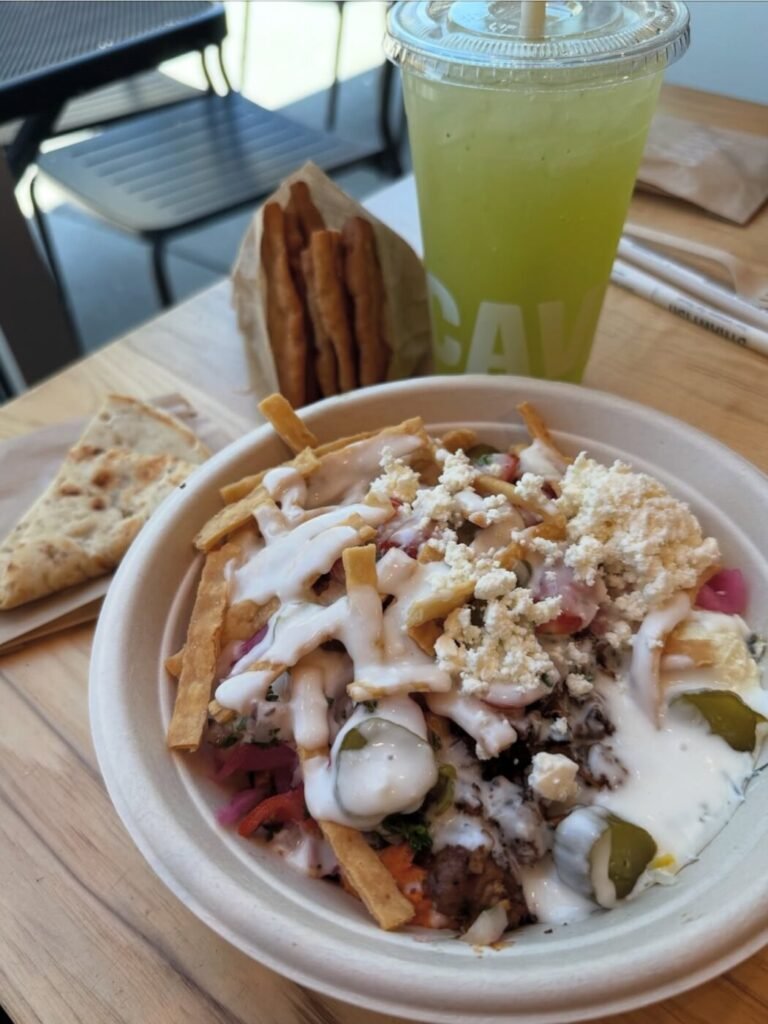
Cava’s expansion has been especially visible, often taking over former Zoe’s Kitchen locations in places like Roswell, Duluth, and Alpharetta. The strategy is simple: inherit prime real estate and introduce a menu that feels both modern and familiar. Same-store sales growth has been strong, driven by demand for customizable, plant-forward meals.
Sweetgreen, meanwhile, has leaned into technology. Its automated “Infinite Kitchen” model is designed to improve efficiency while maintaining consistency, a critical advantage in high-rent suburban markets where margins are tight.
What both brands understand is that, in this area, a $15–$18 bowl is acceptable—if it feels fresh, intentional, and aligned with lifestyle.
The Chicken Wars Intensify
Chicken remains one of the most competitive categories, and a newer player is quickly making its presence felt.
Raising Cane’s has expanded into Cumming and Duluth, bringing with it a stripped-down menu and a highly efficient operating model. Its focus on just a few items—chicken fingers, fries, toast, and sauce—allows for speed and consistency, translating into strong per-store sales.
But entering this market means going head-to-head with deeply entrenched competitors. Chick-fil-A still dominates, and regional loyalty remains strong.
At the same time, legacy brands like KFC are losing traction, with declining sales tied to shifting perceptions around quality and health.
The takeaway is simple: even in a category as familiar as fried chicken, expectations have changed. Speed alone is no longer enough.
The Value Problem Facing Legacy Chains
For brands like McDonald’s and Taco Bell, the challenge is different. These companies still operate at massive scale, but their traditional advantage—low price—has become less clear. As menu prices rise, many customers begin comparing a $14–$16 fast-food meal to a $20 sit-down experience.
Taco Bell has adapted better than most, leaning into digital ordering and limited-time menu innovation. McDonald’s, meanwhile, is working to reshape its value perception through promotions and menu adjustments.
But in North Atlanta, where options are abundant and expectations are high, being “good enough” is no longer a safe position.
Closures, Corrections, and a Tougher Market
Not every brand is keeping up. Wendy’s has announced plans to close hundreds of underperforming locations, while Whataburger has already shut down several newer stores in Georgia.
These aren’t isolated cases. They reflect a broader correction. In a region where rents are high and consumer expectations even higher, there’s little room for concepts that lack a clear identity. Middle-of-the-road chains—neither the cheapest nor the best—are the most vulnerable.
Even long-standing local spots are feeling the pressure, especially as redevelopment reshapes commercial corridors and pushes costs upward.
The Shift Toward Experience
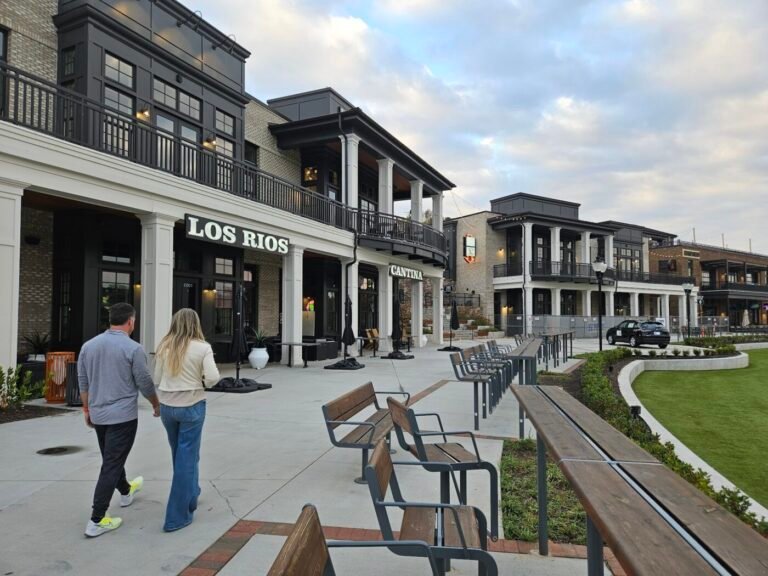
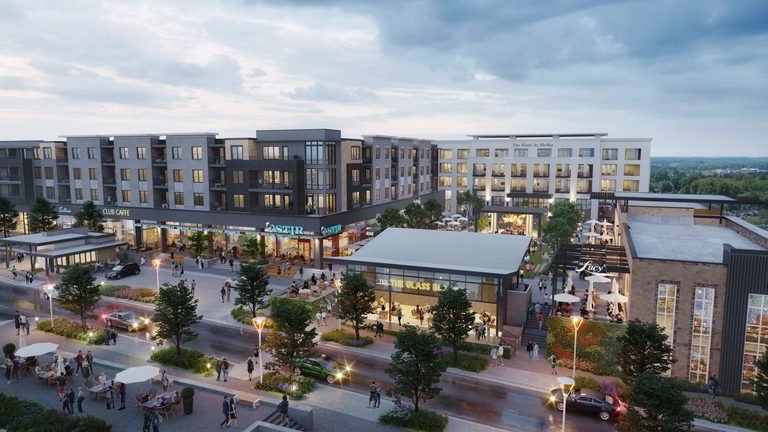
The most significant change may not be about food at all. Developments like Medley in Johns Creek and Avalon in Alpharetta are redefining what a “restaurant location” means. Instead of standalone buildings, chains are increasingly integrated into walkable, mixed-use environments designed around experience.
In these settings, restaurants function as social anchors. People aren’t just stopping for a quick meal—they’re spending time, meeting others, and moving between shops, offices, and public spaces.
Brands that adapt to this environment—those that feel like part of a place rather than just a transaction—are better positioned for long-term success.
The Quiet Competitor: Grocery Stores
There’s another competitor that doesn’t always get mentioned: the grocery store. Chains like Trader Joe’s, Aldi, and Costco are capturing more meal occasions as families look for ways to manage spending without sacrificing quality.
Prepared foods, meal kits, and high-quality ingredients are making it easier to stay home—or at least rethink how often dining out makes sense. For restaurants, that means competing not just on convenience, but on the full experience.
What Comes Next
The North Atlanta dining landscape remains one of the strongest in the country, but it is also becoming more selective.
The brands that are winning share a few clear traits: They operate efficiently. They communicate value beyond price. They create a consistent, reliable experience. Those that don’t are being left behind.
For diners, the result is a market that feels both familiar and rapidly evolving. The names may be recognizable, but the expectations behind them have shifted—and they’re not shifting back.
Read Also:
About the Author

In North Atlanta
Why Honeycrisp Is the $5-a-Pound Apple in North Atlanta
5 Coffee Trucks and Mobile Cafés Worth Finding Around North Atlanta
North Atlanta Added 11,000 Residents, but the Growth Is Concentrated in Three Cities
North Atlanta’s Job Market Splits as Health Care Grows and Office Work Shrinks
What North Atlanta Should Know Today. Friday, Sept. 11, 2026

What North Atlanta’s No-Degree Jobs Actually Pay
IN NORTH ATLANTA