The Place Everyone Calls a City — That Isn’t One
Sugarloaf is a large business and entertainment district in Gwinnett County that operates without formal city status. It serves as a key economic hub with ongoing efforts to enhance connectivity and community identity.
Get major local stories and development updates.
Drive along Interstate 85 past the Sugarloaf Parkway exit and the name appears everywhere—on office buildings, apartment complexes, shopping centers, and event venues. It feels like a city with a clear center and identity.
But Sugarloaf isn’t a city at all.
What Sugarloaf Actually Is
Sugarloaf is a large, coordinated business and entertainment district that stretches across parts of Duluth and Lawrenceville. It isn’t incorporated, meaning there’s no mayor, no city hall, and no official municipal boundary.
Instead, it operates through a structure called a Community Improvement District (CID), a model where commercial property owners agree to tax themselves to fund improvements, infrastructure, and long-term planning.
That structure has allowed Sugarloaf to function like a downtown—without technically being one.
From Horse Farms to High-Rise Offices
The name “Sugarloaf” dates back long before retail and office buildings arrived. The land was once part of a large estate known as Sugarloaf Farms, a 1,200 to 1,600-acre property owned by the Rollins family.
In the 1990s, developers saw something different: a strategic location along growing transportation corridors with the potential to become a major suburban center. The transformation that followed was rapid.
The creation of the Sugarloaf Country Club and the surrounding developments helped establish the name as a premium brand. Over time, that brand expanded outward, attaching itself to residential communities, retail centers, and office buildings.
Today, “at Sugarloaf” has become shorthand for a certain kind of place—newer, planned, and connected.
An Economic Engine for Gwinnett
What began as a single property has grown into one of the most significant economic zones in the county.
The Sugarloaf district now supports more than 26,000 jobs and over 1,200 companies, making up roughly 7 percent of all employment in Gwinnett County. It’s also considered one of the county’s primary “Class A” office markets, attracting corporate tenants and continued development.
Large venues bring people in from across the region. The Gas South District alone draws over a million visitors annually for concerts, sports, and events. Nearby, Sugarloaf Mills serves as one of the largest retail and entertainment destinations in Georgia, anchoring the area’s public-facing identity.
The result is something closer to an “edge city”—a suburban hub that functions like an urban center without the traditional structure.
Built Around Movement
At the center of it all is Sugarloaf Parkway.
The road isn’t just a connector—it’s the spine of the district. Designed as a wide, high-capacity corridor, it links offices, retail, residential developments, and entertainment venues into a single continuous zone.
Everything feeds into it, and everything spreads out from it.
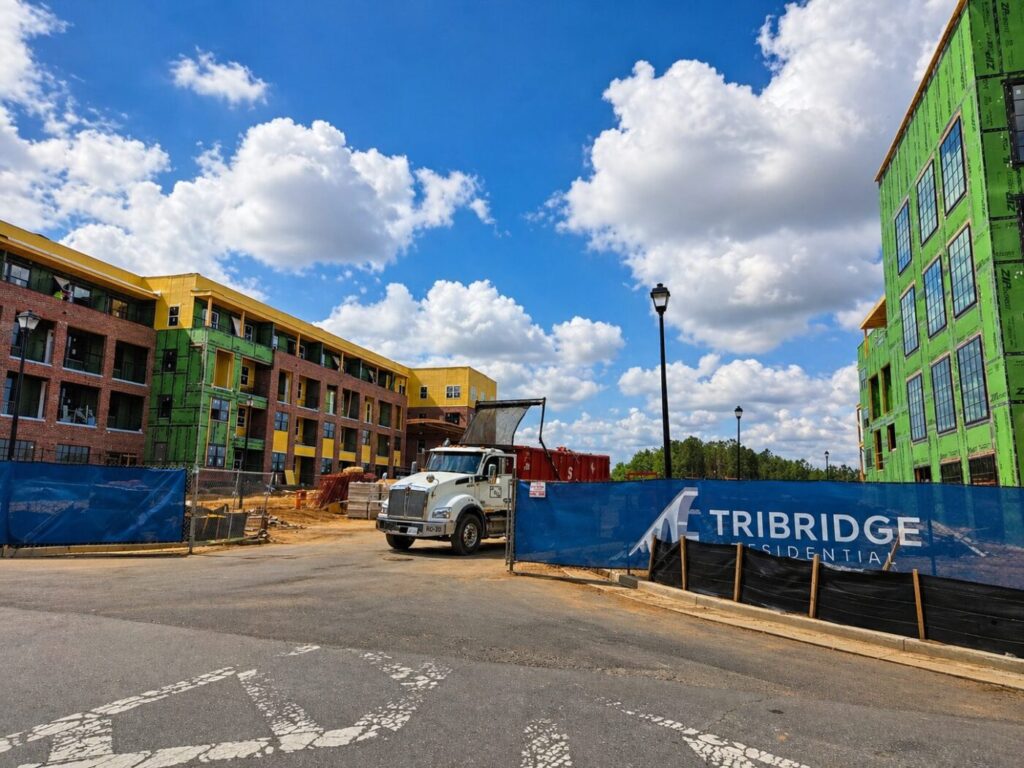
That design has made the area easy to access, but also heavily car-dependent—something planners are now trying to evolve.
The Next Phase: Making It Feel Like a Place
As Sugarloaf grows, the focus is shifting from expansion to identity.
A long-term planning effort is now underway to shape what the next 20 years will look like. The goals are clear: improve mobility, create more walkable connections, and turn the district into a place people don’t just pass through, but spend time in.
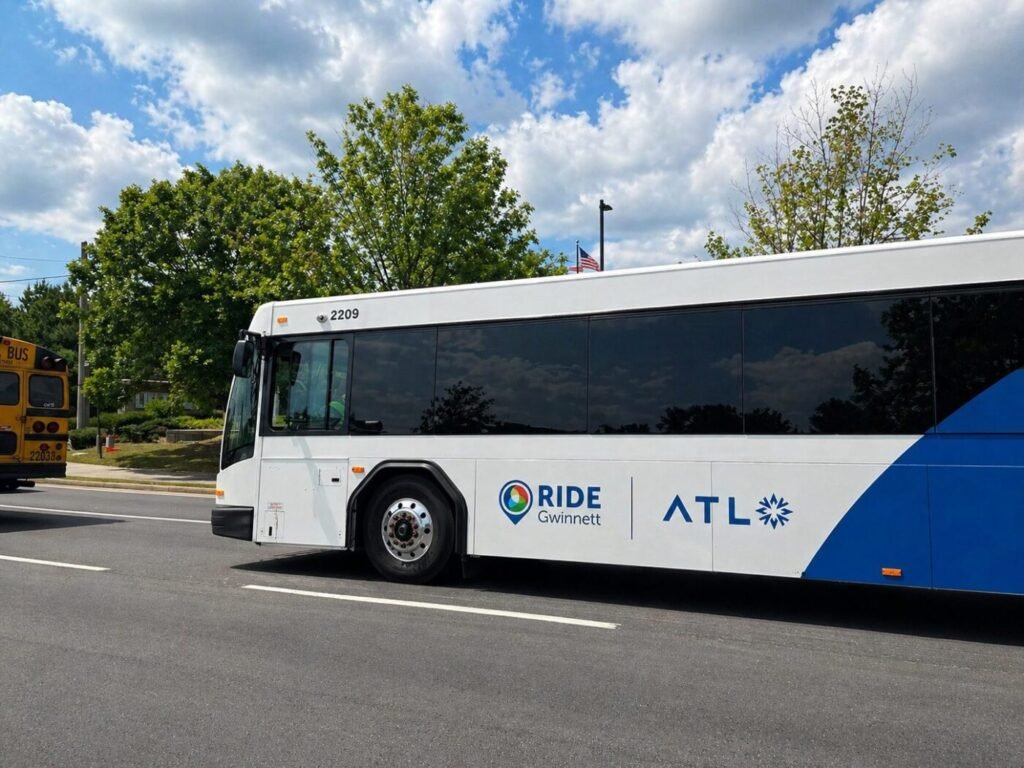
That includes adding trails, improving transit options, and investing in public art and gathering spaces. Plans already underway point to a more connected district, with the proposed County Loop Trail linking major anchors like Gas South District and Sugarloaf Mills, alongside studies for future Bus Rapid Transit stops designed to move people through the corridor more efficiently. At the same time, visible placemaking projects are already reshaping the area, including large-scale murals such as the Synchronicity underpass installation, new pedestrian crosswalk designs, and ongoing upgrades to lighting and streetscapes that aim to make the district feel less like a drive-through corridor and more like a place to linger.
Sugarloaf may not be a city on the map.
But in practice, it functions like one—and it’s still being built.
About the Author

In North Atlanta
Duluth’s First Food-Truck Park Is Coming to the Gas South District Corridor

What North Atlanta Should Know Today, Tuesday, Sept. 1, 2026
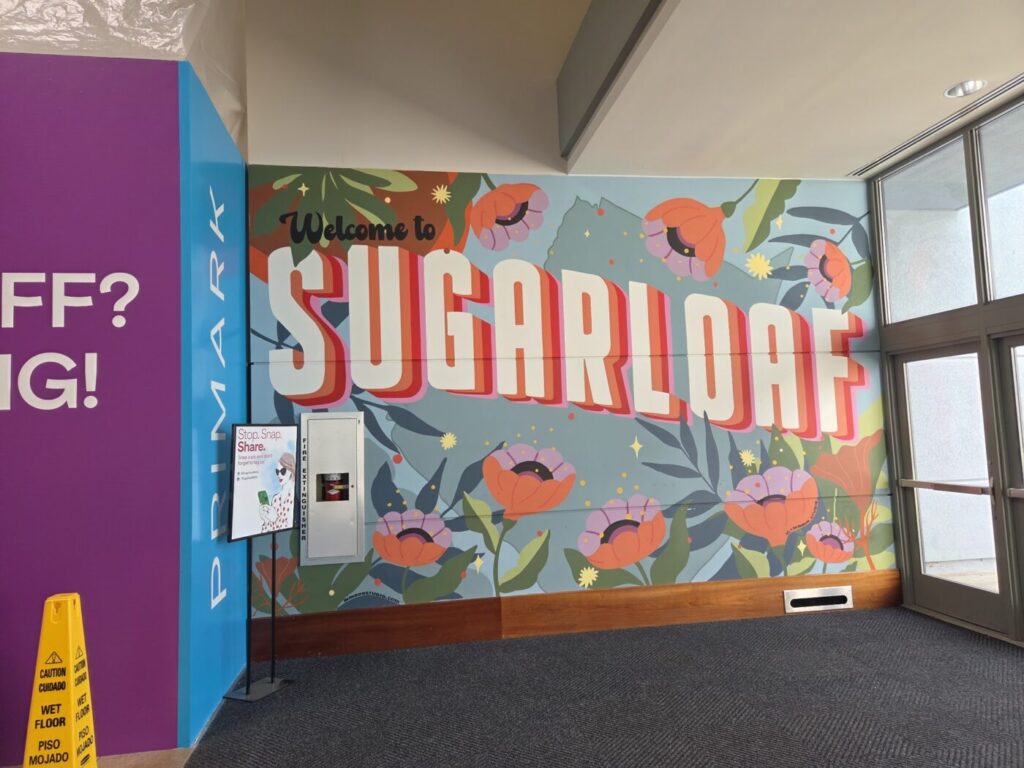
Primark’s first Georgia store opens Sept. 8, with $15-an-hour jobs in Lawrenceville
What North Atlanta Should Know Today
Suwanee’s Winton Machine Heads to Washington With $400,000 on the Line
North Atlanta’s NHL Race Is No Longer Just Alpharetta vs. South Forsyth
IN NORTH ATLANTA