Paid Parking Is Expanding Across Atlanta. Is North Atlanta Next?
Paid parking is becoming common in central Atlanta and now spreading to parts of North Atlanta like Roswell and Alpharetta due to increased demand and limited space.
Get major local stories and development updates.
A night out in Atlanta now often begins with a small calculation.
Not the menu. Not the reservation. The parking.
Recent reporting from The Atlanta Journal-Constitution shows that across the city—from the Beltline to Buckhead to Decatur—paid parking is becoming part of the standard dining experience. What was once free and assumed is now something you factor in before you even leave the house.
For many residents, the shift feels abrupt. In reality, it follows a familiar pattern. As neighborhoods grow denser and more desirable, land becomes more valuable. Parking, once treated as a courtesy, becomes something that must justify itself economically.
Atlanta is already there. North Atlanta is not far behind.
The Model Already Playing Out
In Atlanta’s busiest districts, the transition is visible block by block. Around the Beltline and Old Fourth Ward, private operators manage lots that were once loosely regulated. In Midtown and Buckhead, decks and surface lots now charge by the hour, often with dynamic pricing during peak times.
The effect reaches beyond inconvenience. Diners interviewed in the AJC report describe paying what feels like the price of a drink or appetizer just to park. A simple stop for coffee or a quick bite becomes something you think through in advance. Businesses that rely on impulse visits—bagel shops, casual cafés—feel the difference first.
This is what a maturing urban environment looks like: access becomes managed, not assumed.
The First Local Signal: Roswell
North Atlanta has not fully crossed that line, but the first signs are already in place.
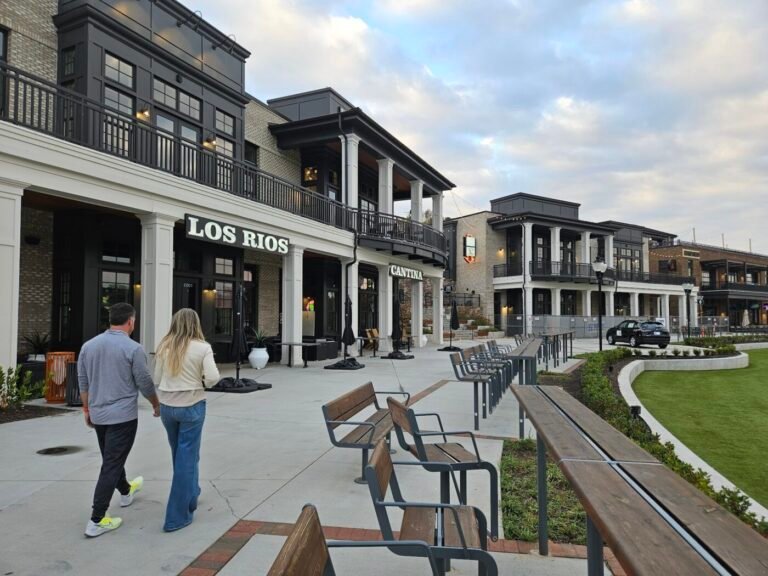
In Roswell, the city has approved a plan to convert a downtown parking deck to paid parking, even as implementation details continue to evolve. It is a modest step, but it reflects the same pressures seen in Atlanta—more visitors, more demand, and finite space.
Downtown Roswell, particularly around Canton Street and the restaurant corridor, is one of the clearest local examples of a place approaching that threshold. On busy evenings, parking already feels constrained. Formal pricing is often the next step in that cycle.
Where This Could Happen Next
The spread of paid parking rarely happens everywhere at once. It concentrates first in places where demand consistently outpaces supply.
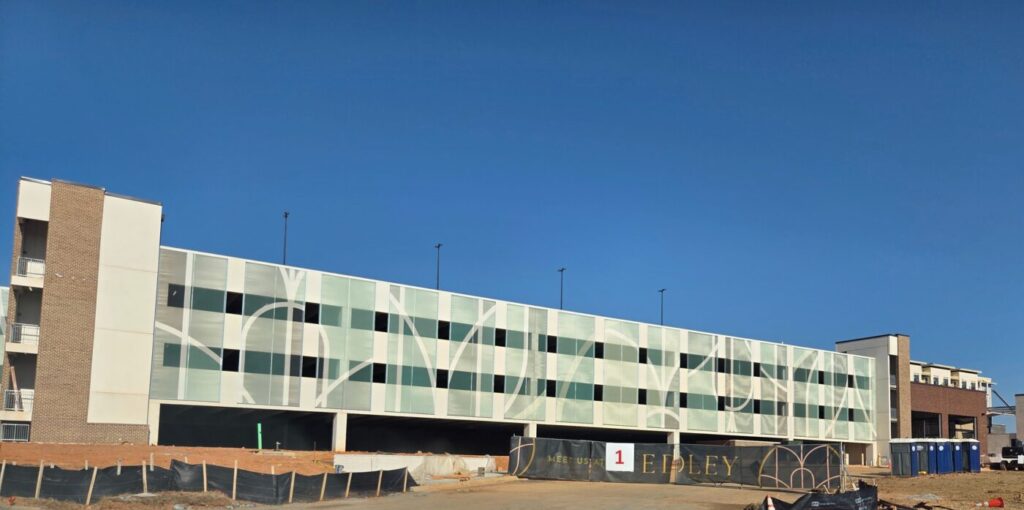
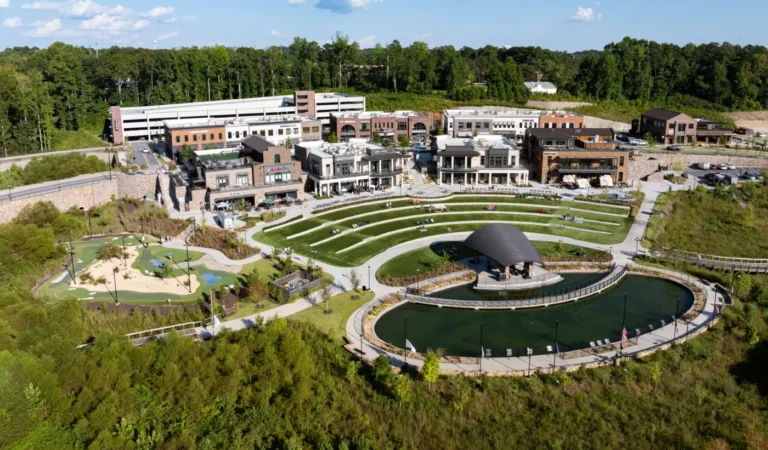
In Alpharetta, the area around Avalon is an obvious candidate. Weekend evenings already bring full decks, traffic circulation, and limited availability. While Avalon currently maintains structured parking access, the underlying pressure—high demand in a compact, high-value environment—is the same dynamic seen in Atlanta districts before pricing expanded.
A few minutes away, downtown Alpharetta tells a similar story. Along Milton Avenue and near the Town Green, the mix of restaurants, events, and walkability has transformed the area into a regional destination. On festival weekends or peak dining hours, finding a spot can require multiple passes. It is exactly the kind of environment where time limits, validation systems, or eventual paid structures begin to appear.
In South Forsyth, Halcyon is still in a growth phase, but its design—walkable, mixed-use, increasingly busy on weekends—puts it on a similar trajectory. As more residential density builds nearby and visitor traffic increases, parking management typically becomes more structured.
Further east, Suwanee Town Center has steadily grown into a gathering place with concerts, restaurants, and community events. On event nights, the parking supply tightens quickly. Duluth’s downtown, especially around Main Street and Parsons Alley, shows the same pattern. Both are still largely free today, but both are moving toward the kind of sustained activity levels that often lead to change.
Where It Likely Holds—for Now
Not every part of North Atlanta is heading in this direction at the same pace.
Johns Creek, with its more distributed layout and plaza-based retail, still operates on a model where parking is directly tied to individual businesses. Large surface lots remain part of the experience, and demand is spread across multiple centers rather than concentrated in one district.
Parts of Cumming, especially outside the denser South Forsyth corridor, function similarly. The scale and layout make widespread paid parking less likely in the near term.
These areas still compete on convenience. Free parking remains part of that identity.
Timing the Shift
If the Atlanta pattern is any guide, the transition in North Atlanta will not arrive all at once.
The first stage is already visible: increased demand and tighter parking in popular districts. The next stage usually brings subtle controls—time limits, enforcement, validation tied to purchases. Only after that does direct pricing begin to appear, typically in specific high-demand locations rather than across an entire city.
That process can take several years. But once it begins, it tends to move in one direction.
If this caught your attention, these stories may too.
About the Author


In North Atlanta
What North Atlanta Should Know Today. Friday, Sept. 11, 2026
5 Coffee Trucks and Mobile Cafés Worth Finding Around North Atlanta
Roswell Approves Champions Place Expansion for Adults With Physical Disabilities
Roswell Pulls Back Property Tax Proposal, but Higher Rate Remains on Table

Roswell Area Park Pond Reopens After $3.1 Million Restoration
North Atlanta Added 11,000 Residents, but the Growth Is Concentrated in Three Cities
IN NORTH ATLANTA