 Exclusive sponsor
Atlanta’s World Cup Hotel Boom May Not Arrive the Way Many Expected
Atlanta's hotel industry is more optimistic than many host cities as the 2026 World Cup approaches. Suburban hotels and airport connectivity boost demand despite slower international travel.
Major local stories and useful updates, once a week.
As the 2026 FIFA World Cup moves closer, Atlanta still appears positioned to benefit more than many other host cities. But a new national hotel industry report suggests the long-anticipated tourism surge may arrive in a far more uneven and uncertain way than many local businesses initially hoped.
The new U.S. Hotel Outlook Report from the American Hotel & Lodging Association paints a complicated picture for host markets across the country. While stadiums are expected to be full and millions of tickets have already been sold, hotel operators nationwide say booking patterns remain softer than expected only weeks before kickoff.
For metro Atlanta, however, the findings were noticeably more optimistic than for many competing host cities.
According to the report, Atlanta and Miami currently stand out as relative bright spots among the World Cup host markets. Roughly half of Atlanta hotel respondents reported booking pace running in line with or ahead of expectations — and stronger than a normal summer period — helped by the city’s international airport connectivity, diversified visitor demand, and team base camp activity.
That distinction matters because many major cities are reportedly seeing the opposite.
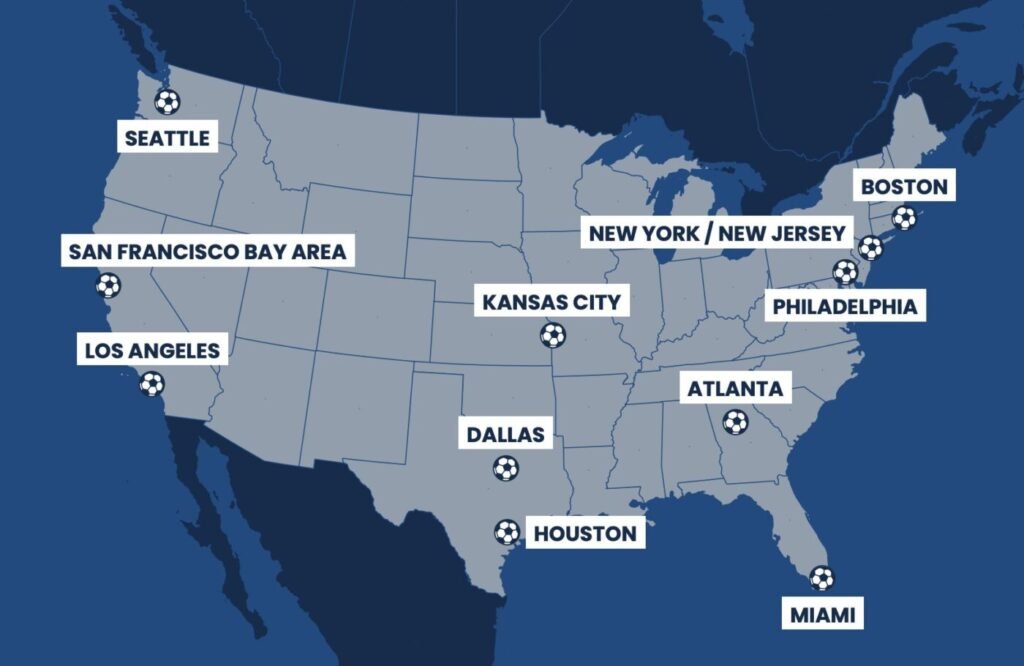
Hotels in places like Kansas City, Philadelphia, Seattle, Boston, and San Francisco described bookings falling below forecasts, with some operators calling the tournament close to a “non-event” for local hospitality demand after large FIFA room blocks were released back into the market.
Atlanta appears better insulated for several reasons that go well beyond soccer itself.
Unlike some host markets that rely heavily on downtown tourism concentrations, Atlanta functions as a sprawling regional hub with enormous year-round business travel infrastructure already in place. Hartsfield-Jackson Atlanta International Airport remains one of the busiest airports in the world, while the metro’s suburban hotel ecosystem stretches far beyond downtown into Alpharetta, Sandy Springs, Cumberland, Gwinnett, and South Forsyth corridors.
That suburban dimension could quietly become one of North Atlanta’s biggest advantages during the tournament.
Visitors increasingly look for alternatives to dense urban hotel zones during major events, especially families, longer-stay travelers, and international tourists combining the tournament with broader Southern road trips. Areas around Alpharetta, Johns Creek, Duluth, and South Forsyth may benefit indirectly from travelers seeking more space, easier parking, newer hotels, and proximity to GA-400 access routes.
The report also highlights a major issue shaping the tournament nationally: international travel demand has not yet materialized at the levels many analysts expected. Roughly 70% of respondents cited visa delays, geopolitical uncertainty, and broader travel concerns as major barriers suppressing overseas bookings.
That shift matters economically because international World Cup travelers tend to spend substantially more money and stay longer than domestic visitors. The report estimates international visitors could spend roughly $5,048 per trip compared to approximately $4,794 for domestic travelers, while many overseas fans also extend trips into multi-city vacations.
In practical terms, that affects far more than hotels.
Restaurants, rideshare drivers, retail centers, attractions, luxury shopping districts, and suburban entertainment zones across North Atlanta have all quietly anticipated spillover benefits from the World Cup. Avalon in Alpharetta, Halcyon in South Forsyth, downtown Alpharetta, The Forum redevelopment corridor in Peachtree Corners, and Duluth’s growing Korean dining scene could all see incremental traffic if international tourism improves closer to kickoff.
The report also warns that rising travel costs are beginning to reshape behavior. Elevated airfare prices, stronger transportation surcharges, gas prices, and higher operational expenses are making U.S. travel significantly more expensive compared to previous World Cups.
That issue lands differently in metro Atlanta than in more transit-dependent cities.
North Atlanta’s suburban lifestyle still revolves heavily around driving. Families regularly move between youth sports tournaments, shopping centers, offices, restaurants, and entertainment districts spread across multiple counties. If transportation costs continue rising into the tournament window, visitors staying outside the urban core could face noticeably higher daily expenses moving around the region.
Still, the broader mood inside Atlanta’s hospitality market appears more stable than in many competing cities.
The report notes that national hotel revenue growth tied to the World Cup may ultimately be modest overall, with projected RevPAR growth around 1.7% during tournament months. But in Atlanta, local officials and hospitality operators may ultimately judge success less by whether every downtown room sells out, and more by whether the event strengthens the city’s long-term reputation as a global sports and convention destination.
That broader positioning could matter for years after the final match.
Atlanta already sits at the center of a rapidly expanding sports corridor that stretches across North Georgia youth soccer, suburban athletic complexes, international business growth, and the 2026 tournament itself. In suburbs like Johns Creek, Suwanee, Alpharetta, and South Forsyth, soccer participation has exploded over the past decade, fueled by international migration patterns and the region’s increasingly global population.
For many local families, the World Cup may end up feeling less like a temporary mega-event and more like a milestone confirming how international North Atlanta has quietly become.
Source: American Hotel & Lodging Association “U.S. Hotel Outlook Report – FIFA World Cup 2026” (April 2026).
Where to Stay for the Atlanta World Cup
Visitors coming to Atlanta for the 2026 FIFA World Cup are likely to spread far beyond downtown hotels alone. Metro Atlanta’s suburban hotel network — especially across Alpharetta, Sandy Springs, Duluth, and South Forsyth — may become one of the region’s biggest advantages during the tournament.
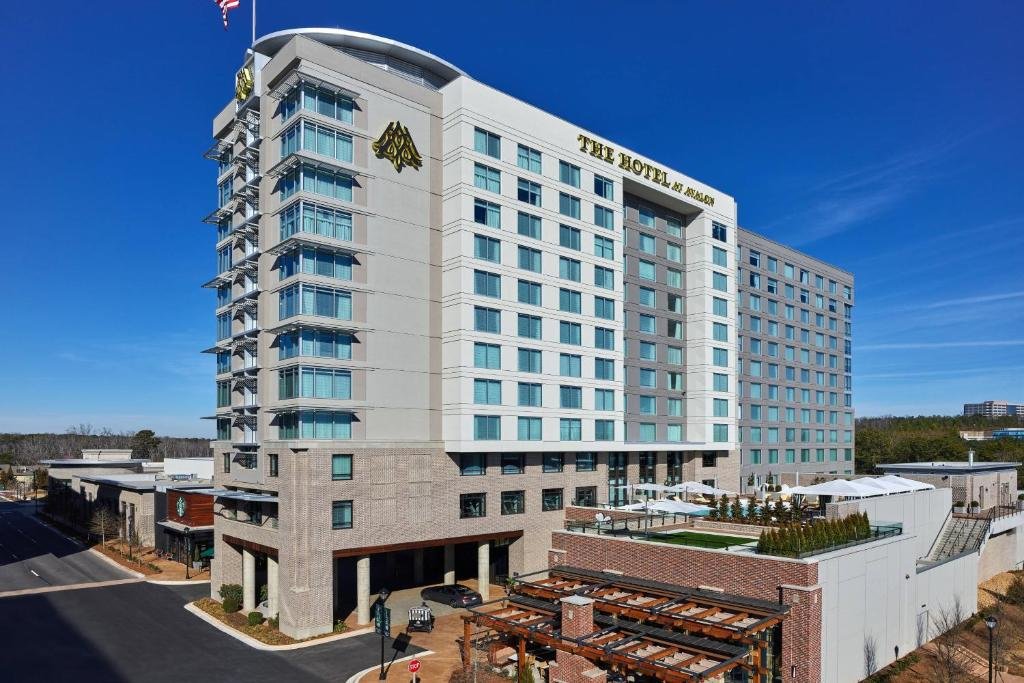
For travelers looking to stay closer to the luxury shopping and dining atmosphere of North Fulton, the hotel cluster around Avalon in Alpharetta will likely become one of the strongest suburban hubs during the World Cup. Properties such as The Hotel at Avalon, Autograph Collection, the Hilton Alpharetta Atlanta, and the Courtyard by Marriott Alpharetta Avalon Area place visitors near restaurants, nightlife, and GA-400 access while avoiding some of downtown Atlanta’s congestion.
Downtown Alpharetta may also appeal to visitors wanting a more walkable suburban experience. Hotels including the Hampton Inn & Suites Alpharetta Roswell and the Fairfield Inn & Suites Alpharetta provide easier access to local restaurants, breweries, and festival-style gathering spaces that have become increasingly popular in North Fulton.
Further south along the GA-400 corridor, Sandy Springs and Perimeter Center remain among metro Atlanta’s strongest hotel concentrations outside the urban core. The Westin Atlanta Perimeter North, Hyatt Regency Atlanta Perimeter at Villa Christina, and Crowne Plaza Atlanta Perimeter at Ravinia offer relatively quick access toward Mercedes-Benz Stadium while surrounding visitors with a more business-oriented environment.
For international visitors interested in food culture and a more globally diverse atmosphere, Duluth may become one of the more interesting World Cup base locations in the region. The Westin Atlanta Gwinnett, Embassy Suites by Hilton Atlanta NE Gwinnett Sugarloaf, and Courtyard Atlanta Duluth/Gwinnett Place place visitors close to the Gas South District as well as Duluth’s rapidly expanding Korean dining scene.
South Forsyth and the Halcyon corridor may appeal especially to families and longer-stay travelers looking for newer suburban development patterns, easier parking, and access toward North Georgia destinations beyond Atlanta itself. Hotels such as the Hilton Garden Inn Atlanta North/Alpharetta, Home2 Suites by Hilton Cumming Atlanta, and Fairfield Inn & Suites by Marriott Atlanta Cumming/Johns Creek sit within one of the metro’s fastest-growing suburban corridors.
Visitors seeking a more luxury-oriented experience closer to Atlanta’s high-end shopping districts may still gravitate toward Buckhead hotels such as the InterContinental Buckhead Atlanta, Waldorf Astoria Atlanta Buckhead, and Grand Hyatt Atlanta in Buckhead, particularly for travelers combining the tournament with broader business or leisure travel.
One of Atlanta’s advantages compared to many World Cup host cities is simply the scale of its suburban hospitality infrastructure. Instead of relying almost entirely on downtown inventory, visitors will have access to hotel clusters spread across North Fulton, Gwinnett, Perimeter, Buckhead, and South Forsyth — potentially giving travelers more flexibility as pricing and availability fluctuate closer to kickoff.
A few more local reads, before you go.
Community Voice
A snapshot of reader views, not a scientific survey.
Explore Community Voice →About the Author


In North Atlanta

Why North Atlanta Has Few Solar Farms — and South Georgia Has So Many

Smart Grocery Carts Are Coming. But What Are We Giving Up?
After Isaias, North Atlanta’s Focus Shifts From Warnings to Repairs

North Atlanta’s Bachelor’s-Degree Gap Reaches 52 Points Across 18 Cities

More North Atlanta Residents Are Working, Yet Unemployment Rose

Sugar Hill Has North Atlanta’s Longest Average Commute
IN NORTH ATLANTA