 Exclusive sponsor
Georgia Tied for America’s Lowest Fiction-Reading Rate. North Atlanta May Be Different
Georgia has one of the lowest adult fiction reading rates nationwide, but North Atlanta’s educated communities and busy libraries show a different story. High school and college graduation rates and robust library use suggest a local reading culture more vibrant than state averages indicate.
Major local stories and useful updates, once a week.
Georgia has busy libraries, thriving book clubs and no shortage of readers lining up for the latest novel. Yet when Americans were asked whether they had read a novel or short story during the previous year, Georgia landed at the bottom of the country.
Only 25% of Georgia adults reported reading fiction, according to the most recent detailed state comparison from the National Endowment for the Arts. Georgia tied Hawaii for the lowest rate in the nation and fell well below the national figure of 38%.
The result does not mean that three-quarters of Georgians never read. It measures a narrower habit: reading novels or short stories between July 2021 and July 2022. It does not include the Bible, biographies, political books, cookbooks, self-help titles, school assignments or most other nonfiction.
Still, the difference is large enough to raise an uncomfortable question. Does Georgia have a weaker culture of recreational reading than much of the country?
Georgia trails the rest of the Southeast
Georgia’s 25% fiction-reading rate was lower than every neighboring state. Florida registered 27%, Tennessee 31%, Alabama 32%, North Carolina 33% and South Carolina 46%.
The small gaps between Georgia, Florida and Tennessee should not be treated as a precise ranking of literary enthusiasm. State survey samples have margins of error, and the Georgia estimate was not designed to explain why residents read more or less. What can be said with greater confidence is that Georgia’s rate was statistically below the national average.
At the other end of the country, Vermont reached 60%, followed by Nebraska at 56%, Montana at 53% and Washington state at 51%. Those numbers suggest that reading habits do vary considerably by place, although education, age, income and access to books may matter more than anything culturally distinctive about a state. The complete comparison appears in the National Endowment for the Arts state report.
A newer national survey offers a less discouraging picture of American reading as a whole. Pew Research Center found that 75% of adults had read at least part of a book in some format during 2025. Print remained dominant, used by 64% of adults, while 31% read an e-book and 26% listened to an audiobook. The Pew question included books of every kind, which helps explain why its national result is much higher than the fiction-only federal measure.
What Georgians are actually reading
Among Georgians who regularly borrow books, there is little evidence of a uniquely Georgian literary taste. The most popular titles are largely the same commercial novels found on bestseller shelves throughout the country.
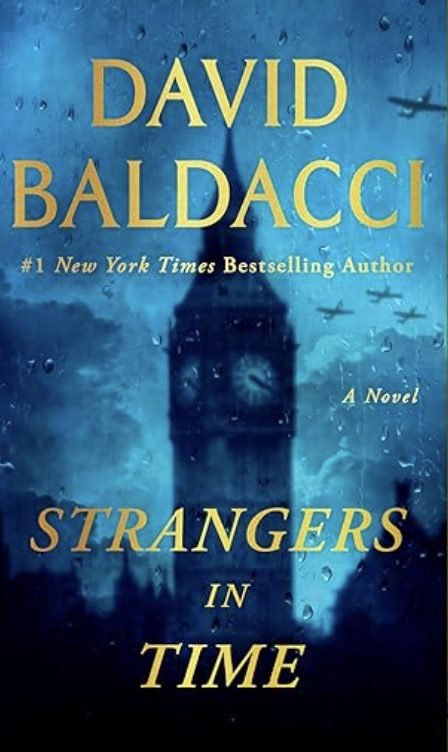
The PINES network, which connects about 300 public libraries around Georgia, recorded nearly 11.65 million borrowed items in 2025. Its leading adult selections included David Baldacci’s wartime novel Strangers in Time, Freida McFadden’s psychological thriller The Boyfriend and Michael Connelly’s crime novel The Waiting. The PINES list leaned toward suspense, crime and accessible commercial fiction.
Fulton County readers produced a slightly broader but equally recognizable list. Its most popular adult books of 2025 included Emily Henry’s Great Big Beautiful Life, Rebecca Yarros’ fantasy-romance blockbuster Onyx Storm, Alice Feeney’s thriller Beautiful Ugly, Taylor Jenkins Reid’s Atmosphere, Abby Jimenez’s Say You’ll Remember Me and Fredrik Backman’s My Friends.
Taken together, the lists point toward a familiar mixture: relationships, family upheaval, historical settings, crime, suspense and romance, with fantasy-romance continuing to attract a large audience. Fulton’s complete top-10 list contains no obscure regional preference. These are national publishing successes.
Georgia may have a particularly substantial market for Christian and inspirational books, but dependable state-by-state sales figures are not publicly available. Publishers, booksellers and online retailers rarely disclose enough geographic data to establish that Georgians buy religious books, thrillers or romances at markedly different rates from people elsewhere.
The stronger conclusion is that states differ more clearly in how many people read than in what their active readers choose. Once someone enters the book market, national bestseller lists, social media recommendations and major publishing campaigns exert considerable influence wherever that person lives.
North Atlanta probably tells a different story
A statewide figure can obscure enormous differences between communities, and North Atlanta is unlikely to resemble Georgia’s 25% rate.
Education is one of the strongest predictors of reading. In Pew’s 2025 survey, 88% of adults with at least a bachelor’s degree had read a book during the previous year, compared with 60% of adults whose education ended with high school. That pattern held across print, digital and audio formats. Pew’s national reading survey included more than 8,000 adults.
Johns Creek and Alpharetta are among Georgia’s most highly educated communities. Approximately 72.7% of Johns Creek adults age 25 or older hold at least a bachelor’s degree, as do 70.7% of adults in Alpharetta, according to the latest Census estimates. Those rates make it reasonable to expect considerably more reading here than in Georgia as a whole, although no comparable city-level reading survey exists.
Library use offers another clue. Forsyth County Public Library welcomed more than 1.06 million visits and circulated nearly 1.47 million books and other materials during 2023–24. That activity includes children’s materials, digital borrowing and items other than conventional books, but it nevertheless reflects a community making intensive use of its libraries. The figures appear in the system’s 2024–2029 strategic plan.
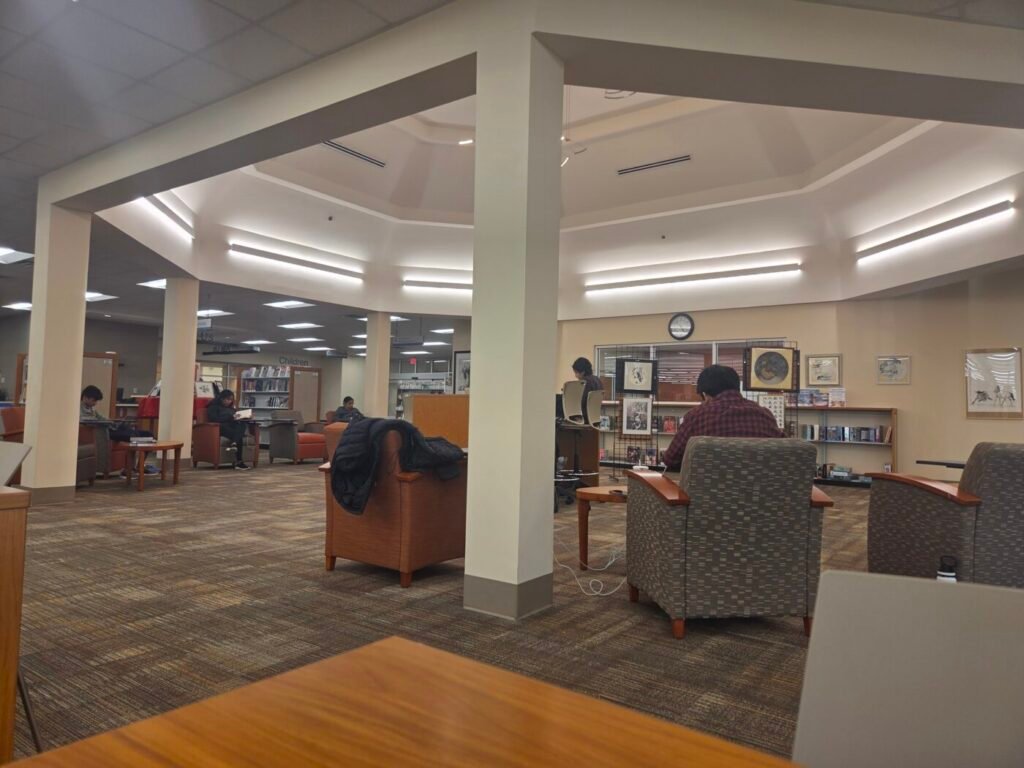
North Atlanta’s school-oriented families, international population, high educational attainment and well-used libraries create a local reading environment that is probably far stronger than Georgia’s statewide standing suggests. A reader in Johns Creek may share more habits with readers in other highly educated suburbs than with the average resident elsewhere in the state.
Georgia’s low ranking is real, but it is not the whole story. It tells us that fiction reading is unusually limited across the state. It does not tell us that Georgians dislike books, that nonfiction is similarly weak or that every community reads at the same rate. Here in North Atlanta, the evidence points toward a place where books remain very much in circulation—even if the state around it is not reading nearly as much fiction as the country does.
If this felt close to home, these stories may be worth your time too.
Community Voice
A snapshot of reader views, not a scientific survey.
Explore Community Voice →About the Author


In North Atlanta
Fulton Opens North Fulton School Closure Review; First Forum Is Oct. 7
North Fulton School Closures Could Take Effect No Earlier Than August 2028
Forsyth Opens School Transfer Window; 12 Campuses Near Capacity

Gwinnett Families Have Until Thursday to Review 51 Course Standards

North Atlanta’s New School Phone Rules: What Parents Need to Know This Fall
The College Enrollment Cliff Is Coming. North Atlanta May Feel It Differently
IN NORTH ATLANTA