A Full Trader Joe’s Lot Says Something About How Johns Creek Shops Now
Trader Joe’s opening in Johns Creek has changed local grocery shopping. Shoppers now visit multiple stores, each for different needs like savings, quality, or convenience. Kroger, Publix, Aldi, Lidl, Sprouts, and Whole Foods all play unique roles in the community’s diverse shopping habits.
Get major local stories and development updates.
The opening-week scene at Trader Joe’s in Johns Creek had all the subtlety of a school carpool line after a thunderstorm. The parking lot at Medley was packed. A nearby Kroger lot, by comparison, looked calm enough to host a defensive-driving class.
That was enough to start the local question: did Johns Creek want a change?
The answer is yes, but not in the simple way grocery chains might fear or fans might hope. Trader Joe’s did not arrive in Johns Creek as a Kroger killer, a Publix replacement or an Aldi upgrade. It arrived as one more stop in a suburban grocery circuit that has become surprisingly sophisticated. Around Johns Creek, South Forsyth, Suwanee, Duluth and Peachtree Corners, many households no longer shop at one grocery store. They shop by mission.
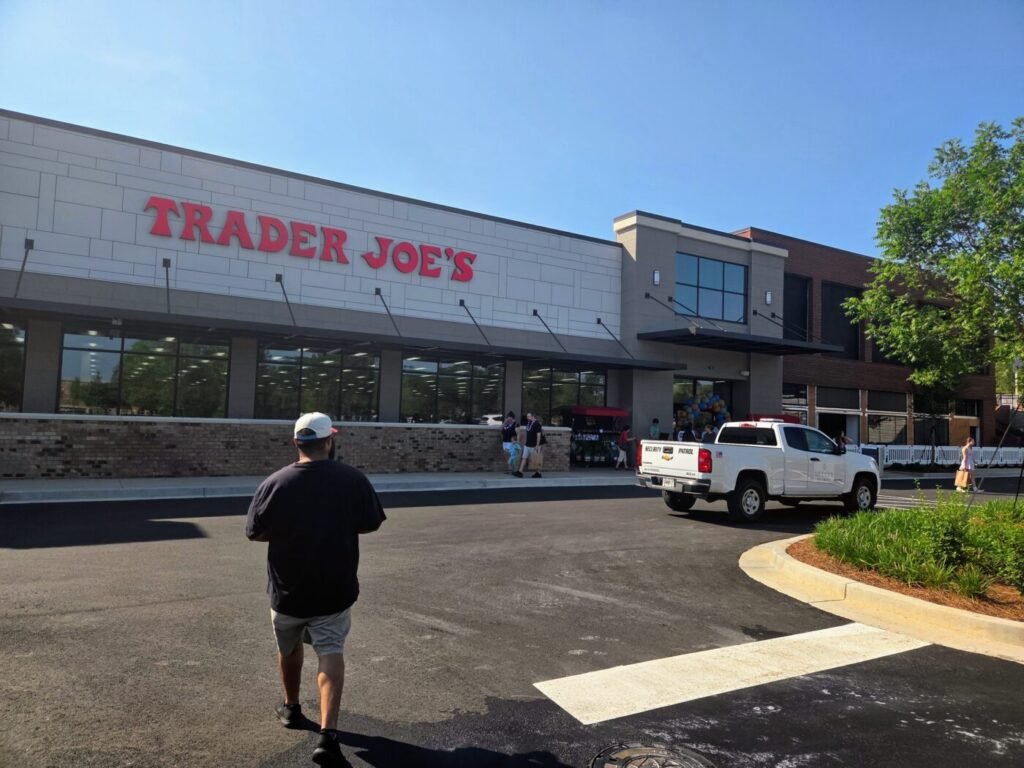
There is the store for fuel points. The store for BOGOs. The store for flowers. The store for the good hummus. The store for paper towels. The store for produce. The store for bread. The store where the employees seem happy to be alive. In North Atlanta, grocery shopping has become less like one errand and more like a weekly strategy session.
Trader Joe’s Wins the Mood
Trader Joe’s has always understood something other grocers sometimes forget: people do not only shop for food. They shop for a feeling.
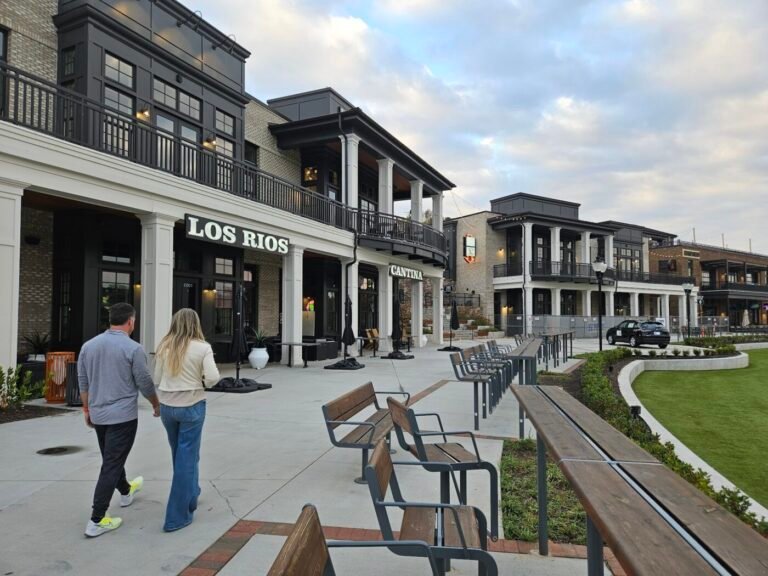
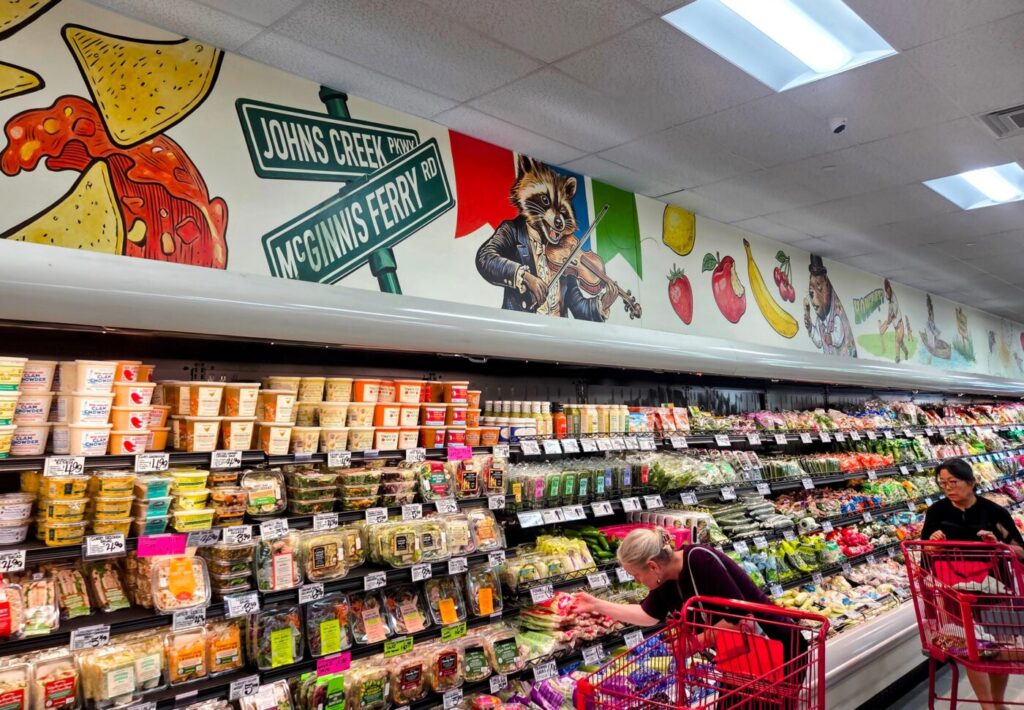
The new Johns Creek store, at Medley near Johns Creek Parkway and McGinnis Ferry Road, lands in a community already rich with grocery options. That makes the opening more interesting, not less. A town with Kroger, Publix, Aldi, Sprouts, Whole Foods nearby, Costco and Sam’s within regional reach, and Lidl just down the Peachtree Parkway corridor does not need another grocery store in the basic sense. It needs a reason to care.
Trader Joe’s gives shoppers a reason. Its stores are smaller, more edited and more cheerful than the average weekly grocery run. You do not go there expecting to find every paper product, soda brand, cereal size and pharmacy item under the sun. You go there because the frozen aisle has personality, the flowers look better than they should for the price, the snacks seem designed by someone with a mischievous streak, and the staff often behaves as if customer service is still part of the job.

That matters in Johns Creek. This is a place where many residents can afford choice but still notice price. The local enthusiasm around Trader Joe’s is not only about status or novelty. It is about the rare grocery trip that feels smaller, faster and less punishing than the big-cart march through a conventional supermarket.
Trader Joe’s sells groceries, but it also sells relief from grocery shopping.
Kroger Still Owns the Practical Run
The mistake would be to read a full Trader Joe’s lot and a quieter Kroger lot as a simple transfer of loyalty. Kroger is not built to be charming. It is built to be useful.
That usefulness is easy to underestimate. Kroger remains the practical backbone for many households: national brands, pantry staples, pharmacy, household supplies, meat, cereal, snacks, paper goods, cleaning products and the fuel points that can turn a grocery bill into a cheaper tank of gas. That last piece is not small in a driving suburb. In Johns Creek and South Forsyth, where daily life is measured in school runs, office commutes, sports practices and weekend drives, grocery loyalty can be decided at the pump.
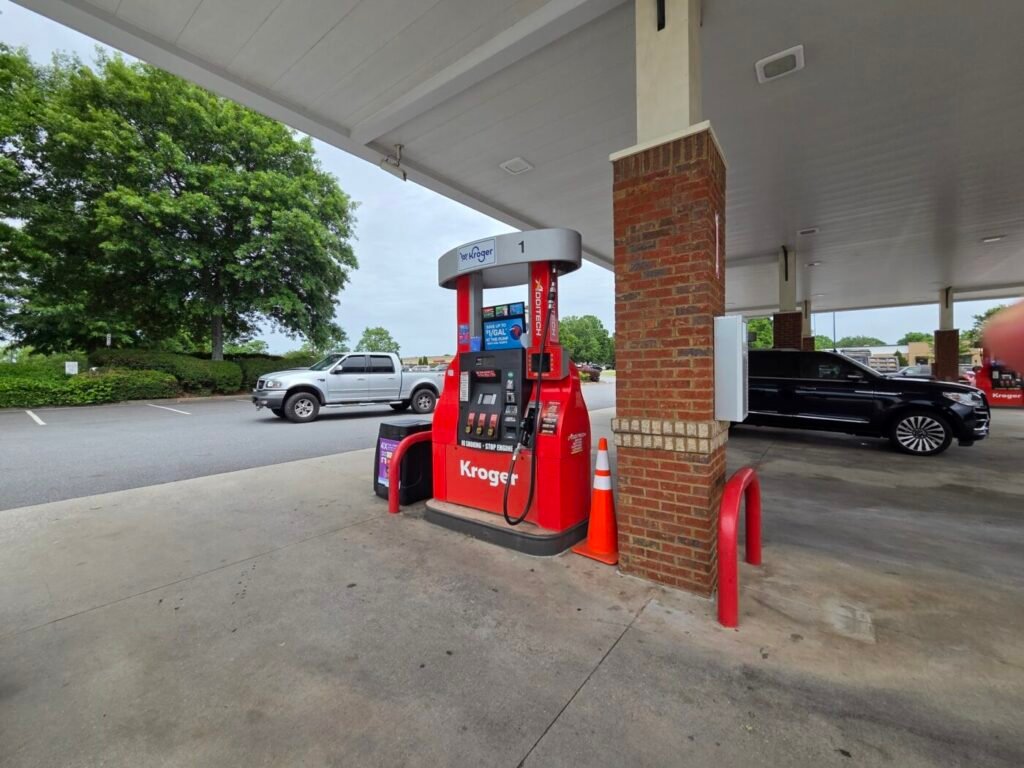
Kroger’s role is not to delight. It is to complete the list.
That is why even residents who complain about Kroger often keep going. A full-size supermarket does the unglamorous work of suburban life. Nobody writes love letters to the aisle with aluminum foil, trash bags and family-size cereal. But someone still has to buy them.
Trader Joe’s may win the emotional trip. Kroger still wins the operational one.
Publix Keeps the Trust Lane
Publix occupies a different place in the local imagination. It is the familiar, steady option, the one many shoppers criticize for price and still visit for convenience, deli, bakery, prepared foods and BOGOs.
In North Atlanta, Publix has a powerful advantage: habit wrapped in comfort. The stores are usually clean. The shopping experience feels organized. The deli has cultural weight far beyond what a deli should have. The BOGO signs have trained generations of suburban shoppers to think in pairs.

Publix does not have to be the cheapest store to remain important. It is the place people use when they want the grocery trip to go smoothly. For some households, that is worth paying for. For others, it becomes a selective stop: Publix for a sale, a sub, bakery items, a prepared dinner or the one thing they trust Publix to do better.
That makes Publix less vulnerable to Trader Joe’s than it may appear. The two chains do not really compete trip for trip. Trader Joe’s is a basket. Publix is a household system.
Aldi and Lidl Make the Story More Honest
The arrival of Trader Joe’s could be misread as another sign of affluent suburbs chasing boutique retail. But the local conversation tells a more complicated story. Many of the same shoppers praising Trader Joe’s also talk openly about Aldi and Lidl.
That is the real Johns Creek grocery story.
Aldi has become a regular part of the suburban budget conversation. It is not glamorous. It is not always consistent. Shoppers may debate the produce, the checkout experience or the quality of certain store brands. But Aldi has earned a place because it saves real money on dairy, pantry goods, snacks, canned items, meats and weekly basics.
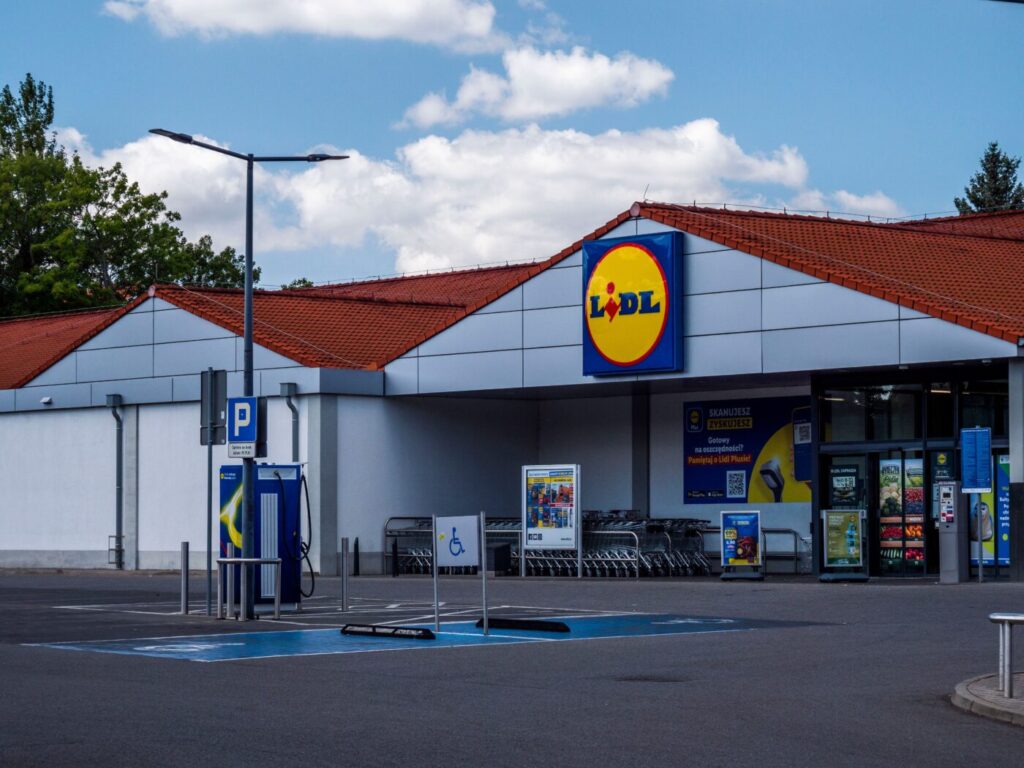
Lidl plays a slightly different role. It has a European feel, strong bakery appeal, imported products, cheeses, breads and the kind of aisle surprises that make a quick stop turn into a longer look. In the Peachtree Parkway corridor, Lidl is not just a discount store. It is a bakery run, a cheese run, a frozen-food run and sometimes a “how is this so cheap?” run.
Together, Aldi and Lidl complicate the idea that North Atlanta shoppers are simply trading up. They are not. They are trading around.
A family might buy flowers and frozen dinners at Trader Joe’s, milk and snacks at Aldi, bread at Lidl, produce at Sprouts, paper goods at Kroger, and BOGOs at Publix. That is not brand disloyalty. It is modern suburban competence.
The Family Connection Behind Aldi and Trader Joe’s
One reason Aldi and Trader Joe’s feel like distant cousins is that, in a way, they are.
Both trace back to the Albrecht family of Germany, where brothers Karl and Theo Albrecht built Aldi into one of the most influential discount grocery businesses in the world. In 1960, the brothers amicably split Aldi in half after a disagreement over whether the stores should sell cigarettes. Theo wanted to sell them. Karl worried they would attract shoplifters.
That small retail disagreement created a grocery family tree that still reaches into American suburbs today. The Aldi stores most shoppers know in Georgia are part of the Aldi Süd side. Trader Joe’s, meanwhile, belongs to the Aldi Nord side, which bought the California-born chain in 1979.
The Aldi story later took a darker and stranger turn. In 1971, Theo Albrecht was kidnapped in Germany and held for 17 days before being released after a ransom payment of 7 million Deutsche marks. In a detail that almost sounds invented by someone trying to explain Aldi’s culture of cost control, Albrecht later sought to treat the ransom as a business expense for tax purposes. The episode helped deepen the family’s reputation for secrecy and extreme privacy.

So when a Johns Creek shopper compares Aldi and Trader Joe’s, they are not imagining the family resemblance. Both brands share a heritage of small stores, private-label products, tight operations and a quiet suspicion that a grocery store does not need 47 kinds of ketchup to be useful.
But the personalities diverged. Aldi became the disciplined sibling: low prices, fast checkout, limited selection, bring-your-own-bag efficiency and a quarter for the cart. Trader Joe’s became the charming sibling: Hawaiian shirts, frozen orange chicken, flowers, seasonal snacks and employees who seem oddly happy to help you locate a jar of something called Cowboy Caviar.
In North Atlanta, that family split plays out almost perfectly. Aldi is where shoppers go to keep the grocery bill under control. Trader Joe’s is where they go to make the grocery trip feel less like a chore. Same roots, different branches, different baskets.
Sprouts and Whole Foods Own the Health Basket
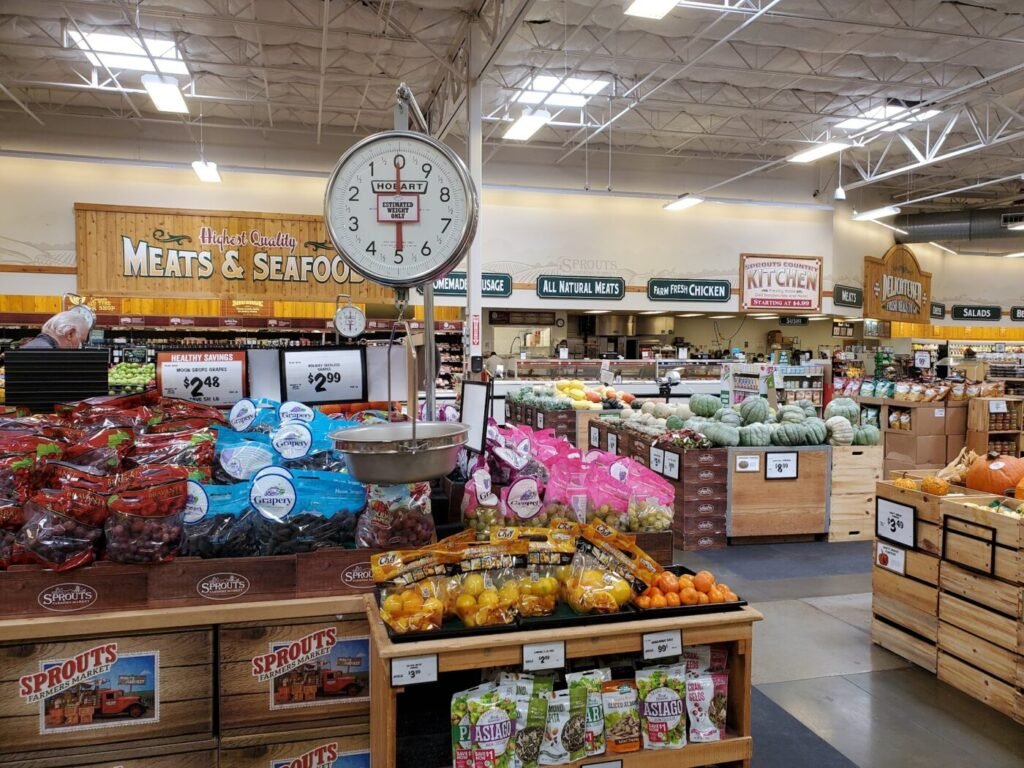
Sprouts has its own lane in this ecosystem: produce, health-focused foods, vitamins, bulk items, gluten-free, dairy-free and the kind of shopping that feels closer to wellness than stocking the pantry. It is not always the cheapest full-cart option, but it has a clear reason to exist.
Whole Foods, meanwhile, remains a signal of specialty shopping. It can be expensive, and everyone knows it. Yet when a Whole Foods is packed, it says something about the local market. North Atlanta shoppers may complain about prices, but they will pay when the product, convenience or atmosphere feels worth it.
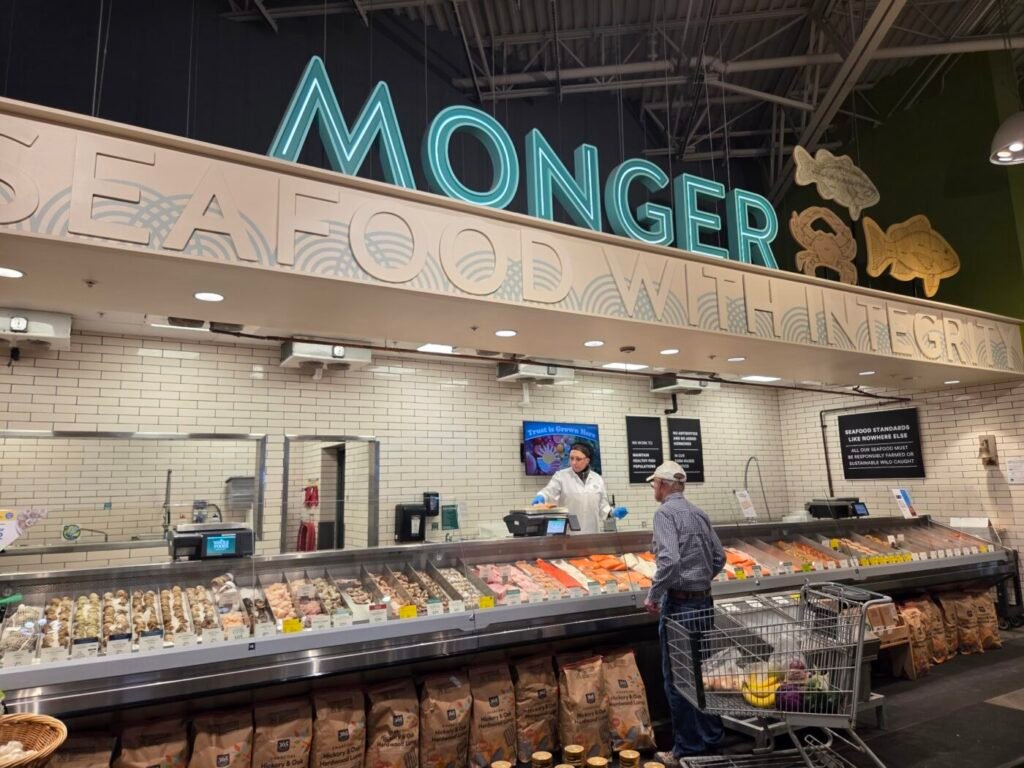
That is the balance Trader Joe’s now enters. This is not a low-price-only market. It is not a luxury-only market. It is a choice market. Residents want savings, quality, service, convenience and a little pleasure. Not always in the same store.
The Winner Is the Rotation
So who wins the Johns Creek grocery contest?
Trader Joe’s wins the fun trip. Kroger wins the practical trip. Publix wins the trusted trip. Aldi wins the savings trip. Lidl wins the bakery-and-deals trip. Sprouts wins the produce-and-health trip. Whole Foods wins the specialty trip. Costco and Sam’s win the bulk trip.
The shopper wins by refusing to choose only one.
If this caught your attention, these stories may too.
About the Author

In North Atlanta

At Read It Again, the Bookstore Comeback Is About Community

Dervish Plans 200-Seat Turkish Restaurant in Johns Creek

What North Atlanta Should Know Today. Friday, Sept. 11, 2026
Medley Job Fair Looks to Fill 300 Positions Ahead of Johns Creek Opening

Johns Creek Native to Lead Medley’s Concierge Team Ahead of October Opening

Johns Creek’s New Boardwalk Earns a State Award Before Its First Fall Season
IN NORTH ATLANTA