Gas Prices Expected to Stay High. Here’s How North Atlanta Drivers Can Adjust
Gas prices in North Atlanta are rising and expected to stay elevated. Drivers find savings by using fuel apps combined with local station knowledge and timing fill-ups earlier in the week.
Get major local stories and development updates.
Rising tension and supply pressures in the Gulf are keeping global fuel prices elevated, and analysts expect that to continue. Europe is already seeing steeper costs, and parts of Asia even more so. The takeaway is becoming clear: this is not a short spike, but a new baseline.
For drivers in North Atlanta, the shift is less about waiting for prices to drop and more about adjusting for the long haul. Here is a practical local guide to help you do that.
Start With the Apps—but Don’t Stop There
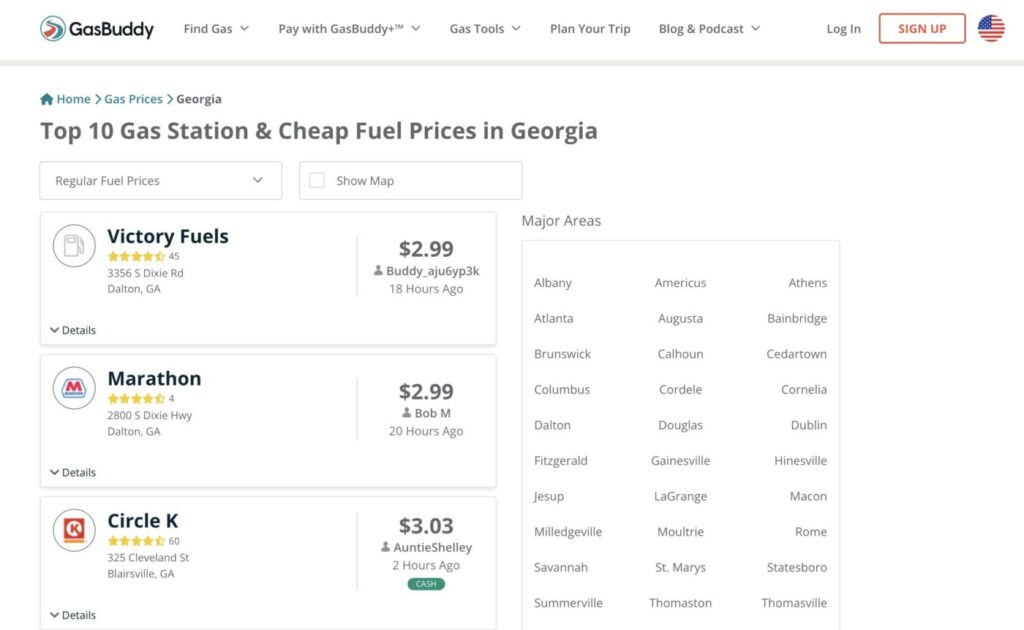
Most people begin with apps like GasBuddy, Waze, or even Google Maps. They are useful, especially for a quick scan before heading out. GasBuddy is still the most reliable for price comparisons, particularly if you sort by “recent updates.” Waze helps when you are already driving and want to adjust your route.
But here is the local reality: prices change quickly, and not every listing is up to date. That is why experienced drivers in Alpharetta, Johns Creek, and Cumming often combine apps with a mental map of “usual suspects.”
The Reliable Low-Price Spots
Warehouse clubs and grocery fuel centers are often where the lowest prices cluster.
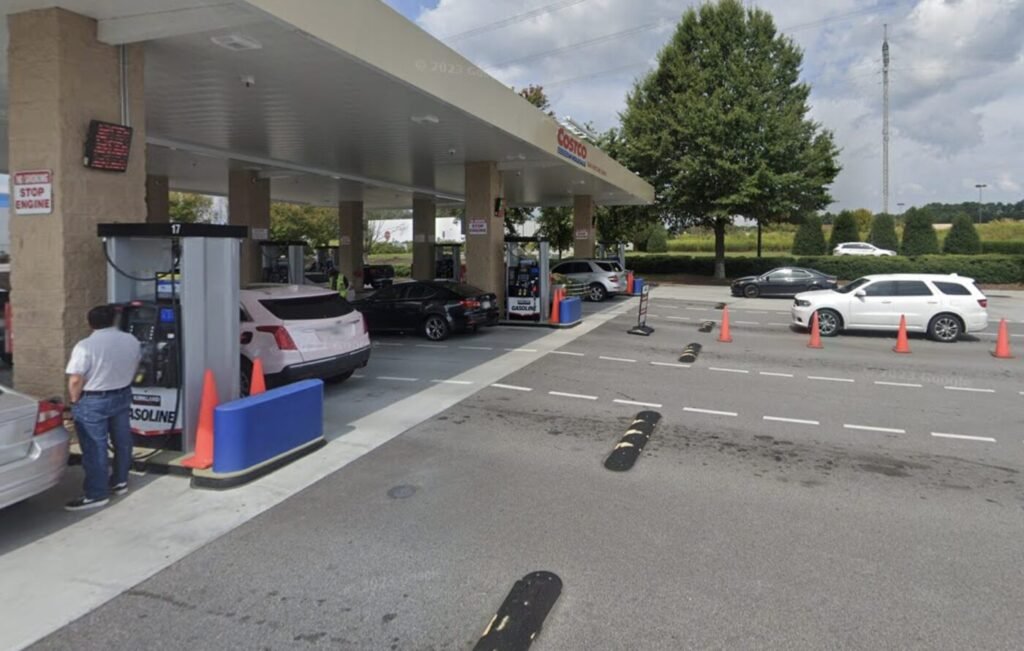
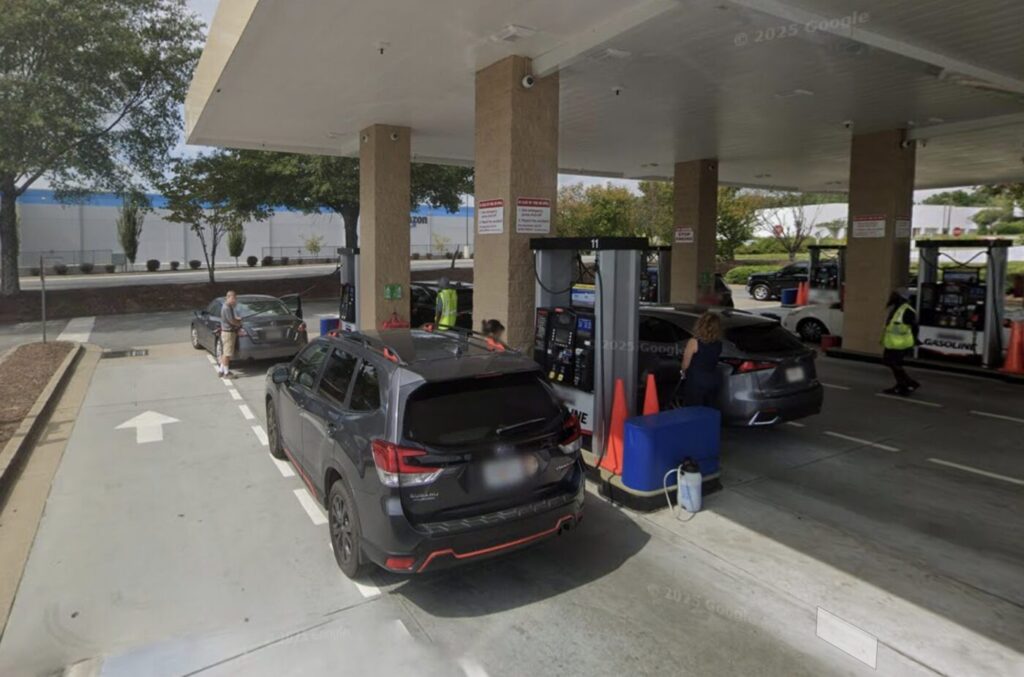
Take the Costco on Bald Ridge Marina Road in Cumming (1211 Bald Ridge Marina Rd). If you have a membership, this is one of the most consistently low-priced stations in South Forsyth. Lines can build on weekends, but the savings usually hold.
A similar pattern shows up at the Costco on Venture Drive in Duluth (3980 Venture Dr). This one tends to draw drivers from Johns Creek and Suwanee, and prices here often undercut nearby stations by a noticeable margin.
Kroger Fuel Centers are another steady option, especially if you use their rewards program. The station at Kroger Fuel Center is one many locals pass daily without thinking—but it often sits just below surrounding prices, particularly if you stack fuel points.
Further north, Kroger Fuel Center tends to follow the same pattern, especially during midweek price dips.
QuikTrip and RaceTrac locations also compete aggressively. Stations along Peachtree Parkway—especially near the stretch between Johns Creek and Duluth—often move prices quickly to stay competitive, so it is worth checking two or three within a short drive.
Places That Tend to Be Higher
There are also areas where prices are almost always elevated.
Stations right off GA-400 Exit 10 and GA-400 Exit 13—especially near retail clusters like Halcyon or Avalon—are convenient, but that convenience is built into the price.
The same goes for stations close to major shopping hubs like The Forum on Peachtree Parkway. These are easy stops when you are already out, but rarely the cheapest.
In general, if a station is right at a highway exit or next to a major destination we all recognize, it is worth driving just a few minutes further. Often, that is where the real savings begin.
Why Two Stations Across the Street Can Have Different Prices
Location, location, location.
Stations that sit on the “easy turn-in” side of a busy road—especially during rush hour—often price slightly higher. They capture drivers who want the quickest stop without crossing traffic. On the opposite side, where access is less convenient, prices tend to be more competitive.
Brand strategy also plays a role. Some national chains maintain tighter pricing structures, while independently operated stations have more flexibility to undercut nearby competitors.
You can see this along Medlock Bridge Road and State Bridge Road in Johns Creek, where opposing corners sometimes show a gap of 10 cents or more. The difference is not random—it reflects how each location fits into traffic flow and driver behavior.
Once you start noticing it, it becomes easier to understand why the lowest price is not always where you first expect it.
Best Times of the Week to Fill Up in North Atlanta
Prices in North Atlanta do not just vary by location—they shift throughout the week in ways that regular drivers start to notice over time. While there is no perfect formula, a few patterns tend to repeat.
Early in the week, especially Monday and Tuesday, is often when prices are at their most stable. Stations have usually adjusted after the weekend, and before the next round of changes begins. If you are planning ahead, this is often the safest window to fill up without overpaying.
By Wednesday or Thursday, prices can start to move. Sometimes they dip slightly as stations compete with each other, especially along busy corridors like Peachtree Parkway or near major intersections in Alpharetta and Johns Creek. Other times, they begin to climb in anticipation of the weekend.
Friday through Sunday is typically the most expensive stretch. With more people on the road—running errands, heading out of town, or simply moving through a busier schedule—stations have less incentive to keep prices low. The difference is not always dramatic, but it is consistent enough to notice over time.
Time of day can also play a small role. Prices are often updated in the morning, so checking late morning or early afternoon can sometimes reveal a recent drop. By evening, the advantage may already be gone.
None of this is exact, but taken together, it creates a simple rhythm. Fill up early in the week when you can, stay aware of midweek dips, and try to avoid last-minute weekend stops unless necessary. Over time, those small adjustments tend to add up.
Membership Perks That Quietly Lower Your Cost Per Gallon
Beyond where and when you fill up, how you pay can make a meaningful difference. Many drivers already carry access to fuel discounts without actively using them. Credit card programs, in particular, can reduce the final price in ways that do not show on the station sign.
For military families and veterans, certain cards linked to programs like USAA offer recurring discounts at specific brands, including Shell and Murphy USA locations. These savings are applied at the transaction level, not the pump, which is why they are easy to overlook.
Grocery-linked programs also extend further than many realize. Fuel points are not just occasional bonuses—they can be built steadily through routine shopping and redeemed strategically for larger discounts. Drivers who plan their redemptions instead of using them casually tend to see the biggest impact over time.
The effect is subtle on any single visit, but across a month, these layers can shift the overall cost more than chasing small price differences between stations.
If this caught your attention, these stories may too.
About the Author


In North Atlanta

What North Atlanta Should Know Today. Friday, Sept. 11, 2026
North Atlanta Courthouse Wedding Price Check: A Legal Marriage Can Start at $16

North Atlanta unemployment fell in July — but employment slipped in several communities
Why Sardines Are Disappearing From Some North Atlanta Shelves
What North Atlanta Should Know Today
Suwanee’s Winton Machine Heads to Washington With $400,000 on the Line
IN NORTH ATLANTA