Why North Point Mall May Be the Future of Suburban Development—Not the Past
Get major local stories and development updates.
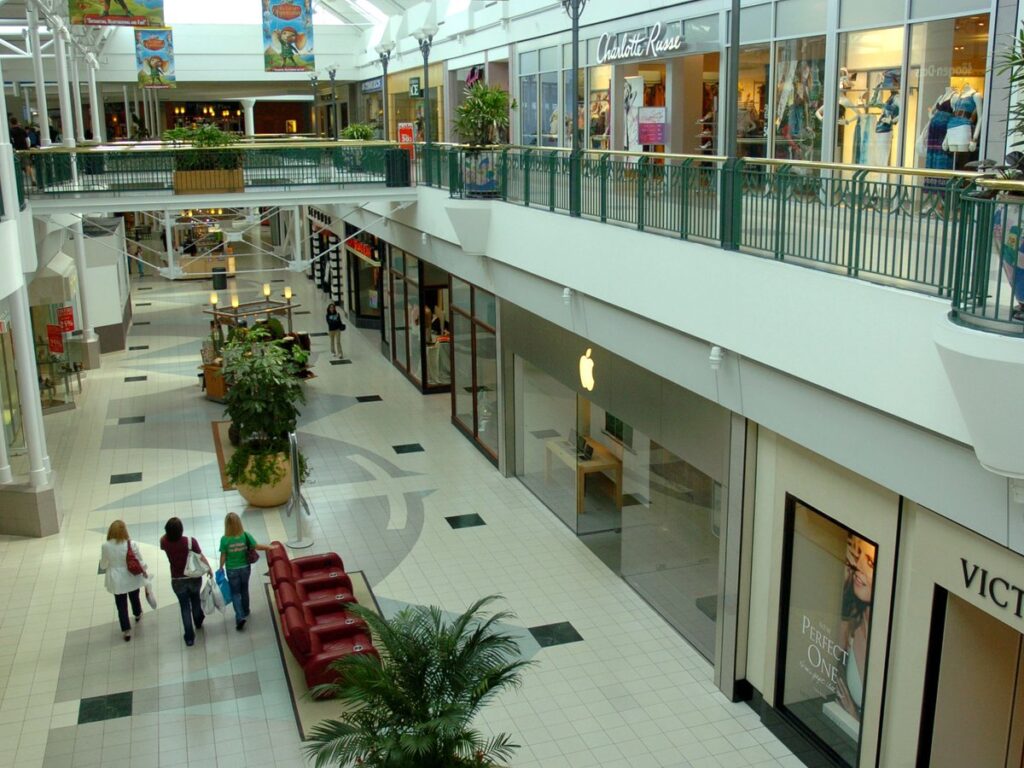
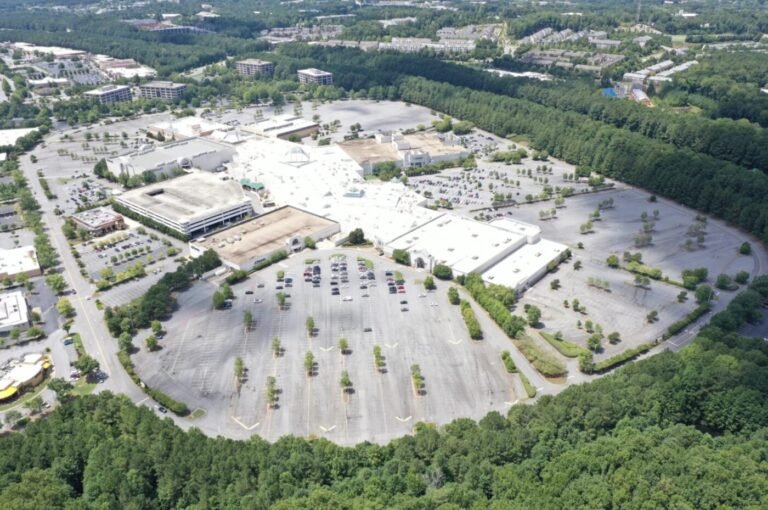
The national narrative around malls tends to follow a familiar script—empty storefronts, declining traffic, eventual closure. But North Point doesn’t fit that pattern. The property still draws more than 3 million visitors a year, a level of activity that would be considered healthy in many retail markets.
That’s exactly what makes this moment different. The mall is not being replaced because it failed. It is being reconsidered because of what the land beneath it has become.
Opened in 1993, the 1.3 million-square-foot complex helped define Alpharetta’s rise into a major suburban destination. For many longtime residents, it was once the center of local life—a place where shopping, dining, and weekend routines all converged. Today, it remains active, but no longer dominant.

From retail centers to “places”
Across metro Atlanta, a clear pattern has emerged. Traditional retail centers are being reshaped into something broader—places where people live, work, and spend time, not just shop.
At Ponce City Market, an industrial building became a dense mix of offices, residences, and public gathering spaces. At Avalon, retail was only one layer of a walkable district that blends housing, corporate offices, and entertainment.
Even established retail hubs like Lenox Square have moved in that direction, adding hotels and mixed-use elements to stay relevant in a changing landscape. The shift is not subtle. Retail is no longer the anchor—it is part of a larger system.
A site too valuable to stay the same
North Point sits along one of the most strategic corridors in the region, near GA-400, where growth, traffic, and demand continue to accelerate. That positioning changes the economics entirely.
The property is currently owned by New York Life, which acquired it in 2021 following pandemic-era financial pressure. Since then, ownership has been working toward a large-scale redevelopment vision that reflects how suburban land is now being used.
To move that forward, the firm brought in Jamestown—known for projects like Ponce City Market and its involvement with Avalon—to manage the property and help guide its next phase.
What could replace it
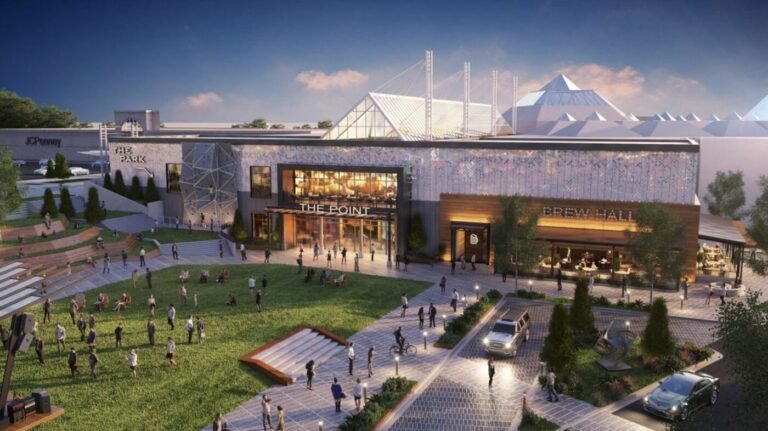
Plans being explored include a dense mix of residential units, office space, hotel rooms, and a reconfigured retail environment, all organized into a more walkable, district-style layout. The concept also includes a large arena that could potentially anchor the site as a regional entertainment destination.

That arena has drawn attention because of its possible connection to a future NHL franchise, though no team is guaranteed and the financial hurdles are significant. A separate proposal in South Forsyth is pursuing a similar opportunity, adding a layer of regional competition.
Still, the sports component is only part of the picture. Even without it, the direction is clear: more density, more uses, more reasons to be there beyond shopping.
The in-between moment
One of the most unusual aspects of North Point’s situation is that the transition has already begun—without the mall actually closing. A rezoning application has been filed, but the approval process alone is expected to take time, followed by phased development that could stretch over several years. In the meantime, the mall continues to operate, with active tenants, events, and daily foot traffic.
There are signs of change. Some tenants report lower traffic than in peak years, and the closure of the Sears anchor in 2018 marked a turning point. But the property has not hollowed out in the way many aging malls have.
Not an ending, but a transition
What comes next will likely look less like a traditional mall and more like a district—closer in spirit to Avalon than to the enclosed shopping centers of the 1990s. But the transition will be gradual, shaped by approvals, investment, and market demand.
For now, the escalators are still running. The storefronts are still open. And the site continues to do what it has done for more than thirty years—bring people together in one place. What changes next is not whether it survives, but what it becomes.
If you’ve been following growth and change around here, these stories are worth a look too.
About the Author

In North Atlanta
North Point Redevelopment Will Not Move Forward Without NHL Team, Jamestown Says
Alpharetta’s NHL Arena Study Forecasts 1.2 Million Visitors—but Leaves Key Questions Unanswered
ANDRITZ Is Hiring Engineers and Project Leaders in Alpharetta
Old Milton Parkway Widening Will Reshape Avalon Corridor Through 2029
North Atlanta’s NHL Race Is No Longer Just Alpharetta vs. South Forsyth
ADP Opens New Alpharetta Roles in AI Content, Product Strategy and Internships
IN NORTH ATLANTA