Woodstock Moves Forward With Pedestrian Plaza Plan on Elm Street
Get major local stories and development updates.
A stretch of Elm Street in downtown Woodstock has been closed to traffic, but the change is less about disruption and more about direction. City officials are moving ahead with a pedestrian plaza project they describe as transformational, part of a broader effort to reshape how people move through and experience the city’s downtown.
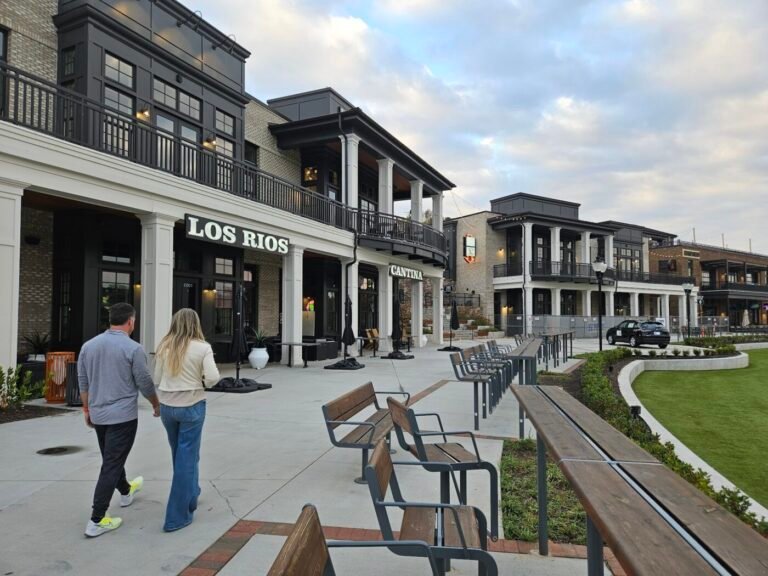
The project centers on turning Elm Street into a pedestrian-first space, with plans that include pavers, seating areas, lighting, and public art. The goal is not simply to beautify the corridor, but to create a place where people naturally gather rather than pass through.
City leaders say the idea has been under discussion for some time, but recent grant funding accelerated the timeline and allowed work to begin earlier this month. The initial closure is already changing how residents interact with the area, with pedestrians using the space more freely and businesses watching closely as foot traffic patterns evolve.
A Downtown Adapting to Growth
Woodstock’s population has been rising steadily, growing from just over 35,000 residents in 2020 to more than 39,000 by mid-2024. That pace of growth is part of a wider shift across the northern suburbs, where cities like Alpharetta and Roswell continue to attract new residents and investment.
With that growth comes pressure on infrastructure and public space. In Woodstock, the response has been to rethink the role of downtown streets—not just as corridors for cars, but as destinations in their own right.
Local residents have already begun to treat the closed section of Elm Street as an extension of the downtown environment. The absence of traffic has made it easier to move between shops, restaurants, and public spaces, reinforcing the city’s push toward a more walkable core.
Linking Parking to Place
A key piece of the project is its connection to a recently completed parking deck across the street, which provides more than 600 free parking spaces. The pedestrian plaza is expected to serve as a direct gateway, guiding visitors from parking into the heart of downtown.
This kind of integration reflects a broader trend seen across North Fulton and South Forsyth, where newer developments are increasingly designed to balance accessibility with walkability. Rather than prioritizing one over the other, projects are attempting to connect the two.
Business and Community Response
Nearby business owners are watching the project with cautious optimism. For many, increased pedestrian activity is expected to translate into longer visits and more consistent foot traffic, particularly during weekends and evening hours.
There is also a strong safety component. With heavy foot traffic already common in downtown Woodstock, reducing vehicle flow in key areas is seen as a way to create a more comfortable environment for families and visitors.
At the same time, the city is emphasizing that the project is still evolving. Once the initial phase is completed, the next step will involve design development shaped by public input, giving residents a role in defining how the space ultimately looks and functions.
A Model Taking Shape
Projects like this are becoming more common as suburban downtowns continue to evolve. What was once a car-oriented layout is gradually shifting toward something more balanced—part transportation network, part public gathering space.
In Woodstock, the Elm Street plaza represents that shift in a visible way. It is a signal that growth is not only about adding residents or buildings, but also about redefining how space is used day to day.
For readers in Johns Creek, Alpharetta, and across South Forsyth, the project offers a glimpse of where similar suburban centers may be heading next.
Read Also:
About the Author

In North Atlanta
Roswell Approves Champions Place Expansion for Adults With Physical Disabilities
Roswell Pulls Back Property Tax Proposal, but Higher Rate Remains on Table

Roswell Area Park Pond Reopens After $3.1 Million Restoration
South Forsyth Roads and Development Take Center Stage at Forsyth County Meeting
What North Atlanta Should Know Today
Suwanee’s Winton Machine Heads to Washington With $400,000 on the Line
IN NORTH ATLANTA