The Value Question: Why Some North Atlanta Residents Are Looking Elsewhere

Get major local stories and development updates.
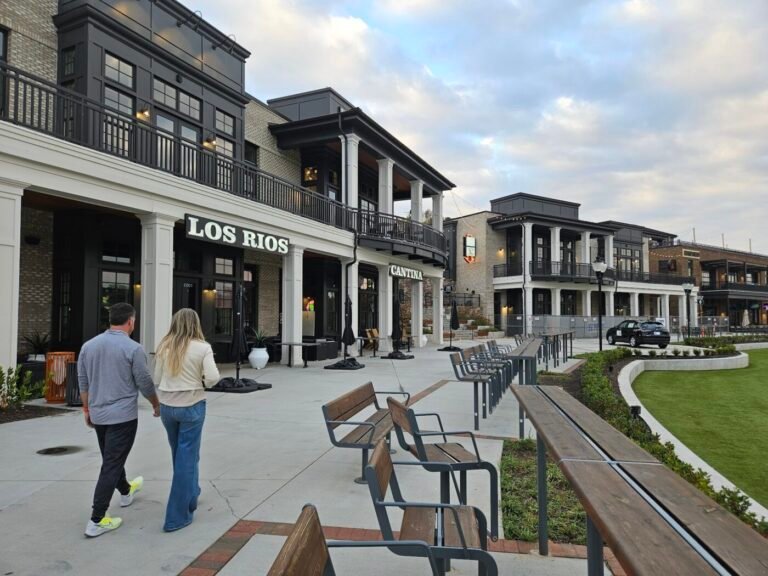
On a Saturday morning in Roswell, the sidewalks still fill with people heading toward Canton Street, coffee in hand. But the faces, more and more, are changing—not because the area is losing its appeal, but because residents are beginning to make more calculated decisions about where their lives make the most sense.
What’s unfolding across North Fulton and South Forsyth isn’t a simple story of people leaving. It’s a shift in mindset. For years, communities like Johns Creek, Alpharetta, and Milton represented a clear destination—top schools, strong property values, and a high quality of life. Now, that same success has introduced a new layer of pressure, pushing some residents to reconsider whether staying still offers the same value it once did.
A Different Kind of Migration
Georgia remains one of the country’s growth leaders, still attracting new residents from across the United States. But alongside that growth, a quieter countercurrent has emerged. More households are choosing to leave—not out of dissatisfaction, but as part of a broader strategy.
Some are heading to Texas, particularly the Dallas–Fort Worth area, drawn by the absence of state income tax and the promise of more space for the money. Others continue toward Florida, especially retirees looking to convert home equity into a more relaxed lifestyle. Still, even that traditional destination has become more complicated as insurance and housing costs rise.
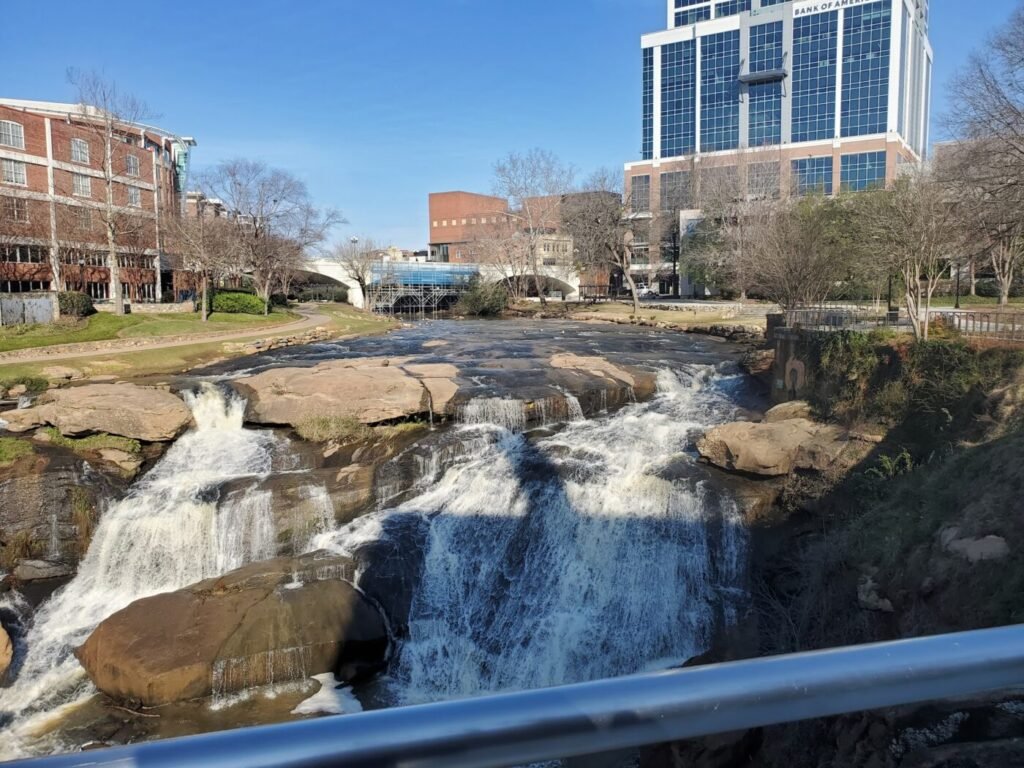
The Carolinas have stepped into that gap. Cities like Greenville, Myrtle Beach, Charlotte, and Raleigh are increasingly attractive for families who want a balance—lower costs than North Atlanta, but a similar pace of life and access to jobs. These “in-between” destinations are becoming one of the most important migration patterns shaping the region today.
Who Is Leaving—and Why
The profile of those moving away is not uniform, but it follows a few clear patterns.
Millennials, now in their prime homebuying years, are facing a market that has become significantly more competitive. In areas like Johns Creek, where median home prices have climbed toward the upper $700,000 range, many families are finding that the equation simply no longer works.
For Baby Boomers, the decision often looks different. Many have built substantial equity over decades. Selling a home in Milton or Alpharetta can unlock the kind of financial flexibility that makes relocation appealing—whether that means a coastal retirement in Florida or a quieter community in South Carolina.
Even younger residents are beginning to shape the trend. Gen Z professionals, early in their careers, are more mobile and often prioritize affordability and walkability. Some are choosing emerging tech hubs outside Georgia where entry-level housing is more accessible.
What connects all of these groups is not a shared destination, but a shared calculation: what does a dollar buy here, and what could it buy somewhere else?
The Cost Equation Is Changing
At the center of this shift is housing. Rising home prices are only part of the story. Regulatory costs—everything from zoning restrictions to development fees—can account for a significant portion of the final price of a new home. The result is a tighter supply and higher barriers to entry, especially for younger buyers.
At the same time, property taxes have climbed alongside home values, offsetting some of the benefits of Georgia’s gradual income tax reductions. For many households, the combined effect creates a sense that staying requires more financial stretch than it once did.
The rental market tells a similar story. The loss of tens of thousands of affordable units in recent years has made it harder for workers to live near where they work. In some of the region’s most successful suburbs, that has begun to reshape the local workforce itself.
Explainer
This shift is largely the result of rising costs colliding with limited supply. As property values climbed across North Atlanta, so did property taxes, insurance, and maintenance costs—expenses that landlords often pass on to tenants. At the same time, fewer new units are being built at lower price points, partly because development regulations, land costs, and construction expenses make affordable projects harder to justify financially.
Many older, lower-cost rentals have also been renovated or replaced with higher-end housing, further shrinking the affordable pool. The result is a tightening market where service workers, teachers, and younger professionals increasingly find themselves priced out of the communities they work in, forcing longer commutes or relocation—and gradually altering the makeup of the local workforce.
Stay vs. Move: The Math for a Johns Creek Homeowner Considering the Carolinas
Consider a typical scenario: a homeowner in Johns Creek with a property valued around $750,000. Selling that home—often with significant built-up equity—can unlock a very different financial picture in parts of North or South Carolina.
In the Raleigh or Greenville areas, a comparable single-family home might fall closer to the $450,000 to $550,000 range, depending on neighborhood and size. That difference alone can free up $200,000 or more in equity, either reducing a mortgage dramatically or allowing a cash purchase with funds left over. Monthly payments, even with today’s interest rates, often come down meaningfully.
Property taxes also tend to be lower in many Carolina markets, and in some cases, overall cost of living—from insurance to utilities—leans slightly more favorable. For a household still working remotely, the equation becomes even clearer: the same income, paired with lower fixed costs, translates directly into more flexibility.
But the calculation isn’t purely financial. Staying in Johns Creek still offers proximity to established networks—schools, healthcare systems, cultural familiarity, and a level of stability that newer markets may take time to replicate. Commute patterns, airport access, and long-term property appreciation also factor into the decision.
What makes this moment different is that both paths are viable. A homeowner can stay and hold a high-value asset in one of the region’s most established suburbs, or convert that value into immediate financial breathing room elsewhere. Increasingly, the decision comes down to timing—whether to continue riding appreciation here, or to realize it now and redeploy it in a market where the numbers stretch further.
Not Always Leaving—Sometimes Just Moving Outward
Not all movement involves crossing state lines. A significant portion of residents are simply moving further out. Counties like Forsyth, Cherokee, and Dawson have seen rapid growth as families trade proximity for space. Larger homes, lower taxes, and quieter surroundings remain powerful draws.
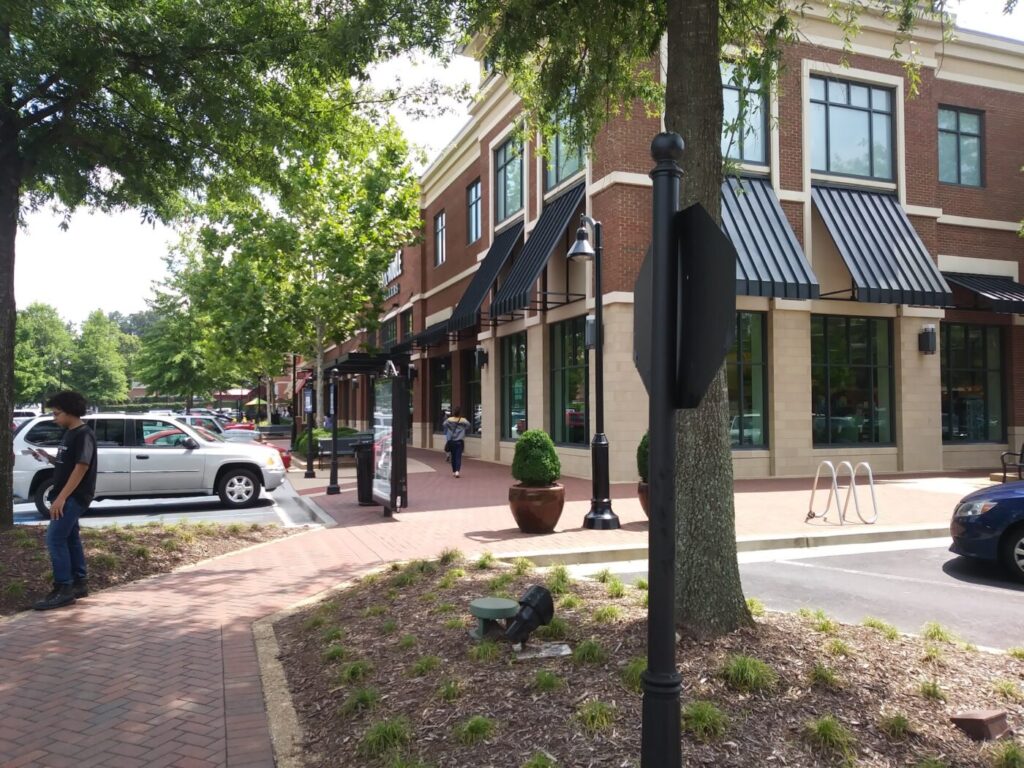
Even within established cities, there’s a subtle reshuffling. Some Milton residents are opting for newer developments that offer a more maintenance-free lifestyle. In Johns Creek, new mixed-use centers and corporate expansions are attracting one group of buyers, while others look toward more affordable nearby cities like Suwanee or Buford.
It’s less an exodus than a rebalancing—people adjusting their position within the same regional map.
A Global Option, Too
For a smaller but growing group, the search for value extends beyond the U.S. Countries like Panama, Mexico, and Portugal are increasingly part of the conversation. Remote work has made it possible for some residents to maintain income while dramatically reducing their cost of living. Others are drawn by lifestyle changes—slower pace, different culture, or more favorable tax structures.
What was once a niche decision has become a more visible option, especially among retirees and remote professionals.
By the Numbers: How Many Are Coming—and How Many Are Leaving
In 2025, Georgia still ranked among the top ten states for inbound migration, meaning more people moved in than out overall. But at the same time, out-migration reached one of its highest recent levels, signaling that the state is no longer experiencing the one-directional influx that defined much of the past decade.
At the national level, moving studies suggest that roughly 55% to 60% of moves involving Georgia are inbound, while about 40% to 45% are outbound. That still places the state in net-positive territory—but the gap has tightened compared to earlier years, when inbound moves dominated more decisively.
Within metro Atlanta, the story becomes even more nuanced. Growth continues, but much of it is shifting outward. Counties on the edge of the region, including Forsyth and Cherokee, have posted some of the fastest growth rates, with places like Dawson County growing by more than 17% between 2020 and 2023. At the same time, some established suburban areas are seeing more residents quietly relocate—either further out, to other states, or occasionally abroad.
Internationally, the trend is smaller but rising. More than 1,200 Americans expatriated in just the first quarter of 2025 alone, reflecting a growing willingness among some households to look beyond the U.S. entirely.
What It Means for North Atlanta
For communities across North Fulton and South Forsyth, these shifts bring both challenges and opportunities.
Growth continues, but it is more selective. Residents are weighing trade-offs more carefully, and the factors that once guaranteed long-term stability—schools, safety, and proximity—are now part of a broader equation that includes cost, flexibility, and lifestyle.
At the same time, new development continues to reshape these areas. Projects like mixed-use centers and corporate expansions are drawing new residents even as others leave. The result is a region that is still growing, but in a more complex and layered way.
The sidewalks in Roswell are still full on Saturday mornings. But behind the scenes, more people are asking the same question: not just where they want to live, but what kind of life they want that place to support.
If you’re tracking where the area is heading, these stories add more context.
About the Author


In North Atlanta
Medley Opens First Access to 133 Townhomes in Johns Creek
What North Atlanta Should Know Today. Friday, Sept. 11, 2026

Dervish Plans 200-Seat Turkish Restaurant in Johns Creek
What North Atlanta Should Know Today. Sunday, Sept. 13, 2026
North Atlanta Added 11,000 Residents, but the Growth Is Concentrated in Three Cities
Medley Job Fair Looks to Fill 300 Positions Ahead of Johns Creek Opening
IN NORTH ATLANTA