 Exclusive sponsor
What the New Georgia Tax Caps Could Mean for Longtime North Atlanta Homeowners
Georgia’s new tax caps limit property tax increases to inflation rates, offering relief for longtime homeowners in North Atlanta suburbs while creating a complex tax system.
Major local stories and useful updates, once a week.
For years, homeowners across Johns Creek, Alpharetta, Milton, Suwanee, and South Forsyth watched their property assessments climb at a pace that often felt disconnected from everyday life.
A family that bought a home twenty years ago suddenly found itself staring at assessment notices showing jumps of 20%, 30%, or more in a single year. Even residents with fully paid-off homes increasingly worried about whether they could realistically afford to remain in the neighborhoods they helped build.
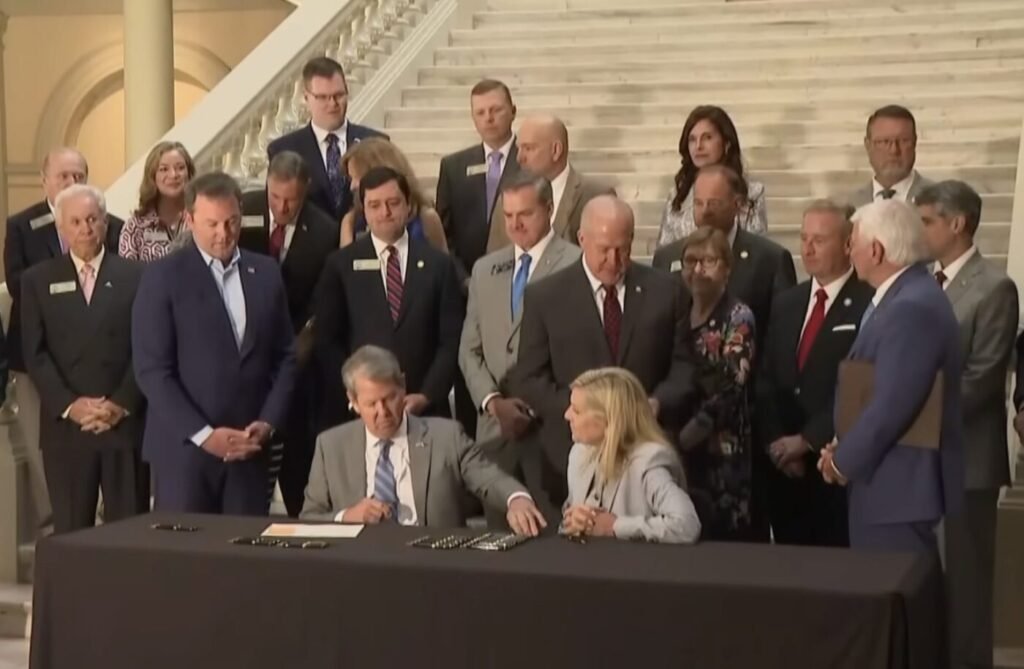
Now Georgia’s new “Save Our Homes” framework — House Bill 581 and its follow-up cleanup legislation, House Bill 92 — is beginning to fundamentally reshape how suburban property taxes work across North Atlanta.
The shift may become one of the most important financial changes local homeowners experience this decade.
The Core Change: Taxes Can No Longer Rise as Fast as Home Prices
The heart of the new law is an inflation-based cap on taxable home values.
Before the legislation, local governments generally taxed homes based on rapidly rising market assessments. During the North Atlanta housing surge, that meant tax bills could climb sharply even when millage rates technically stayed the same.
Under the new system, taxable value growth is now tied largely to inflation instead of pure market appreciation.
In practical terms, if a home in Duluth rises 10% in market value during a year when inflation runs at 3%, the taxable value would generally only be allowed to rise about 3%.
That difference becomes what Georgia now calls a “floating homestead exemption.”
For longtime suburban homeowners, especially retirees or families trying to remain in high-demand areas near GA-400, the savings could compound significantly over time.
Why This Matters So Much in North Fulton and South Forsyth
The law arrives after one of the most aggressive suburban real estate runs in modern Georgia history.
Communities like Johns Creek, Milton, and Alpharetta experienced some of metro Atlanta’s steepest residential appreciation during the post-pandemic housing boom. In some neighborhoods, assessment growth dramatically outpaced income growth.
The result was a growing fear among longtime residents that suburban success itself was becoming financially destabilizing.
The legislation effectively creates a “speed limit” on how quickly taxable values can rise for owner-occupied homes.
But the story becomes more complicated once local governments enter the picture.
Gwinnett and Fulton Took Different Paths
One reason many homeowners remain confused is that Georgia did not impose a fully uniform statewide system.
Instead, counties and school districts were allowed to opt out.
That created a patchwork system across North Atlanta.
In Gwinnett County, officials argued their existing protections were already stronger than the new state law. Gwinnett has long used a Value Offset Exemption system that effectively freezes county taxable value at the level when the homestead exemption was granted.
That means some longtime homeowners in places like Suwanee may actually continue receiving stronger protection under the county’s existing framework than they would under the new state cap.
Fulton County took a different approach.
Fulton leaders moved toward integrating the state protections alongside existing local caps, aiming to maximize whichever benefit is more favorable to homeowners.
The School Funding Debate Is Just Beginning
The largest long-term controversy surrounding the law may not involve homeowners directly at all.
It may involve schools.
Public school systems across Georgia rely heavily on property taxes to fund operations, staffing, transportation, and classroom expansion.
District leaders warned that strict caps on taxable value growth could eventually reduce future revenue growth significantly.
Gwinnett County Public Schools estimated the cap could reduce revenue growth by tens of millions of dollars annually over time.
That concern drove many Georgia school districts to opt out of the statewide cap structure altogether.
In Forsyth County, the situation differs slightly because the district already operates under a separate local tax cap structure with its own rules and expiration timeline.
The result is a growing reality where homeowners may face one tax system for county or city taxes and another for school taxes.
The Bigger Shift: Georgia Is Moving Toward Consumption Taxes
Another major but less discussed part of the legislation involves a potential shift away from property taxes and toward sales taxes.
The law authorizes a new mechanism called FLOST — the Floating Local Option Sales Tax.
The idea is straightforward: local governments could raise sales taxes slightly and use that revenue to reduce property tax pressure.
Supporters argue this spreads the burden beyond homeowners to include shoppers, visitors, and commuters who use suburban infrastructure without directly paying residential property taxes.
Critics warn that sales taxes are more volatile during recessions and may place greater pressure on working families.
For North Atlanta suburbs that continue to grow rapidly with retail, restaurants, and mixed-use development, the debate over shifting from property taxation toward consumption-based taxation may become one of the defining political fights of the next several years.
What Homeowners Will Likely Notice First
Most residents probably will not experience the change as a dramatic single-year event.
Instead, the effects will likely accumulate quietly over time.
Homeowners who stay in the same house for many years may gradually see a widening gap between actual market value and taxable value.
New buyers, however, will reset to current market valuations when they purchase a home.
That could create increasingly large tax differences between longtime residents and newcomers living on the same street.
Some analysts also warn the system could discourage downsizing because homeowners may hesitate to give up their protected taxable valuations.
In communities where housing inventory is already tight, that could reinforce supply shortages over time.
A New Era of Suburban Stability — and Complexity
The Save Our Homes structure was designed to address a growing suburban fear: that people who spent decades building their communities could eventually be priced out by tax growth alone.
In that sense, the legislation may already be succeeding.
But it also introduces a far more complicated local tax landscape — one where cities, counties, and school districts may all operate under different rules depending on whether they opted in, opted out, or retained older local protections.
For homeowners across North Fulton, South Forsyth, and Northeast Gwinnett, understanding property taxes may soon require almost as much attention as understanding mortgage rates.
And for many longtime suburban residents, that conversation is no longer theoretical.
It is now directly tied to whether they can realistically afford to stay where they are.
More worth reading from around here.
Community Voice
A snapshot of reader views, not a scientific survey.
Explore Community Voice →About the Author


In North Atlanta

Is Socialism Coming to North Atlanta? The Answer Is More Complicated

What Suburban Budgets Reveal About North Atlanta’s Next Phase of Growth

Forsyth Property Assessments Are Arriving. Here’s What Homeowners Should Check
What North Atlanta Should Know Today: 10 Stories for Saturday, July 25
Brookhaven’s Proposed 40% Tax-Rate Jump Is Not a 40% Increase in the Total Tax Bill

What North Atlanta Should Know Today
IN NORTH ATLANTA