Smart Grocery Carts Are Coming. But What Are We Giving Up?
AI-powered smart grocery carts promise a new grocery experience in North Atlanta’s Kroger, Sprouts, and Whole Foods stores. These carts offer real-time pricing, coupons, and self-checkout but may reduce human interaction at checkout.
Get major local stories and development updates.
AI-powered grocery carts are not yet a normal part of shopping in Johns Creek, Alpharetta, Cumming or Suwanee. But the technology is no longer theoretical, and North Atlanta has several of the chains most likely to bring it here.
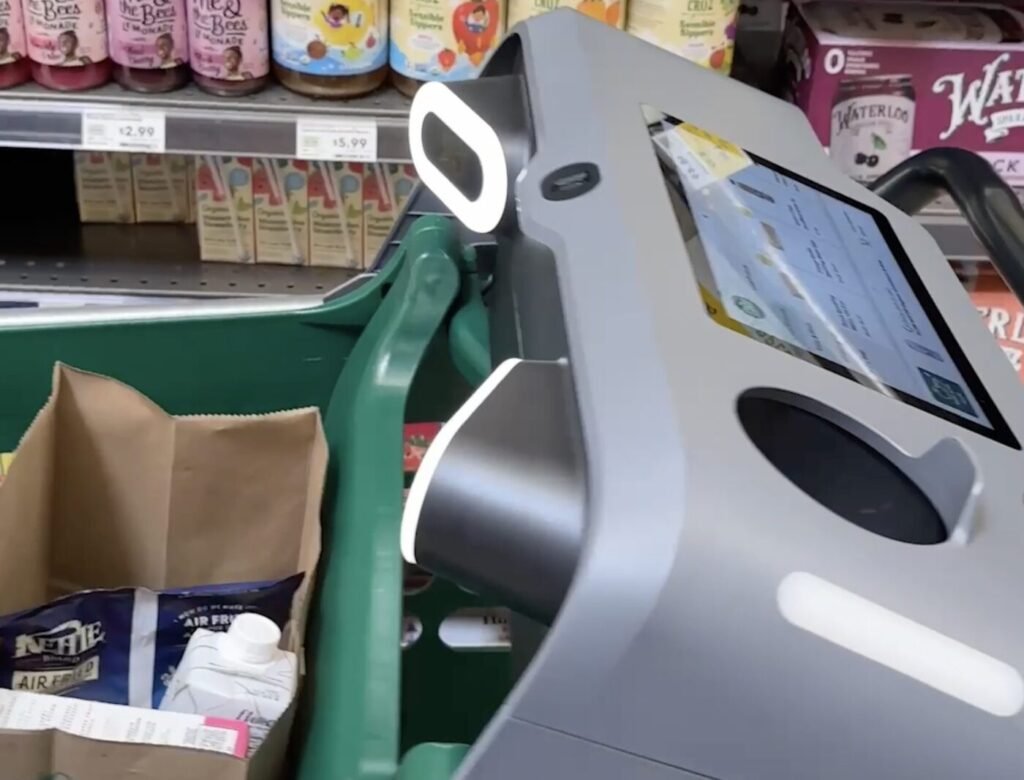
The latest signal comes from Weis Markets, a Mid-Atlantic grocer that is rolling out Instacart’s Caper Carts at select Pennsylvania stores. These carts use cameras, sensors, a built-in scale and a screen to recognize items as shoppers place them in the basket. The cart shows a running total, offers digital coupons and can connect to a store loyalty account. In some stores, the cart can also become a small advertising screen, nudging shoppers with offers while they move through the aisles.
For North Atlanta, the most likely path would not be Weis. It would be Kroger, Sprouts or Whole Foods.
Where Smart Grocery Carts Could Show Up First in North Atlanta
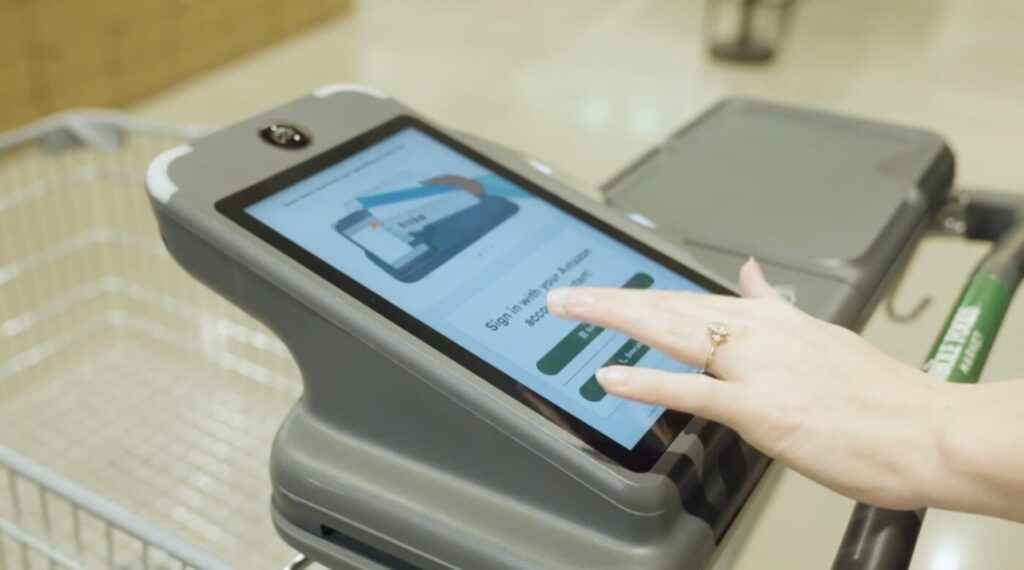
Kroger is the obvious first candidate because of scale. Across the North Atlanta Star core corridor, Kroger has about 20 stores when counting Alpharetta, Cumming, Suwanee, Roswell, Duluth, Sugar Hill and Buford. Kroger has already tested Caper-powered smart carts under the KroGO name in other markets, and the company has a large enough local footprint to make a regional test visible quickly.
Sprouts is another chain to watch. It has a smaller but highly relevant local network, with stores in Peachtree Corners, Cumming, Johns Creek/Suwanee, Roswell and Buford. Sprouts has also been tied to Instacart’s newer AI shopping tools, which can work online and, in some cases, inside Caper Carts. A Sprouts rollout here would fit the kind of customer who already uses digital coupons, shops by diet preference and compares prices on produce, supplements and prepared foods.
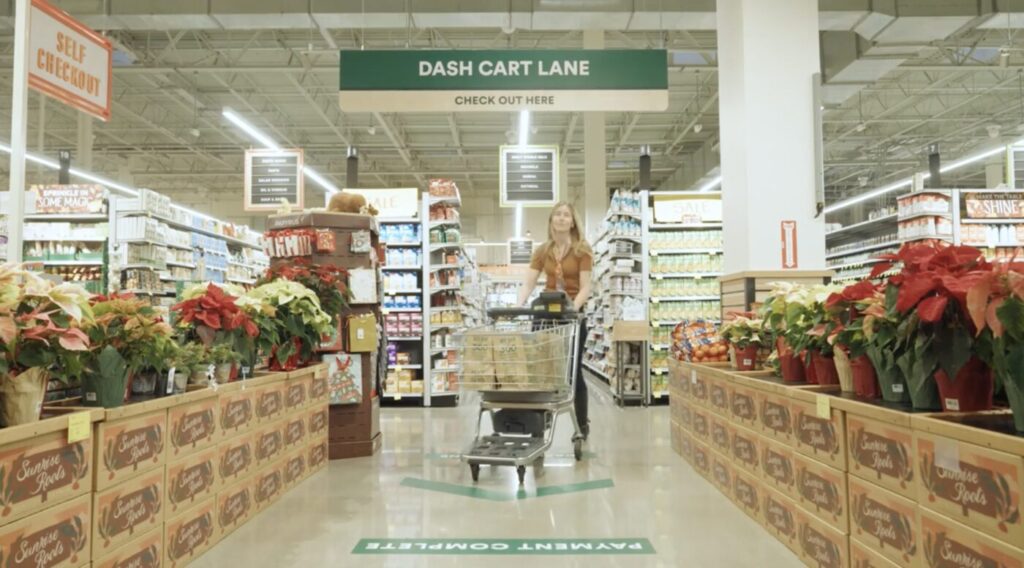
Whole Foods is the Amazon angle. The open local stores at Avalon in Alpharetta and Duluth already use Amazon-linked store technology such as app payment and Amazon One palm payment. Amazon is also expanding its own Dash Cart system at additional Whole Foods locations by the end of 2026. If that reaches Georgia, Avalon would be a logical place to watch because of its high-income trade area, regional draw and Amazon-connected customer base. The planned Whole Foods in South Forsyth would also be worth watching after it opens.
The likely first local stores would be the ones with higher-income trade areas, strong loyalty-program use, large weekly baskets and enough store traffic to justify the equipment. That points first to Alpharetta, South Forsyth/Cumming, Suwanee-Johns Creek and possibly Duluth or Peachtree Corners. A smaller or older store would be less likely to lead unless the chain wants a controlled test.
Will Smart Carts Save Shoppers Money — Or Help Stores Sell More?
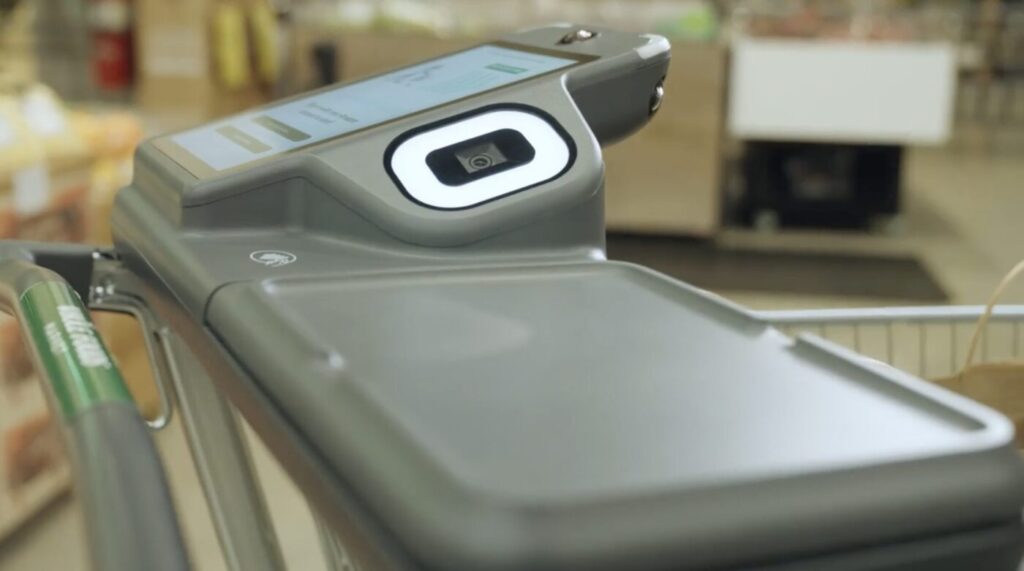
The timing is harder to pin down. There is no confirmed local launch date for Caper Carts or Dash Carts in North Atlanta. Based on current national rollouts, the realistic local window would be late 2026 or 2027 if Georgia is selected for a test. The technology is already moving through the grocery industry, but local adoption usually follows a cautious pattern: a few stores first, then expansion only if shoppers use it and stores see enough return.
Will it save shoppers money? Sometimes. A smart cart can help because the running total is visible before checkout, and the cart can surface coupons while the shopper is still in the aisle. That could be useful for families trying to keep a grocery trip under $150 or $200. But the same screen can also become a sales tool. Weis says one prompt asking shoppers whether they had everything they needed lifted basket size by nearly one percentage point. In plain English: the cart may help shoppers track spending, but it is also designed to help grocers sell more.
For North Atlanta, the bigger story is convenience moving deeper into the store. Self-checkout shifted part of the checkout process to the shopper. Smart carts move that shift earlier, turning the cart into the scanner, coupon box, loyalty card, price tracker and checkout lane. The technology will feel helpful to some shoppers and intrusive to others. But with Kroger, Sprouts and Whole Foods already planted across this corridor, North Atlanta is exactly the kind of suburban grocery market where the next test could eventually appear.
What Happens to the Cashier?
The uncomfortable question is whether the smart cart makes grocery shopping easier by making the store less human.
For years, even in a rushed suburban grocery run, the cashier was often the one person a shopper actually spoke to. Not a long conversation, necessarily. Sometimes just a greeting, a comment about the weather, a small joke about the price of berries, or a familiar face who recognized a family after years of Saturday shopping. That kind of contact is easy to dismiss until it disappears.
Smart carts do not automatically eliminate cashiers. Stores still need workers to stock shelves, help customers, manage pickup orders, handle returns, check IDs, troubleshoot machines and answer questions. But the direction is clear: more of the transaction is moving away from a person and into a screen. The cart identifies the food. The screen shows the coupon. The loyalty account applies the discount. The shopper pays and leaves.
That may be efficient. It may also make the grocery store feel more like a warehouse with better lighting.
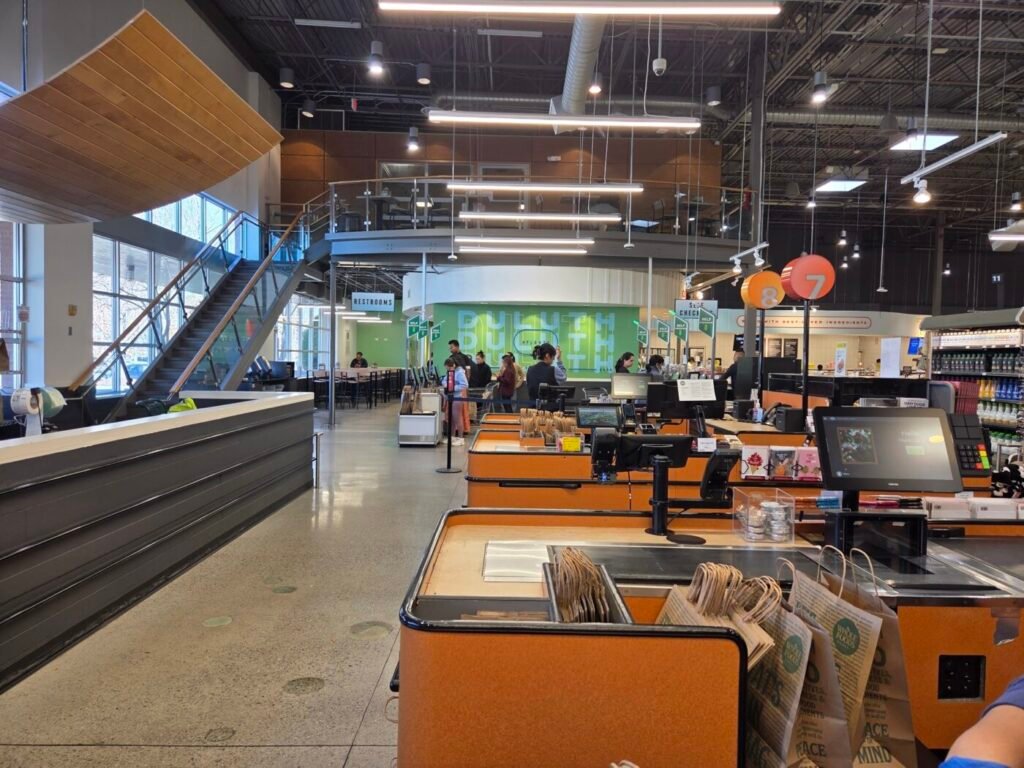
There is a difference between saving time and removing community. North Atlanta’s grocery stores are not just places to buy milk, salmon and paper towels. They are part of the weekly rhythm of suburban life.
The risk is not only that a few cashier hours may be reduced over time. The risk is that shopping becomes more solitary, more tracked and more transactional. Get in. Scan. Accept the offer. Spend a little more. Pay. Leave.
That may be the future grocery chains want to build. The question for shoppers in Alpharetta, Johns Creek, Cumming and Suwanee is whether convenience is enough — or whether a store still owes its customers something more human than a faster checkout.
If you’ve been following growth and change around here, these stories are worth a look too.
About the Author


In North Atlanta
The $4 Labor Day: Why Sun Belt Families Are Feeling the Gas-Price Surge So Differently
5 Coffee Trucks and Mobile Cafés Worth Finding Around North Atlanta
North Atlanta’s Job Market Splits as Health Care Grows and Office Work Shrinks
What North Atlanta Should Know Today. Friday, Sept. 11, 2026

What North Atlanta’s No-Degree Jobs Actually Pay
North Atlanta Courthouse Wedding Price Check: A Legal Marriage Can Start at $16
IN NORTH ATLANTA