The Future of Home Delivery Is Already Arriving in North Atlanta
Suburban North Atlanta is adopting drone and underground delivery methods to speed up same-day service. Walmart and Peachtree Corners lead these local innovations.
Get major local stories and development updates.
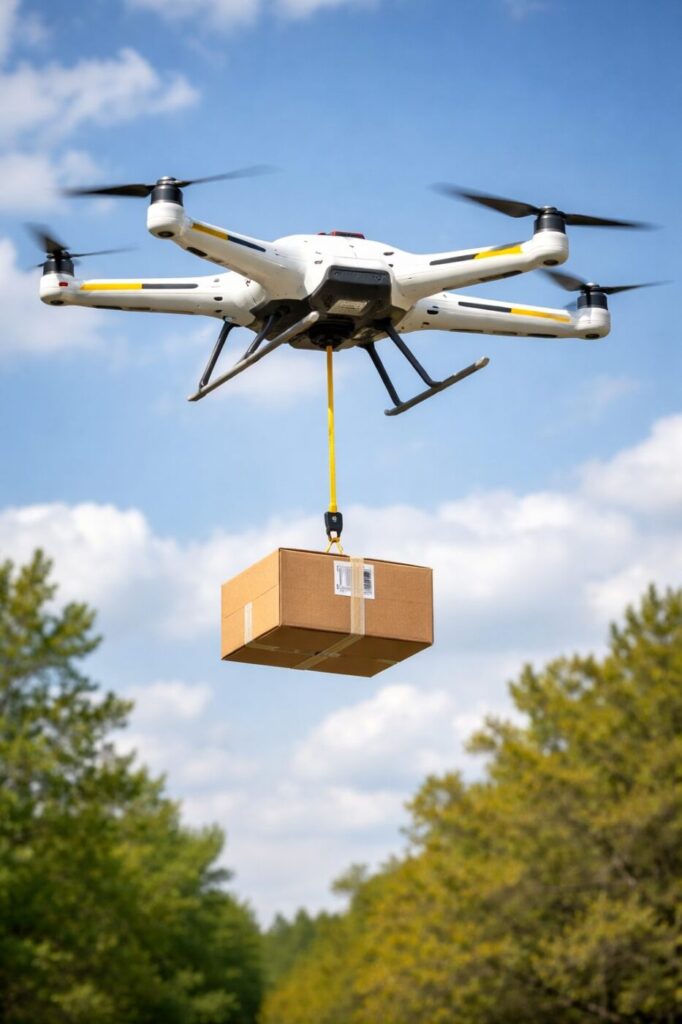
On a quiet weekday morning, it’s no longer unusual to hear a soft mechanical hum overhead, glance up, and see a small drone lowering a package into a driveway. The moment lasts less than a minute. Then it’s gone, leaving behind something as ordinary as groceries or medicine—and a glimpse of how quickly daily life is changing.
What once felt experimental is beginning to take shape as a real system across North Fulton, South Forsyth, and nearby communities. The way goods move—from store shelves to front doors—is being rebuilt into something faster, more local, and far less dependent on traffic.
A New Kind of Delivery Network
For decades, delivery in the United States relied on large regional warehouses and patient customers willing to wait days. That model is shifting. In its place, a decentralized network is forming—built on micro-fulfillment centers, local retail hubs, and autonomous delivery systems.
In suburbs like Alpharetta and Johns Creek, expectations have changed. Two-day shipping is no longer the benchmark. Increasingly, residents expect items to arrive within hours—or even minutes.
This shift is being driven by competition between Amazon and Walmart, but the real transformation is physical. Delivery is no longer just about logistics software. It is about where goods are stored, how they move, and how close they already are to the customer before an order is even placed.
The Sky as a Delivery Route
Drone delivery is the most visible sign of this change. Across metro Atlanta, small aircraft are now being deployed from retail rooftops, particularly from Walmart locations operating as local hubs.
These drones do not land. They hover, lower packages by tether, and move on within seconds. Designed to carry lightweight items—groceries, medications, small electronics—they operate within a limited radius, typically around six miles.
The appeal is simple: bypass traffic entirely. Local roads are no longer part of the equation. For certain deliveries, the sky becomes the fastest route.
Still, the expansion is not without tension. In communities like Milton, discussions are already underway about how this technology fits into quieter, more rural environments.
Where Drone Deliveries Are Already Happening Locally
Drone delivery in North Atlanta isn’t spread evenly across entire cities. It’s expanding in small, defined pockets—usually within a few miles of specific retail hubs. That means two neighborhoods in the same city can have completely different experiences, with one seeing regular aerial deliveries and another seeing none at all.
The most active areas right now are clustered around parts of Alpharetta and Roswell, where select Walmart locations are being used as launch points. From these hubs, drones typically serve a radius of about five to six miles, focusing on lightweight, high-frequency deliveries like groceries, pharmacy items, and small household needs.
In Milton, the conversation has been more cautious. While the technology is under consideration, local discussions have focused on how drone traffic fits into quieter residential and equestrian areas. The rollout here is slower and more deliberate.
Beyond North Fulton, Woodstock has emerged as one of the clearest early examples in the region, with more visible and consistent drone delivery activity already taking place.
What This Means for Local Neighborhoods
For residents, the determining factor is proximity—not city limits. The neighborhoods most likely to see drone deliveries today tend to share a few characteristics:
They are located within a short drive of a participating Walmart store
They fall inside a roughly five-mile delivery radius
They are part of suburban clusters where testing and scaling are easier
In practical terms, this means subdivisions near major retail corridors—especially along GA-141 and similar routes—are the most likely to be included as the network expands.
What to Watch Next
As more hubs come online, coverage will expand outward in rings rather than across entire cities at once. For many neighborhoods in Johns Creek and South Forsyth, drone delivery isn’t here yet—but it’s likely approaching from nearby zones rather than arriving all at once.
The Underground Delivery Network Taking Shape in Peachtree Corners
While drones tend to draw attention in the sky, a quieter experiment is unfolding below ground in Peachtree Corners. There, a company called Pipedream Labs is testing a system that removes delivery from both roads and airspace entirely.
The concept is simple, but the implications are significant. Instead of relying on drivers or aircraft, small autonomous carriers move through narrow underground pipes, transporting packages directly between locations. The system functions almost like a physical internet—goods moving from one point to another without ever encountering traffic, weather, or traditional delivery delays.
In practice, the process is designed to be seamless. A retailer or restaurant places an order into a secure loading point, and within minutes, the item travels through the underground network to its destination. The pipes themselves are relatively compact—about 18 inches in diameter—but large enough to handle a wide range of everyday goods, from groceries to takeout and small retail items.
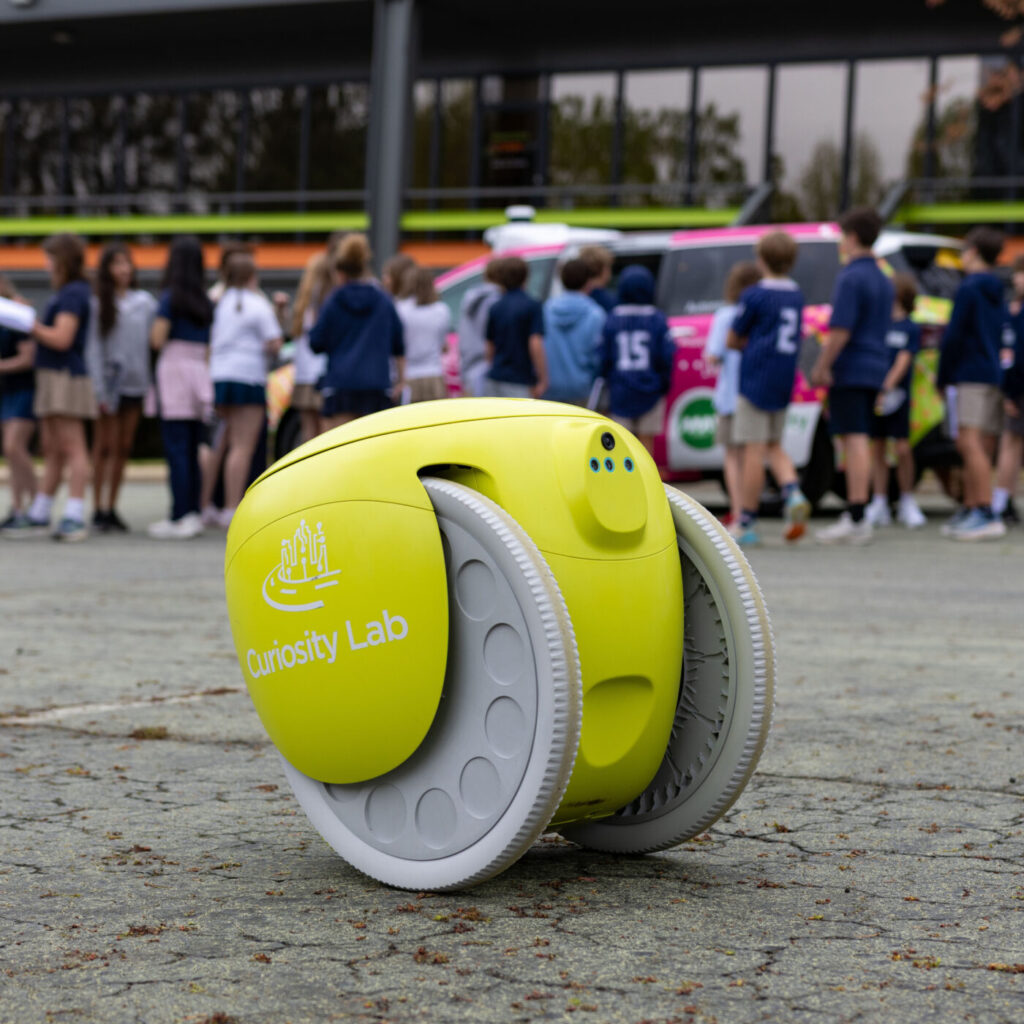
Peachtree Corners has become a natural testing ground for this kind of infrastructure. Through its Curiosity Lab initiative, the city has positioned itself as a place where emerging technologies can be tested in real-world suburban conditions, not just controlled environments.
The broader goal is to solve the most complex part of modern logistics: the final stretch between a business and a customer’s door. By creating a direct, enclosed pathway, the system eliminates many of the inefficiencies that slow traditional delivery—congestion, labor constraints, and route complexity.
For now, the network remains limited in scale. But its presence suggests a different direction for future development. As mixed-use communities continue to grow across North Fulton and South Forsyth, systems like this could eventually be integrated into the design itself, making delivery infrastructure as standard as utilities.
Why Peachtree Corners
Peachtree Corners has positioned itself as a smart city testing ground, especially through its Curiosity Lab. That makes it one of the few places in the country where experimental infrastructure like this can be tested in a real-world suburban setting.
Amazon vs. Walmart: Two Different Approaches
Behind the scenes, two different strategies are shaping the future. Amazon continues to rely on large, automated fulfillment centers but is shifting toward smaller regional hubs to speed up delivery. Facilities like the one on Shiloh Road in Alpharetta reflect this move toward proximity and faster turnaround.
Walmart, by contrast, is using its existing stores as distribution centers. With locations already close to most neighborhoods, it can fulfill orders directly from shelves and deliver them quickly—often within hours.
The difference shows most clearly in groceries. Walmart’s store-based model gives it a strong advantage in same-day delivery, while Amazon continues to dominate broader e-commerce.
From Two Days to Thirty Minutes
Delivery speed is no longer a single standard. It is becoming a layered system.
Retailers are now offering same-day delivery for general items, one-hour or three-hour delivery for urgent needd, and sub-30-minute delivery for essentials
Faster delivery is no longer a bonus—it’s becoming part of the product itself. In suburban households where time is limited, the willingness to pay for convenience is steadily increasing.
Comparing Walmart+, Amazon Prime, and Target Circle for Local Families
For many households, the question is no longer whether to use delivery—but which service fits best into everyday life. Each major retailer has built its own ecosystem, and the differences matter more in suburban areas where grocery runs, errands, and traffic all shape daily routines.
| Service | Annual Cost | Best For | Delivery Strength | Local Advantage |
|---|---|---|---|---|
| Amazon Prime | $139/year | General shopping, variety | Wide inventory, fast shipping, growing same-day | Strong network, but depends on fulfillment centers |
| Walmart+ | ~$98/year | Groceries, everyday essentials | Same-day and even sub-30-minute delivery in some areas | Local stores act as warehouses—very strong in suburbs |
| Target Circle 360 | ~$99/year | Household goods, curated shopping | Same-day via Shipt, reliable scheduling | Balanced offering, but fewer ultra-fast options |
In practical terms, many local families are already mixing services. Amazon remains the default for general purchases, while Walmart is increasingly used for groceries and urgent needs. Target sits somewhere in between, often preferred for specific categories like home goods or everyday household items.
The decision often comes down to proximity. In areas where a Walmart or Target is just minutes away, those services tend to feel faster and more predictable. Where that isn’t the case, Amazon’s broader network still holds an edge.
The Cost Behind Convenience
What feels seamless on the surface comes with significant complexity underneath. The “last mile”—the final step from distribution point to home—is the most expensive part of delivery. Even public systems like USPS have struggled to adapt, with recent changes in Georgia leading to major service disruptions before stabilizing again.
Private companies are investing heavily in automation to reduce labor costs, but those systems only become efficient at scale. Until then, the economics remain delicate, often hidden behind subscription fees and pricing strategies.
Delivery robots—compact, wheeled, and self-navigating—are beginning to appear in certain areas. They move slowly, yield to pedestrians, and complete short-distance deliveries. For many residents, what once felt like a novelty is becoming part of the everyday landscape.
Infrastructure Is Catching Up
Even as delivery becomes more digital, it still depends on physical infrastructure. Road projects like the widening of McGinnis Ferry Road are aimed in part at easing congestion that affects both commuters and delivery vehicles. At the same time, new developments are being designed with logistics in mind from the beginning.
The system is still evolving. There are questions about cost, regulation, and long-term impact. But the direction is clear.
Delivery is no longer something that happens in the background. It is becoming part of the visible, physical fabric of suburban life.
Read Also:
About the Author

In North Atlanta
The $4 Labor Day: Why Sun Belt Families Are Feeling the Gas-Price Surge So Differently
5 Coffee Trucks and Mobile Cafés Worth Finding Around North Atlanta
Gwinnett Schools Bring Bus Driver Recruiting to Suwanee and Peachtree Corners
North Atlanta Added 11,000 Residents, but the Growth Is Concentrated in Three Cities
North Atlanta’s Job Market Splits as Health Care Grows and Office Work Shrinks
What North Atlanta Should Know Today. Friday, Sept. 11, 2026
IN NORTH ATLANTA