 Exclusive sponsor
The End of the Saturday Dealership Trip? How Online Car Buying Is Starting to Reshape North Atlanta
North Atlanta’s traditional Saturday dealership routine is changing as online car buying grows. Digital retailers offer home delivery while dealerships adapt to new consumer priorities.

Major local stories and useful updates, once a week.
For decades across North Fulton and South Forsyth, buying a car was almost a suburban ritual.
Families spent Saturdays driving between dealership corridors along GA-400, Alpharetta Highway, Mansell Road, and Peachtree Industrial Boulevard. A typical day involved walking rows of SUVs under bright lot lights, negotiating trade-in values, waiting in finance offices, and comparing offers between dealerships in places like Roswell, Alpharetta, Duluth, and Cumming.
Now, that long-standing suburban experience may be beginning to change.
A growing number of North Atlanta buyers are purchasing vehicles almost entirely online — sometimes without ever stepping onto a dealership lot. The shift accelerated after digital automotive retailer Carvana expanded into new-car franchise sales through the acquisition of a metro Atlanta Chrysler-Dodge-Jeep-Ram dealership in late 2025.
The move may sound like another automotive industry headline. But it reflects something much broader: the growing collision between traditional suburban retail culture and the convenience economy.
Convenience Is Becoming the Product
The core appeal of online car buying is not necessarily price.
It is time.
In many North Atlanta households, both parents work full-time. Families often juggle school schedules, youth sports, long commutes, and packed weekends. The idea of spending six or seven hours moving between dealerships can increasingly feel outdated to buyers who already order groceries, furniture, prescriptions, and even medical consultations online.
The research behind Carvana’s expansion specifically identifies affluent suburban communities in North Fulton, South Forsyth, and Gwinnett as prime targets for the digital-first model.
Instead of visiting multiple lots, buyers can now browse inventory from a phone, arrange financing digitally, upload documents remotely, and schedule delivery directly to their driveway.
For some suburban consumers, the appeal is not even about avoiding negotiation. It is about reclaiming an entire Saturday. Reducing errands and eliminating time-consuming retail experiences has become part of how many families manage suburban life.
The Pressure on Traditional Dealerships
North Atlanta’s dealership landscape has long been one of the defining commercial features of the suburbs.
Large dealership campuses line major corridors across Roswell, Alpharetta, Duluth, and Cumming, including long-established operations like Rick Hendrick Chrysler Dodge Jeep Ram Duluth, Troncalli Chrysler Dodge Jeep Ram, and Palmer Dodge Chrysler Jeep Ram, with businesses that often span generations of local ownership and customer relationships. These dealerships rely not only on new-car sales, but also on financing, trade-ins, service departments, certified pre-owned inventory, and long-term ties with North Atlanta families and businesses.
The online model disrupts several parts of that ecosystem simultaneously.
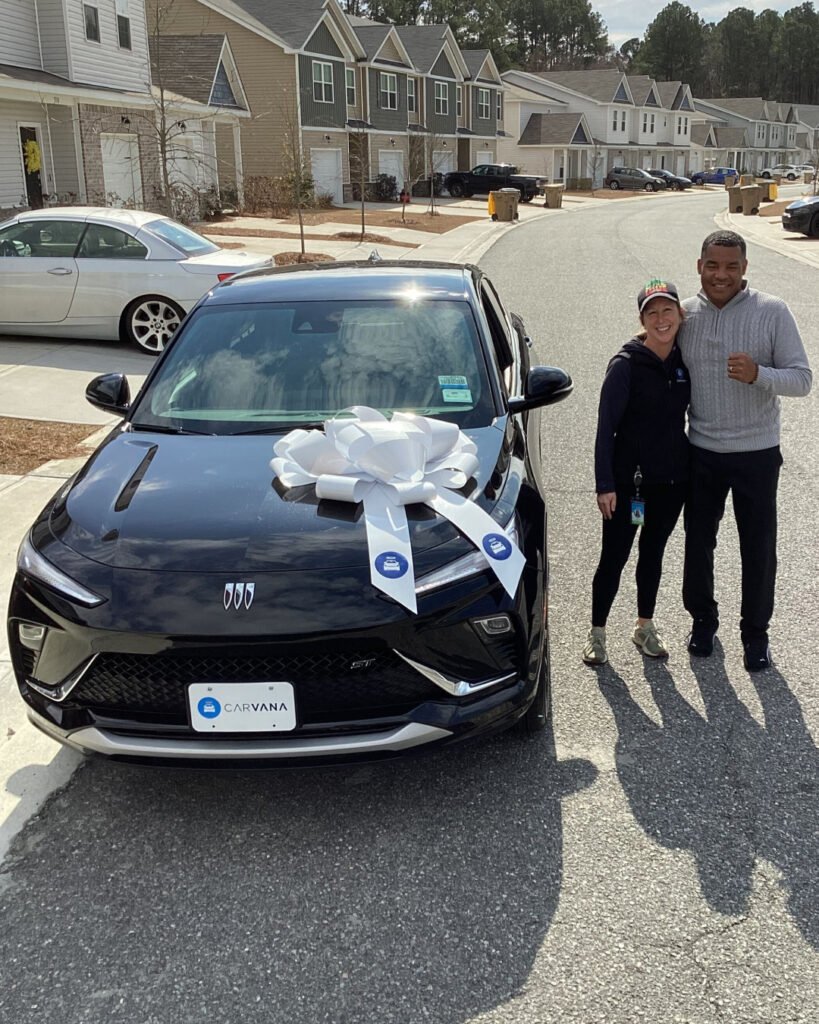
One of the most significant impacts involves trade-ins. When buyers purchase vehicles digitally, their previous vehicles often enter the online retailer’s own used-car inventory pipeline rather than remaining inside the local dealership ecosystem.
That matters because late-model trade-ins from affluent North Atlanta ZIP codes tend to be especially valuable. Dealers rely heavily on these vehicles to supply certified pre-owned inventory, which often carries strong profit margins.
If more transactions move online, traditional suburban dealerships may increasingly compete not only for buyers, but for inventory itself.
Why Physical Dealerships Are Not Disappearing Anytime Soon
Despite the digital momentum, traditional dealerships still maintain major structural advantages.
Service remains one of the biggest.
Modern vehicles require warranty repairs, recall work, software updates, diagnostics, and specialized maintenance that still depend heavily on physical infrastructure and factory-certified technicians.
Dealerships have invested heavily in service centers, technician staffing, parts inventories, and commercial fleet support. Those systems are difficult to replicate through a purely online retail platform.
For many suburban families, service convenience may ultimately matter more than purchase convenience.
A family in Milton or Johns Creek might enjoy buying a vehicle online. But when the check-engine light turns on six months later, they still want a trusted local service department nearby.
The digital model has also faced operational criticism in Georgia and elsewhere over title processing delays and registration complications. Some metro Atlanta buyers have reported long waits for permanent registration documents and license plates. That administrative reliability gap may continue giving traditional local dealerships an advantage among buyers who prioritize security and simplicity.
A New Era for the GA-400 Corridor
The broader question is whether this transition eventually reshapes suburban retail geography itself.
North Atlanta’s dealership corridors occupy some of the region’s most commercially valuable land. Massive lots filled with inventory have historically been considered essential to automotive retail.
But if more buyers become comfortable purchasing vehicles digitally, the role of those physical spaces could gradually evolve.
That does not necessarily mean dealerships disappear. More likely, they become increasingly hybrid operations — part showroom, part service hub, part logistics center, and part delivery network.
Many traditional dealers are already adapting by offering remote paperwork, home delivery, mobile service fleets, and online inventory systems that increasingly resemble e-commerce platforms.
What happens next may depend on whether traditional dealerships can convince suburban buyers that physical presence still offers something digital convenience alone cannot: faster service resolution, long-term trust, and a reliable place to return after the sale is complete. In North Atlanta’s increasingly competitive automotive market, the battle is no longer simply over inventory or pricing. It is over who can best fit into the time pressures and expectations of modern suburban life.
Community Voice
A snapshot of reader views, not a scientific survey.
Explore Community Voice →About the Author


In North Atlanta
Hyundai Says Georgia Metaplant Hiring Goal Holds as Hybrid Production Expands
The $4 Labor Day: Why Sun Belt Families Are Feeling the Gas-Price Surge So Differently

Boehringer Ingelheim Brings Nearly 500 Employees—and New Job Openings—to Johns Creek

Kimchi Red’s Three-Restaurant Story Began With a Name and No Restaurant
Quest Diagnostics Hiring Across North Atlanta, With Phlebotomy Pay Starting at $21.70
5 Coffee Trucks and Mobile Cafés Worth Finding Around North Atlanta
IN NORTH ATLANTA