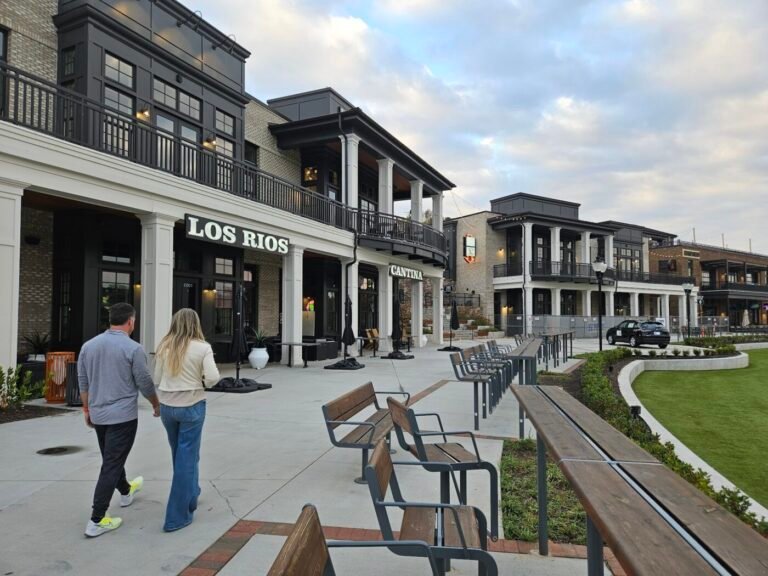
Woodstock’s Next Chapter: Growth, Development, and New Investment Reshaping the City
Woodstock’s population has surged, prompting new housing communities, revitalized downtown spaces, and significant infrastructure investment. The city is emerging as a regional center with expanding retail, hospitality, and recreational opportunities for residents and visitors alike.
Get major local stories and development updates.
This article is part of our ongoing 2026 Development Update series examining how public projects and private investment are reshaping North Atlanta.
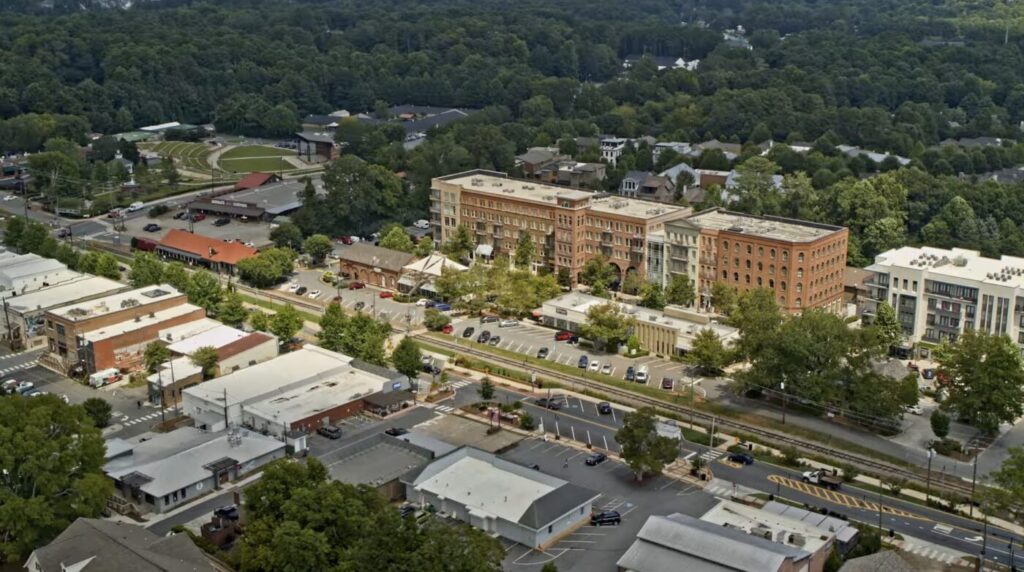
Just north of the North Fulton suburbs, the city of Woodstock has become one of the most dynamic growth stories in metro Atlanta. Over the past decade the Cherokee County city has evolved from a traditional bedroom community into a regional destination with a busy downtown, new housing districts, and major infrastructure investments.
Today Woodstock sits at the intersection of several powerful trends shaping the outer Atlanta suburbs: strong population growth, rising housing demand, expanding retail and hospitality sectors, and a city government investing heavily in parks, roads, and walkable urban districts.
Population Growth and a Changing Community
Woodstock’s population has grown rapidly over the past 15 years. The city had about 23,900 residents in 2010. By 2020, that number had climbed to just over 35,000. More recent estimates place the population close to 40,000 in 2024.
That represents roughly a 65 percent increase since 2010.
The demographic profile reflects the broader shift happening across northern metro Atlanta. Woodstock remains largely family-oriented, with nearly a quarter of residents under the age of 18. At the same time, the community is gradually becoming more diverse and economically established.
Median household income now exceeds $100,000, educational attainment levels are high, and the city continues to attract residents relocating from other parts of the United States.
Regional planning forecasts suggest that the broader Woodstock area — including surrounding neighborhoods and employment corridors — could grow from roughly 113,000 residents today to more than 150,000 by 2050.
In practical terms, that means Woodstock is increasingly functioning less like a small suburb and more like a regional center serving northern Cherokee County.
A Downtown Built for Visitors
One of the most visible drivers of Woodstock’s transformation has been the deliberate reinvention of its downtown.
The historic district along Main Street has become one of metro Atlanta’s most successful small-town walkable centers, drawing visitors from across Cherokee, Cobb, and North Fulton counties.
City leaders have continued investing in infrastructure to support that popularity. A six-level parking deck with more than 600 spaces recently opened near the city center, helping accommodate growing crowds for restaurants, events, and concerts at the Northside Hospital Cherokee Amphitheater.
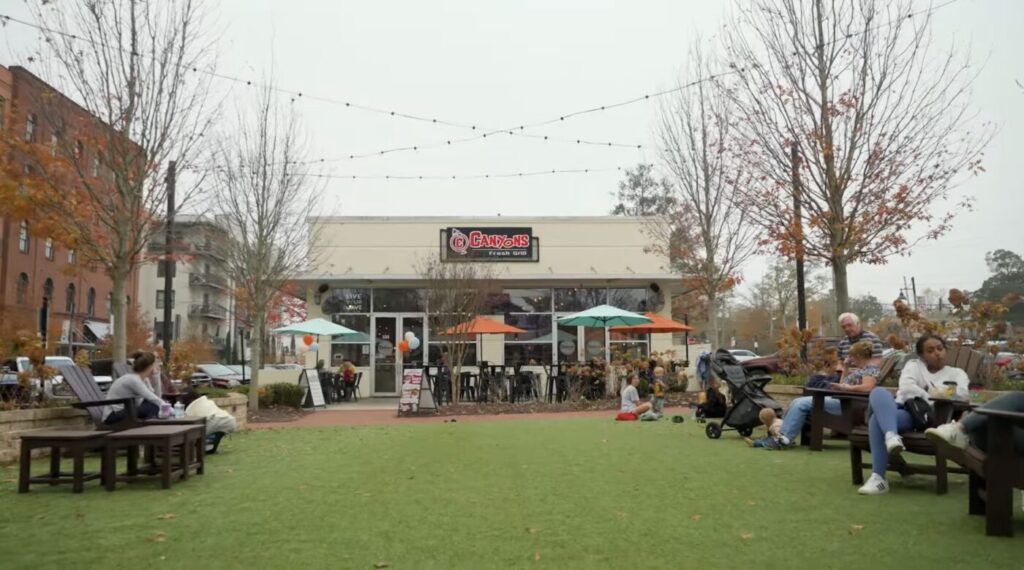
Nearby, new streets and pedestrian connections are gradually expanding the downtown grid. Projects like the Chambers Street extension have improved circulation while creating space for additional development between the historic depot area and the newer city center district.
The city has also begun expanding downtown’s commercial footprint with new office, retail, and restaurant spaces through projects such as Depot Square.
Together, these efforts are reshaping downtown Woodstock into a small but increasingly sophisticated urban district.
Housing Growth: Apartments, Townhomes, and New Communities
Woodstock’s housing pipeline reflects the region’s shifting demand toward a wider mix of housing types.
Near Interstate 575, the Heights at Ridgewalk development is bringing hundreds of new apartments and townhomes to the Ridgewalk Parkway corridor. The project sits close to retail centers and major employment routes, making it attractive for commuters working across Cherokee and Cobb counties.
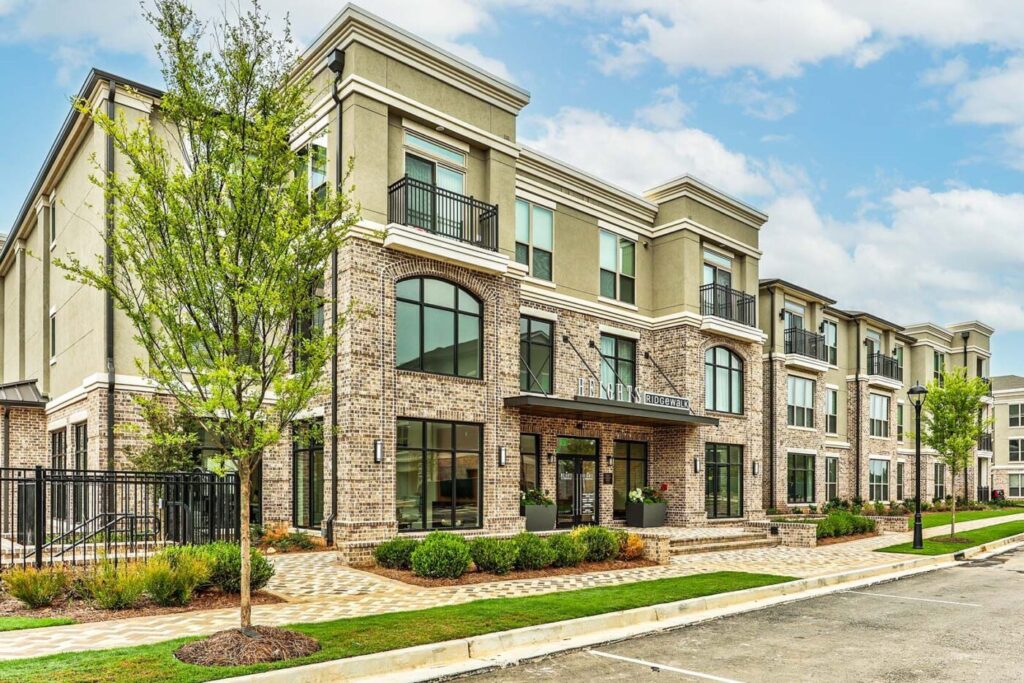
Another major residential project is Sutton Row, a 290-unit apartment community expected to open in phases through 2026 and 2027.
Both developments are connected to the broader Buice Lake master-planned community. That 200-acre project will ultimately include hundreds of single-family homes, townhomes, and additional multifamily housing, creating an entirely new neighborhood district within the city.
Traditional single-family subdivisions are also continuing to expand along Woodstock’s growth corridors. Communities such as Marlowe are adding new homes while triggering road improvements and infrastructure upgrades in surrounding areas.
The overall trend is clear: Woodstock’s housing growth is no longer limited to large-lot subdivisions. The city is increasingly seeing apartments, townhomes, and mixed-use districts integrated into new neighborhoods.
Thinking About Moving to Woodstock?
If you’re planning a move to Woodstock or Cherokee County, you may want to compare quotes from local services. Moving companies, home inspectors, roof inspections and local contractors.
Get free quotes from local professionals here:
→ Compare Local Contractor Quotes
Hospitality and Tourism Expansion
As downtown Woodstock attracts more visitors, the city is also investing in a stronger hospitality sector.
One of the most anticipated projects is a planned six-story boutique hotel across from the Northside Hospital Cherokee Amphitheater. The development is expected to include about 130 rooms along with restaurants, retail space, and meeting facilities.
City officials see the hotel as an important addition to downtown’s visitor economy. In addition to overnight guests, the project is expected to support conferences, small events, and tourism connected to downtown festivals and concerts.
Outside downtown, Woodstock also maintains a cluster of interstate-access hotels along Parkway 575 near Highway 92. Those locations serve regional travelers and visitors arriving from Interstate 575.
Where to Stay in Woodstock, Georgia
Infrastructure Investments Across the City
Alongside private development, Woodstock is carrying out one of the largest infrastructure investment cycles in its history.
Several major road and transportation projects are underway or in planning stages.
One of the most significant is a redesign of the Ridgewalk Parkway interchange at Interstate 575. The project will convert the intersection into a diverging diamond interchange, improving traffic flow while preparing for additional development along the corridor.
Other upgrades include improvements to Neese Road, where a new roundabout and pedestrian infrastructure will help serve growing residential neighborhoods and connect to Dupree Park.
Intersection improvements along Highway 92 and Trickum Road are also planned to reduce congestion and improve turning capacity.
At the same time, Woodstock is investing heavily in walkability and recreation. New sidewalks and multi-use trails are being added throughout the city, including connections to the Noonday Creek Trail network.
Perhaps the most ambitious parks project underway is Little River Park, a 110-acre recreation area along the Little River corridor. When complete, the park will feature trails, water access, boardwalks, dog parks, and playgrounds, along with connections to Olde Rope Mill Park and surrounding trail systems.
Construction began in phases and is expected to continue through 2026.
Retail and Business Investment
Woodstock’s commercial growth is also accelerating.
One of the largest private developments currently underway is the Woodstock Mill District, a $65 million retail project near Towne Lake Parkway that will serve as a new gateway into the city.
The project includes roughly 118,000 square feet of retail space anchored by a Publix grocery store, along with restaurants and additional shops. Construction is expected to open in phases through 2026.
Meanwhile, Woodstock has begun appearing in new technology and retail experiments. Walmart and Wing recently launched a drone delivery service in parts of metro Atlanta, with Woodstock among the communities included in the rollout.
The initiative reflects the way fast-growing suburbs are becoming testing grounds for new logistics and retail formats.
A Suburb Becoming a Regional Center
Taken together, Woodstock’s growth story reflects a larger shift happening across metro Atlanta.
Cities that once functioned primarily as bedroom suburbs are gradually building their own employment centers, entertainment districts, and visitor economies.
Woodstock’s expanding downtown, new residential districts, infrastructure investments, and retail developments suggest the city is entering a new phase — one where it serves not just its residents, but a much wider regional population.
For residents across North Fulton and South Forsyth, Woodstock increasingly feels less like a distant suburb and more like another node in the expanding North Atlanta metropolitan landscape.
Read Also:
Featured Local Business Opportunity
Local businesses opening in the Woodstock area can be featured in North Atlanta Star’s Local Business Feature.
Businesses interested in editorial features or local visibility can learn more here:
About the Author


In North Atlanta
ANDRITZ Is Hiring Engineers and Project Leaders in Alpharetta
20-Acre Buford Highway Tract Hits Market at $5.08 Million
Old Milton Parkway Widening Will Reshape Avalon Corridor Through 2029

Why Honeycrisp Is the $5-a-Pound Apple in North Atlanta
5 Coffee Trucks and Mobile Cafés Worth Finding Around North Atlanta

Simple Man Distillery Hiring Ahead of Cumming City Center Opening
IN NORTH ATLANTA