Private & Faith-Based Schools in North Atlanta: A Guide for Families
Get major local stories and development updates.
Across North Fulton and South Forsyth, families often move to communities like Johns Creek, Alpharetta, Roswell, Milton, Duluth, Suwanee, and southern Cumming specifically because of the public school systems. The districts in this part of metro Atlanta are widely considered among the strongest in Georgia, and for many households the quality of local schools is a major reason for choosing where to live.
Yet alongside the public systems, a quieter parallel education landscape also exists. Throughout North Atlanta’s suburbs, a network of private and faith-based schools offers families alternatives that combine academic instruction with religious education, smaller class sizes, or distinct community cultures.
For some families, these schools provide a way to integrate faith into daily learning. For others, the appeal lies in campus environments, specific academic programs, or the sense of community that often develops around smaller institutions.
The result is a diverse educational ecosystem that reflects the broader religious and cultural landscape of North Atlanta.
A Suburban Education Landscape
Faith-based education in the northern Atlanta suburbs has grown steadily over the past two decades. As communities such as Johns Creek, Alpharetta, and South Forsyth expanded with new housing and growing populations, schools connected to churches, synagogues, and mosques also expanded or opened new campuses.
Many of these institutions serve students from across multiple cities rather than a single neighborhood. Because suburban families typically drive to school rather than walk, campuses often draw from a broad regional area. A school located in Alpharetta may have students arriving from Roswell, Johns Creek, Milton, Duluth, and even parts of Gwinnett County.
This regional reach allows schools to maintain strong enrollment while offering specialized programs or religious instruction that might appeal to particular communities.
At the same time, these schools often become community hubs. Families may attend the same church, synagogue, or mosque connected to the school, participate in weekend events, or meet through athletics and extracurricular activities.
Christian Schools Across North Fulton
Christian schools make up the largest portion of faith-based education options in North Atlanta.
Several of the most prominent institutions are located in or near the cities at the heart of North Fulton. In Alpharetta, King’s Ridge Christian School has grown into a large private campus serving students from preschool through high school. The school combines college-preparatory academics with chapel services, athletics, arts programs, and a wide range of extracurricular activities.
Nearby Roswell hosts Fellowship Christian School, which began as an educational ministry connected to Fellowship Bible Church. Over time the school expanded into a well-known private institution drawing students from across North Fulton.
In Johns Creek, Mount Pisgah Christian School operates one of the larger Christian school campuses in the region. The school offers programs from early childhood through high school and sits near the intersection of several communities, including Alpharetta, Duluth, and southern Forsyth County.
Many Christian schools in the area emphasize a blend of academic preparation and spiritual development. Daily or weekly chapel services are common, and biblical studies are often part of the curriculum alongside standard subjects such as mathematics, science, and literature.
In addition to the larger institutions, a number of smaller Christian academies operate throughout the region, often connected to local congregations. These schools typically focus on early childhood and elementary education while maintaining close ties to the church communities that support them.
Jewish Education in the Northern Suburbs
The Jewish population of North Fulton and the surrounding suburbs has grown steadily, particularly in communities such as Johns Creek and Alpharetta.
While many Jewish families in the area enroll their children in public schools supplemented by Hebrew schools or synagogue programs, some choose full-time Jewish day schools that combine general education with Jewish studies.
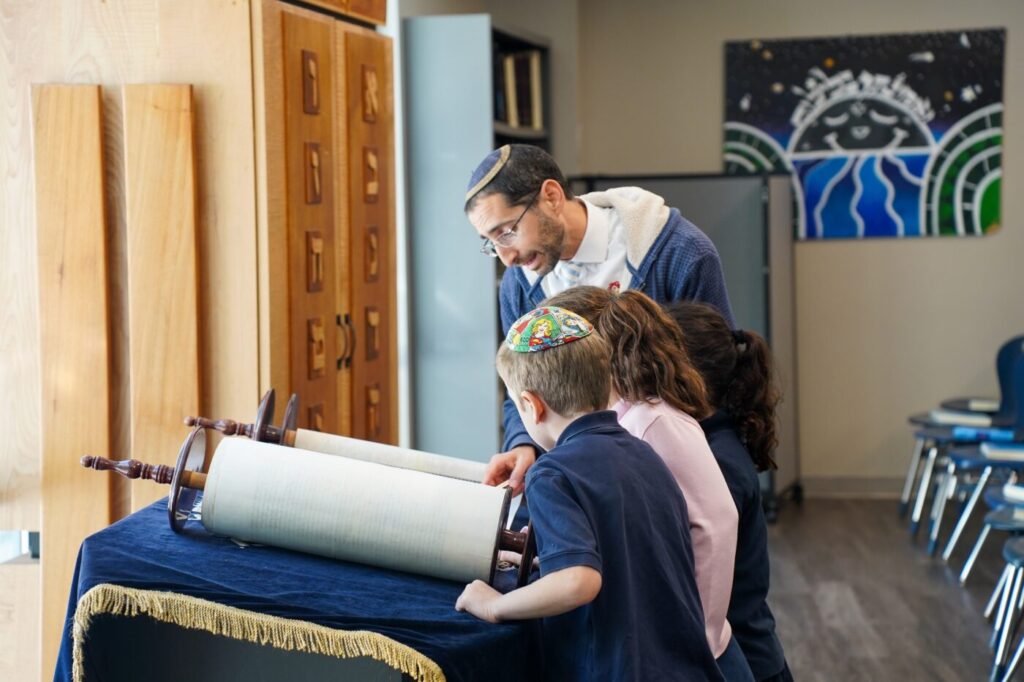
One of the most established institutions serving the northern suburbs is Atlanta Jewish Academy. Located just south of North Fulton but within easy driving distance for many families, the academy provides a dual curriculum that integrates secular subjects with Hebrew language instruction, Jewish history, and religious tradition.
Students often come from across the metropolitan area, including families living in Johns Creek, Alpharetta, and Roswell.
For parents seeking a more immersive Jewish educational environment, such schools offer a setting where religious traditions, holidays, and cultural learning are part of daily life rather than occasional instruction.
Islamic Schools and a Growing Community
North Atlanta’s suburbs are also home to a growing Muslim population, particularly in Duluth, Johns Creek, and Suwanee. The expansion of mosques and Islamic community centers in these areas has also supported the development of Islamic schools.
One of the best-known institutions serving families in the northern suburbs is Al-Falah Academy in South Forsyth. The school provides an academic program that includes mathematics, science, language arts, and social studies while also incorporating Islamic studies, Arabic language instruction, and religious values.
Students often come from a wide geographic area, including communities in Gwinnett County as well as North Fulton.
Like many faith-based schools, the campus also serves as a focal point for community life, hosting events, cultural celebrations, and family gatherings that extend beyond the classroom.
Why Families Choose Faith-Based Schools
Parents who choose faith-based schools often describe a combination of motivations.
For some, religious instruction is the primary factor. They want their children to learn not only academic subjects but also the traditions, values, and practices of their faith.
For others, the attraction lies in school culture. Smaller campuses may allow teachers to know students more closely, and parents sometimes feel the community environment is more personal than larger public systems.
Class sizes are often smaller, and schools may emphasize character education, community service, and moral development alongside academic performance.
In addition, many faith-based schools offer strong extracurricular programs, including athletics, arts, music, and leadership activities.
For families relocating to North Atlanta, these schools can also serve as entry points into local communities, providing social networks and friendships that extend well beyond the school day.
Tuition and Accessibility
Private education naturally involves tuition costs, and these vary widely across institutions.
Some smaller academies connected to churches may offer lower tuition or scholarships supported by congregations. Larger private schools with extensive facilities, athletic programs, and college-preparatory tracks may charge significantly higher tuition.
Many schools provide financial aid or scholarship programs designed to broaden access for families who want a faith-based education but might otherwise find it difficult to afford.
As a result, the student population at many schools includes a mix of families from different economic backgrounds.
Faith-Based Schools and the North Atlanta Community
Although they enroll a smaller share of students compared with public school districts, faith-based schools play a visible role in the educational landscape of North Atlanta.
Their athletic teams compete with other private schools across Georgia. Their students volunteer in community service programs. Their campuses host events that draw families from multiple cities.
In many cases, these institutions have become longstanding parts of suburban life in North Fulton and South Forsyth.
For families exploring educational options in the region, understanding the range of available schools—including public systems, private institutions, and faith-based campuses—can help clarify what environment might best support their children.
North Atlanta’s education landscape is broader than many newcomers initially realize, reflecting the region’s growing diversity and the many ways families shape learning around both academic goals and personal values.
Read Also:
About the Author


In North Atlanta

Kidcreate Studio Opens in South Forsyth With Art, Science and Sensory Programs

At Edison Prep, Brian Eufinger Says Test Prep Starts With the Student, Not the Score
LIIV Atlanta Sets Sept. 27 Opening at Longtime Peachtree Corners Church

Gwinnett Tech Leaders Say the Four-Year Degree Is No Longer the Automatic First Choice

Fulton Restarts Free Friday Weddings—But Couples Still Need $68.50

Is the SAT Still Worth Taking? Georgia’s Admissions Rules Have Changed
IN NORTH ATLANTA