Cuba’s Crisis Has a Quiet North Atlanta Echo
The worsening crisis in Cuba has personal impacts on North Atlanta’s Cuban community, affecting family ties, travel, and remittances in local suburbs.
Get major local stories and development updates.
A widening corporate retreat from Cuba is turning the island’s economic collapse into a more immediate problem for families far beyond Havana, including here in metro Atlanta.
The Wall Street Journal reported that major foreign businesses are pulling back from Cuba as the island faces a deepening economic crisis and new U.S. pressure. Visa and Mastercard transactions by non-U.S. foreign visitors are being suspended. Spanish hotel operators Meliá and Iberostar are giving up management of multiple Cuban hotels. A major Canadian mining company, Sherritt International, has been rethinking its future on the island. Several airlines have also canceled flights into Cuba after fuel shortages.
For North Atlanta, this is not mainly a corporate exposure story. Johns Creek, Alpharetta, Roswell, Cumming, Suwanee and Duluth are not filled with companies that depend on Cuban hotels or nickel mines. The local impact is quieter and more personal. It runs through family calls, remittances, travel plans, immigration paperwork and the worry of Cuban Americans watching relatives live with blackouts, shortages and a collapsing currency.
Metro Atlanta is not Miami, but it does have a Cuban community large enough for the crisis to matter locally. The Atlanta Regional Commission has estimated the Cuban-born population in the Atlanta region at a bit fewer than 9,000, making Cubans one of the region’s notable Caribbean-born groups. The broader Cuban-American population, including people born in the United States, is larger. In a suburban region where immigrant communities are spread across Fulton, Gwinnett, Forsyth, Cobb and DeKalb, international crises often show up first inside households rather than in office towers.
That is likely the case here. If card payments become harder in Cuba and tourism continues to fall, families abroad may face more pressure to send money or goods through whatever channels remain available. If blackouts, food shortages and job losses worsen, more Cuban families may consider migration. If airlines reduce service and hotels close, visits to relatives can become more complicated. Even residents with no business connection to Cuba may feel the effect through churches, restaurants, extended families and immigration-law conversations.
The business withdrawal also matters because tourism has long been one of Cuba’s main ways to bring in foreign currency. When hotel operators leave and payment systems break down, the damage is not limited to investors. It can spread to hotel workers, drivers, restaurant suppliers, guides and families who depend on money moving through the island’s fragile private economy.
North Atlanta’s Cuban community is not large enough to reshape the region’s economy by itself. But the story is still local because immigration has made metro Atlanta a place where world events land at the kitchen table. A blackout in Havana can become a call to Roswell. A currency crash can become a transfer from Alpharetta. A closed hotel or canceled flight can become a postponed family visit from Cumming or Suwanee.
That is the real North Atlanta angle. Cuba’s collapse may be happening 700 miles from Georgia, but for some local families, the distance is much shorter.
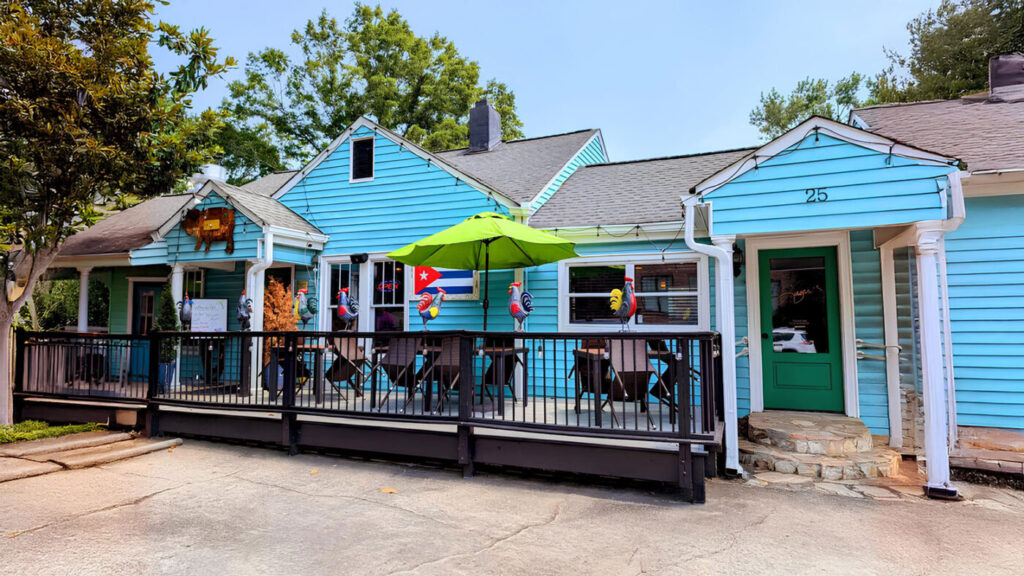
Photo, courtesy of Lazaro’s Cuban Cuisine, Rosewell.
If this felt close to home, these stories may be worth your time too.
About the Author


In North Atlanta
5 Coffee Trucks and Mobile Cafés Worth Finding Around North Atlanta

What North Atlanta Should Know Today. Friday, Sept. 11, 2026
North Atlanta Courthouse Wedding Price Check: A Legal Marriage Can Start at $16

Is the SAT Still Worth Taking? Georgia’s Admissions Rules Have Changed

North Atlanta’s New School Phone Rules: What Parents Need to Know This Fall

North Atlanta unemployment fell in July — but employment slipped in several communities
IN NORTH ATLANTA