 Exclusive sponsor
How the AJC Went From Statewide Giant to Digital-Only
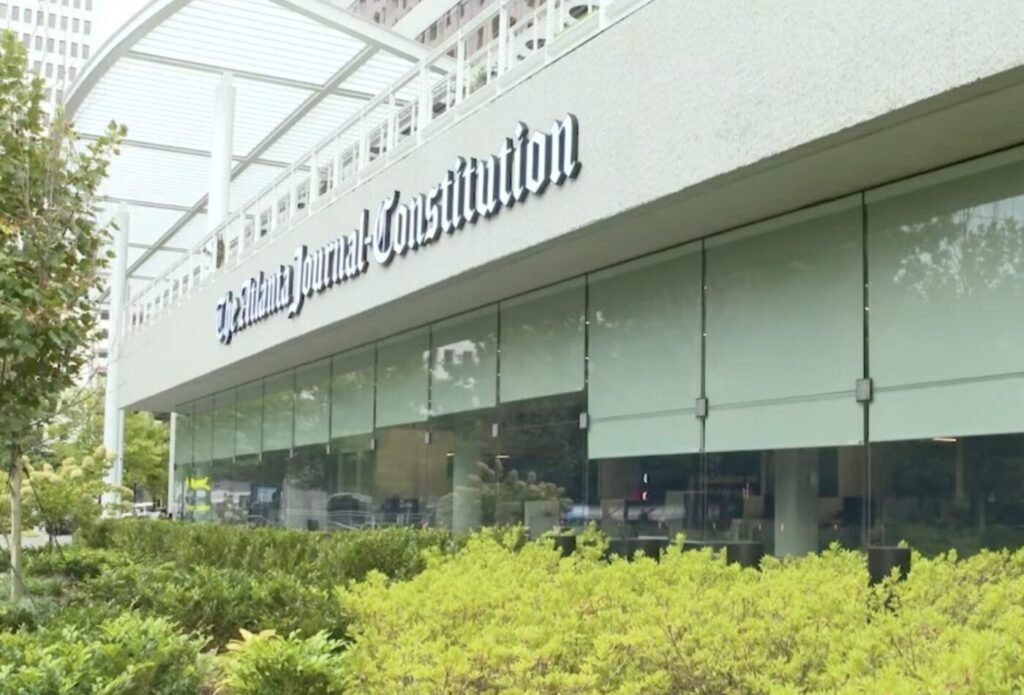
The Atlanta Journal-Constitution ended its long history of print editions on December 31, 2025. Once a statewide giant, it now operates primarily as a digital news outlet, reflecting major changes in news consumption and delivery.
Major local stories and useful updates, once a week.
For generations, Georgia woke up with the thump of a newspaper landing on the driveway. In Atlanta, that paper was usually The Atlanta Journal-Constitution — an institution that once stretched across all 159 Georgia counties and deep into the Southeast. By the time the AJC printed its final physical edition on Dec. 31, 2025, that empire had narrowed to roughly 40,000 remaining print subscribers.
The number sounded shocking partly because the AJC had once been one of the South’s dominant metro newspapers. In the 1990s, Sunday circulation exceeded 600,000 copies, making it one of the country’s most influential regional papers.
But Georgia did not suddenly become “the only state without a printed newspaper,” despite viral claims that circulated after the shutdown. What actually disappeared was something narrower and historically significant: Atlanta became the largest U.S. metropolitan area without a major printed daily newspaper. Georgia itself still has several printed dailies, including the Savannah Morning News, The Macon Telegraph, Augusta Chronicle and Gainesville Times.
The AJC’s decline was not caused by one event. It was the result of several structural shifts that unfolded over nearly three decades.
The first blow was classifieds. Newspapers historically relied less on subscriptions than on advertising monopolies. Auto listings, job ads, apartments, department stores and legal notices funded the newsroom. Then came Craigslist, Google, Facebook Marketplace and targeted digital advertising. The old business model collapsed.
Atlanta’s geography accelerated the problem. Unlike dense northeastern cities where newspaper delivery remained efficient, metro Atlanta sprawled outward into car-dependent suburbs. As readership density fell, it became increasingly expensive to truck newspapers across Georgia every morning. Between 2007 and 2010, the AJC sharply reduced its statewide print footprint and concentrated mainly on metro Atlanta. Circulation plunged more than 44% during that period alone.
By 2021, the paper closed its own presses entirely and outsourced printing to Gainesville. That move bought time financially but also symbolized the shrinking economics of print itself.
The circulation numbers tell the larger story:
In the early 1900s, The Atlanta Journal circulated roughly 30,000 copies in an expanding Southern city. By the 1950s, combined circulation between The Atlanta Journal and The Atlanta Constitution surpassed 300,000 daily copies.
The 1980s and 1990s marked the high-water era. The papers merged newsrooms in 1982 while continuing statewide expansion. By 1996, daily circulation reached roughly 426,000, with Sunday circulation topping 600,000.
Then the decline accelerated.
By 2004, weekday circulation had slipped to around 386,000. By 2019, it had collapsed to roughly 111,000. And by 2025, only about 40,000 print subscribers remained.
Ironically, the AJC’s digital audience was growing while print disappeared. The company reported around 75,000 digital-only subscribers by the end of the print era and publicly targeted 500,000 digital subscribers long term.
The newsroom itself also transformed dramatically.
At its late-20th-century peak, the AJC employed hundreds of reporters, photographers, copy editors, designers and production staff. The Journal and Constitution even maintained separate competing newsrooms for years after Cox acquired both papers.
As recently as 2015, the newsroom still employed about 500 people. But by early 2023, staffing had fallen to roughly 161 employees after years of buyouts and restructuring.
Under publisher Andrew Morse, the company briefly attempted an aggressive digital expansion backed by Cox Enterprises funding. New hires focused less on traditional print journalism and more on audience analytics, app development, newsletters, podcasts, SEO and digital product strategy.
That strategy soon ran into financial pressure as well. In early 2026, the company laid off roughly 50 employees during another restructuring.
The broader shift reflects something larger than Atlanta.
Across the country, metropolitan newspapers have steadily abandoned physical print while smaller regional papers continue operating on narrower local advertising ecosystems. Alabama’s three major metro papers stopped daily print operations years before Atlanta did. Wyoming has operated without a seven-day printed daily since 2020.
What disappeared in Atlanta was not simply a paper product. It was a civic rhythm. For much of the 20th century, the AJC functioned as Georgia’s political scoreboard, sports archive, investigative institution and morning ritual all at once. Governors watched it. Developers feared it. Families clipped recipes and obituaries from it.
Now the institution survives — but mostly as an app, a website and a stream of alerts on a phone screen.
If you’ve been following growth and change around here, these stories are worth a look too.
Community Voice
A snapshot of reader views, not a scientific survey.
Explore Community Voice →About the Author


In North Atlanta

The World Cup Came to Atlanta. FIFA Priced Too Many Georgians Out

Orchid Grove Receives Fresh Demolition Permits Near Duluth

Who Decides What You Can Put on a Georgia License Plate?

Delta Community opens Roswell branch on West Crossville Road

Your Neighbor’s Tree Fell on Your House. Who Pays in Georgia?

After Isaias, North Atlanta’s Focus Shifts From Warnings to Repairs
IN NORTH ATLANTA