 Exclusive sponsor
Georgia’s Magazine Market Is Shrinking—and Getting Stronger
Georgia's magazine market is evolving with fewer but more focused publications reaching over a million readers. Local titles emphasize community relevance while print remains valued alongside growing digital access.

Major local stories and useful updates, once a week.
The numbers behind Georgia’s magazine market reveal something unexpected: scale has not disappeared.
The state’s largest publication, Georgia Magazine, reaches more than 566,000 households every month, distributing roughly 6.8 million copies annually. That translates into an estimated readership of 1.2 million people per issue—meaning nearly one in ten households in Georgia receives it.
Even more striking is reader behavior. About 50 percent of readers report responding to an advertisement in the magazine within a year, a level of engagement that most digital platforms struggle to match.
The Split Between Digital Speed and Print Depth
At the same time, Georgia’s media landscape is clearly dividing into two paths.
Daily news is moving rapidly toward digital-only formats. The most prominent example is Atlanta Journal-Constitution, which ended its printed edition at the end of 2025 after more than 150 years.
But magazines are moving in the opposite direction.
Instead of chasing volume, they are becoming more selective—fewer issues, higher quality, and more intentional content. Research shows printed media generates 29 percent higher brand recall than digital, and magazines stay in homes for an average of 17 days.
In other words, digital wins on speed. Print wins on attention.
The Titles People Still Reach For
At newsstands and in subscriptions, the most widely read magazines in Georgia mirror national trends—but with a strong local layer.
Top-performing titles include:
- AARP The Magazine with over 22 million circulation nationally
- People Magazine, a consistent bestseller
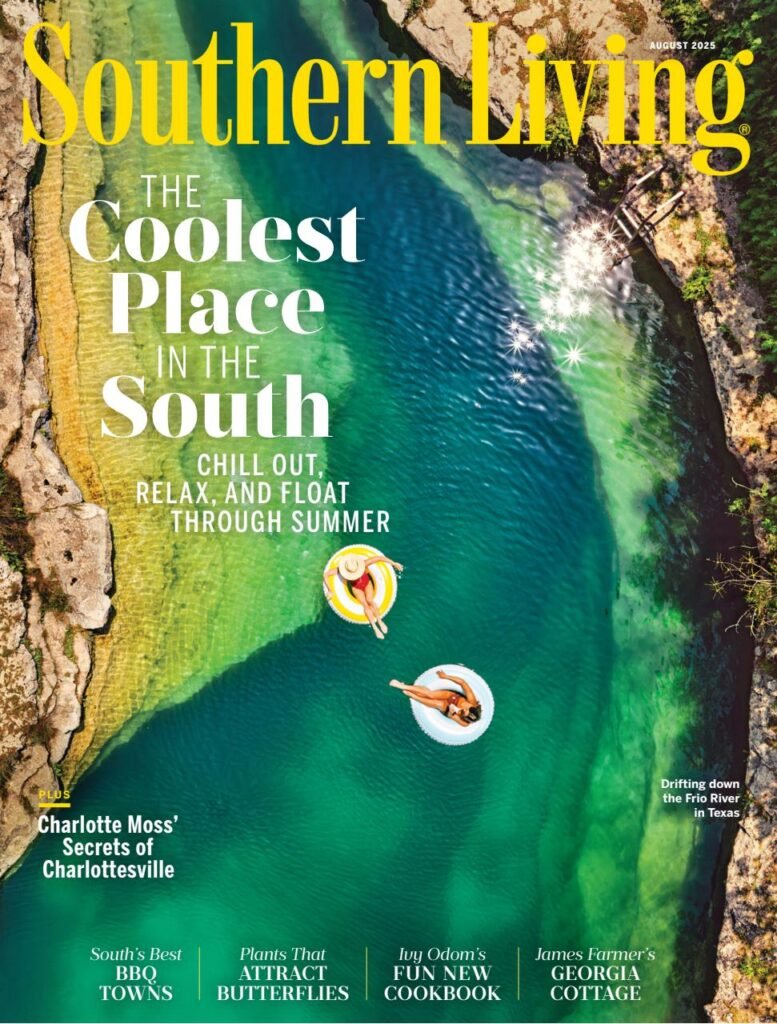
- Southern Living, with particularly strong relevance in Georgia
- National Geographic, recognized by 72% of Americans
These publications succeed not by breaking news, but by offering curated, reliable experiences—something readers increasingly seek in a fragmented digital environment.
Metro Atlanta’s Influence — and Its Limits
Within the state, Atlanta remains the center of publishing influence.
Atlanta Magazine alone reaches more than 400,000 monthly readers, blending long-form reporting with lifestyle and service journalism.
Its business-focused counterpart, GaBiz, targets executives and economic development leaders, reflecting Georgia’s position as a major corporate hub.
But the real shift is happening outside the urban core.
The Rise of Hyper-Local Publications
In places like Forsyth County and North Fulton, smaller magazines are building loyal audiences by staying close to everyday life.
Publications such as My Forsyth focus on restaurant openings, local businesses, and community events. Many operate on a free-to-reader model, funded entirely by local advertisers seeking direct access to nearby households.
These magazines are not trying to compete with national brands. They are filling a different role—one that larger media outlets often miss.
For readers in Alpharetta, Johns Creek, and South Forsyth, this type of content feels immediately useful: where to eat, who to hire, what is opening, and what is changing.
Where People Actually Get Magazines Today
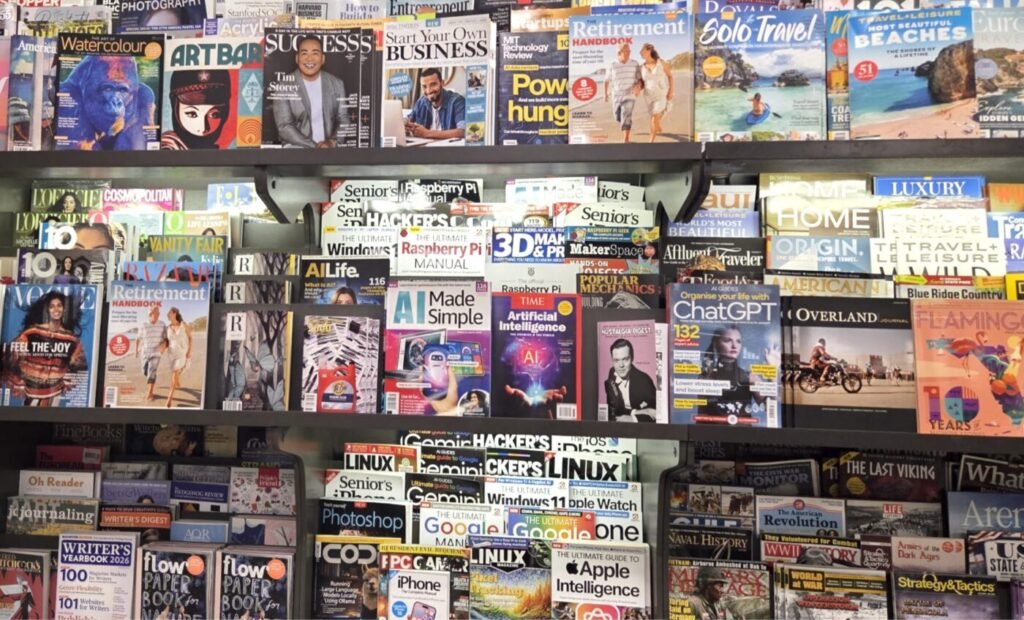
Physical locations still matter. Stores like Barnes & Noble at The Collection at Forsyth remain key hubs for browsing and discovery, especially for national titles and regional publications.
Local bookstores such as Johns Creek Books & Gifts continue to provide a more community-driven selection.
At the same time, digital access has expanded dramatically through Georgia’s PINES library system. With a single library card, residents can access thousands of magazines through apps like Libby—often with unlimited simultaneous access.
That combination—physical presence and digital convenience—is defining the new model.
Why Print Is Growing Again
Several trends are pushing magazines back into relevance:
Digital fatigue is one of the biggest. Readers are increasingly overwhelmed by notifications, short-form content, and algorithm-driven feeds. Print offers a slower, more focused experience.
At the same time, publishers are investing in higher-quality production. Premium paper, stronger design, and collectible editions are turning magazines into something closer to a long-term object than a disposable product.
There is also measurable growth in specific categories. Women’s lifestyle magazines saw readership increase by 23.6 percent between 2024 and 2025, while specialty enthusiast titles grew by 28.2 percent.
What This Means for North Atlanta
The future of local media is not about competing with national outlets or breaking news faster than social media. It is about depth, relevance, and trust.
Hyper-local publications have an opportunity to do what larger platforms cannot: reflect the specific rhythms of a place. That includes small business coverage, neighborhood development, school communities, and everyday life.
As advertising also shifts—toward native formats and targeted local reach—this kind of platform becomes even more valuable. The global magazine advertising market is expected to reach $45 billion by 2034, with native advertising already accounting for 45.7 percent of the segment.
For a local business in Johns Creek or Alpharetta, that means something simple but powerful: the right audience, in the right context, with a higher level of attention.
A Market Moving Toward “Fewer, Better”
There will likely be fewer publications in the years ahead—but the ones that remain will be more focused, more trusted, and more connected to their audiences.
In Georgia, that shift is already visible.
Magazines are no longer trying to be everything for everyone. They are becoming something more specific—and in many cases, more effective.
Useful Links and Resources
For readers who want to explore the publications, platforms, and local access points mentioned above, here are direct starting points:
Major Georgia and Atlanta Publications
National Magazines with Strong Georgia Readership
Libraries and Digital Access
Local Places to Find Print Magazines
The data and trends referenced in this article—such as circulation figures, readership behavior, and industry direction—are based on a 2025 analysis of Georgia’s periodical market, including readership exceeding 1.2 million per issue for leading publications and measurable growth in key magazine categories.
If you’ve been following growth and change around here, these stories are worth a look too.
Community Voice
A snapshot of reader views, not a scientific survey.
Explore Community Voice →About the Author


In North Atlanta

Atlanta Dream Earns First Finals Win, Returns Home Tied

Angel Reese Has Atlanta Dream Chasing Their First WNBA Title

Au and Thorne discuss lawsuit reform, jail spending and political compromise in Johns Creek

Cosmic Baseball Is Coming to Gwinnett in 2027; Ticket Lottery Opens

Duluth Multi-Employer Job Fair Set for Thursday at Pleasant Hill Career Center

Why Shaq Is Towering Over North Atlanta’s Cereal Aisles
IN NORTH ATLANTA