How Much Georgians Actually Spend on the Lottery—and What They Get Back
Get major local stories and development updates.
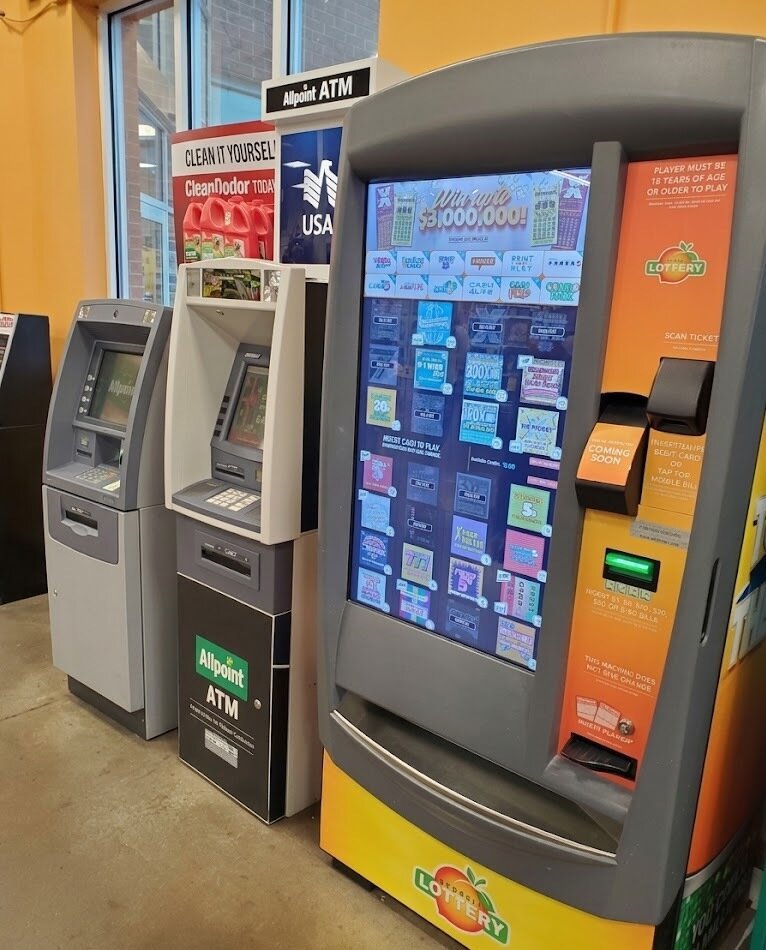
The Georgia Lottery is often framed as entertainment, but the numbers tell a different story. It is one of the largest voluntary spending systems in the state—and one of the most direct pipelines into education funding.
In recent years, Georgians have spent more than $6 billion annually on lottery tickets. That places the state among the top performers nationally in total sales. But the more revealing figure is per capita spending: residents spend roughly $486 to $635 per person each year, ranking near the very top in the United States.
Only Massachusetts consistently exceeds Georgia on a per-person basis.
A High-Spending State, by Design
Compared to larger states like California, Florida, or New York, Georgia’s total lottery revenue is lower simply due to population size. But per resident, participation is significantly higher.
That distinction matters. High per capita spending is the reason Georgia can sustain two expensive programs simultaneously: universal Pre-K and merit-based college scholarships.
The structure is straightforward:
- About 65 percent of revenue returns to players as prizes
- Roughly 25 to 26 percent goes directly to education
- The rest covers retailer commissions and operations
That means for every $100 spent statewide, about $25 is redirected into education funding.
At a $6 billion annual scale, that translates to well over $1.5 billion flowing into education each year.
What That Money Actually Funds
The return on that spending is unusually visible compared to most state programs.
The first major output is Georgia’s universal Pre-K system. Each year, around 70,000 children attend at no cost to their families. The program covers a full school day and has been expanded over time to reduce class sizes and improve teacher pay.
The second is the HOPE scholarship system, which has distributed more than $16 billion to over 2.25 million students since the early 1990s. For many families in Alpharetta, Johns Creek, and South Forsyth, this is the most tangible outcome: in-state tuition significantly reduced or fully covered.
The Zell Miller tier, which requires higher academic performance, covers 100 percent of tuition at public colleges. In high-performing districts, large portions of graduating classes qualify.
How Georgia Compares Nationally
Georgia’s model stands out not just for how much people spend, but for how efficiently funds are returned.
While states like New York generate more total revenue, much of it is absorbed into broader state budgets. Georgia, by contrast, directs proceeds into specific programs, which increases transparency and public support.
In national rankings:
- Georgia is top 10 in total sales
- Top 2 in per capita spending
- Among the highest in per capita returns to education
This combination—high participation and targeted spending—is what makes the system unusually effective.
The Trade-Offs
The system is not without trade-offs.
Lottery tickets are exempt from sales tax in Georgia. A recent audit estimated that applying standard sales tax could generate roughly $230 million annually for the state’s general fund.
But the same analysis found that adding the tax would reduce ticket sales by about 7.6 percent, ultimately lowering education funding by more than $1 billion over a decade.
In practical terms, the state has chosen to maximize education funding rather than maximize tax revenue.
There is also an ongoing equity question. Higher-income households are more likely to benefit from HOPE and Zell Miller scholarships, particularly in high-performing suburban districts. That imbalance continues to shape policy discussions around the program’s future.
What It Means Locally
In North Fulton and South Forsyth, the impact is amplified.
Higher participation rates, strong academic performance, and rapid population growth combine to make these communities some of the largest beneficiaries of lottery-funded programs. Pre-K demand is consistently high, and scholarship usage is above the state average.
At the same time, local retailers benefit from steady foot traffic tied to lottery sales, adding a smaller but consistent economic layer beyond education.
The Final Calculation
Georgia residents spend more on the lottery than almost anywhere else in the country. In return, the state delivers one of the most visible education funding systems in the U.S.
The exchange is simple: high participation fuels stable funding. Whether viewed as a smart public model or a system with trade-offs, it remains one of the defining financial structures behind education in Georgia.
Read Also:
About the Author


In North Atlanta

Fall Is the Right Time to Repair Many North Atlanta Lawns

Gwinnett Police Hiring Event Offers $55,923 Starting Pay and Paid Training
Gwinnett Schools Bring Bus Driver Recruiting to Suwanee and Peachtree Corners

Home Insurance Is at a Record High. Greenville Just Saw the Nation’s Biggest Increase

North Atlanta Weekend Guide: Festivals, Dogs, Live Music and the First Feel of Fall

Dervish Plans 200-Seat Turkish Restaurant in Johns Creek
IN NORTH ATLANTA