The Looking Glass Lands at The CTR as Downtown Atlanta Bets on Social Entertainment
Downtown Atlanta’s CTR is redeveloping the former CNN Center with The Looking Glass, a large dining and entertainment venue opening in 2027. It will offer games, themed activities, and diverse food options in a unique social setting.
Get major local stories and development updates.
Downtown Atlanta’s former CNN Center is being repositioned around a simple idea: the next life of a major urban landmark may depend less on office towers and more on food, games, events and public traffic. The latest piece of that strategy is The Looking Glass, a 38,000-square-foot dining and entertainment venue planned for The CTR, the rebranded 1.2-million-square-foot complex at 190 Marietta Street.
The project comes from AMP Up1 Hospitality, the group behind Your 3rd Spot in West Midtown, and is expected to open in the second quarter of 2027. Construction is scheduled to begin after Atlanta’s 2026 FIFA World Cup activity wraps, allowing The CTR to focus first on its immediate role as a downtown gathering point during one of the largest international events the city has hosted.
For North Atlanta readers, the story is not only about a downtown attraction. It is also about a business model that has already taken hold in Alpharetta, Johns Creek and the broader Georgia 400 corridor: competitive socializing, where restaurants are built around games, group activity and longer visits rather than a traditional dinner-and-drinks format.
A 38,000-Square-Foot Bet on “Eatertainment”
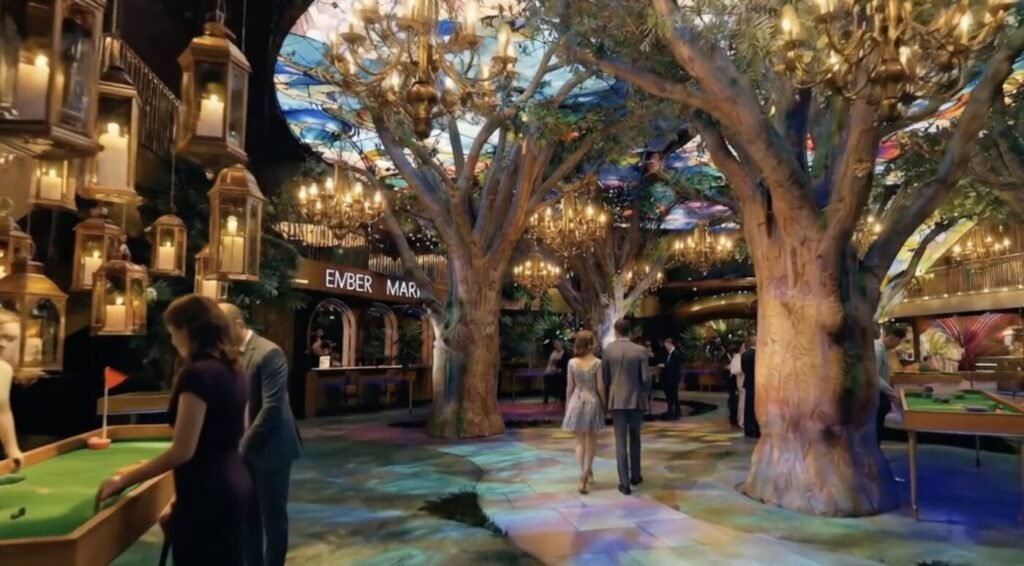
The Looking Glass is planned for the former west-side CNN Studios space overlooking Centennial Olympic Park. The venue is being designed as a multi-level social playground with capacity for up to 1,000 guests. Its concept draws from Alice in Wonderland, but the business premise is more practical than whimsical: give customers enough to do, eat and explore that a night out becomes a full experience rather than a single reservation.
The planned activities include carnival-style games, tabletop competitions, nine-pin bowling, a Hall of Illusions and a site-wide scavenger hunt called the Curiosity Quest. The format is intended to move guests through different rooms and chapters, turning the building itself into part of the entertainment.
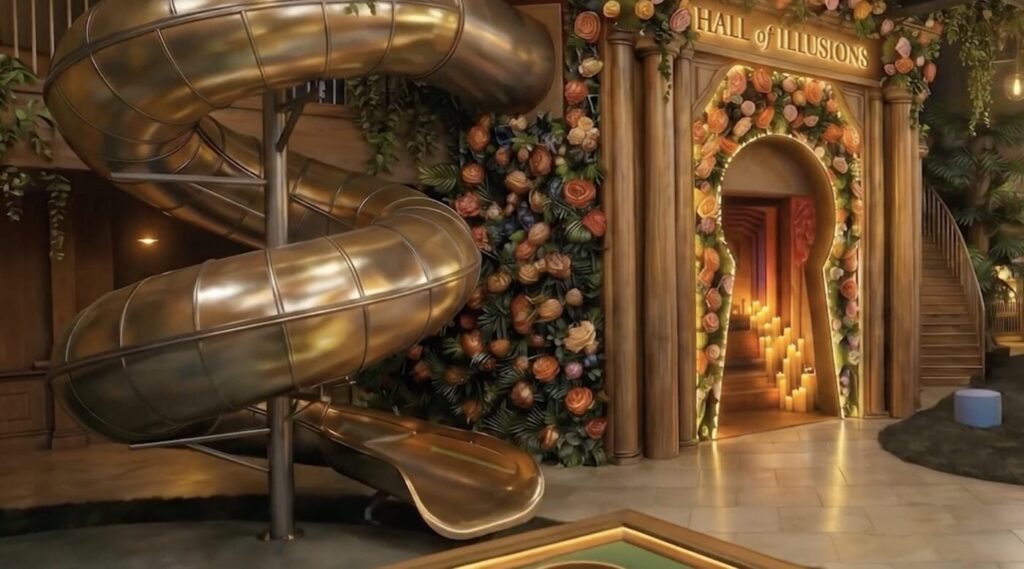
That kind of design reflects a broader shift in hospitality. Operators are trying to solve one of the hardest problems in the restaurant business: how to keep guests engaged longer without relying only on alcohol sales or table turnover. Games, interactive rooms and flexible seating create more reasons for groups to stay, return and spend across several categories.
Food and Beverage Are Central to the Model
The Looking Glass is not being pitched as an arcade with snacks. Its food program is intended to carry the experience, with small plates and desserts that include lemon pepper shrimp, spicy tuna crispy rice, beignets, brown butter tea cakes and raspberry rose macarons. The bar program is expected to include cocktails as well as zero-proof flights, a detail that matters as more venues try to serve mixed groups where not everyone is drinking.
Ordering will run through a station model called The Ember Market, where guests can order by phone or at digital kiosks and then choose where to sit throughout the venue. That setup gives the operator more flexibility than a conventional restaurant floor. It also helps explain why these large-format venues are attractive to developers: they can absorb crowds from events, corporate groups, families and late-night customers without operating like a single-use restaurant.
The venue is expected to be family-friendly during the day, with guests under 18 required to be accompanied by a parent or guardian. In the evening, it will shift to a 21-and-over environment. That two-part schedule mirrors the economics of modern entertainment dining: families and tourists earlier, adults and groups later.
The CTR’s Larger Repositioning
The Looking Glass is part of a much larger overhaul of the former CNN Center. CP Group has invested heavily in repositioning the building as The CTR, with exterior work, atrium changes and a new ground-floor strategy meant to reconnect the complex to the streets around it.
The immediate anchor is CTR Food Works, a 24,000-square-foot food hall opening as part of the building’s public-facing revival. The food hall is replacing the older mall-style food court with chef-driven stalls and a central bar expected to be one of the largest in Georgia. Confirmed concepts include Southern Belle Chicken Company from Michelin-recommended chef Joey Ward, Italian and pastry concepts from chef Steven Ferdinand, Szechuan food, seafood, ice cream, tacos, Latin dishes and a burger collaboration involving Andrew Zimmern.
Mastro’s Ocean Club is also expected to occupy an 8,200-square-foot restaurant space, giving the property a higher-end dining anchor. Together, the food hall, flagship restaurant and The Looking Glass point to a clear leasing strategy: The CTR is trying to become a full-day destination for office workers, tourists, sports fans, concertgoers and downtown visitors.
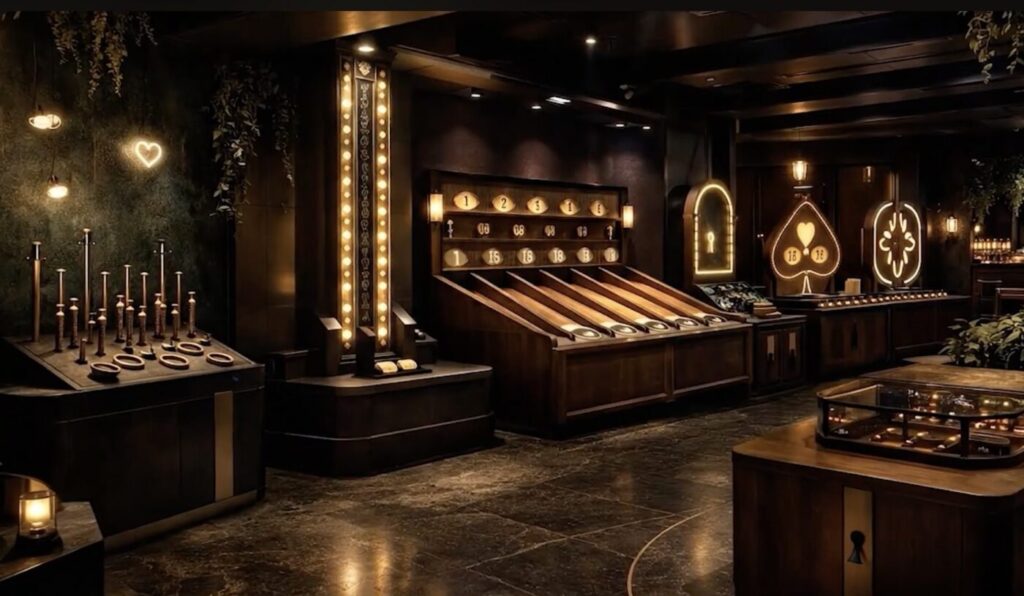
That timing is deliberate. Atlanta will be on a global stage during the 2026 World Cup, and The CTR sits near some of the city’s most important event infrastructure, including Mercedes-Benz Stadium, State Farm Arena, Centennial Olympic Park and nearby hotels. A building that once functioned as a controlled media headquarters is being remade as a public entertainment asset.
A Site With a History of Big Entertainment Ideas
The address has been through several lives. Before CNN, the site was part of the Omni International Complex, which opened in 1976 with a large indoor theme park, ice skating rink and ambitious entertainment attractions. The World of Sid and Marty Krofft was short-lived, closing after only a few months, but it left behind a useful reminder: downtown Atlanta has tried before to turn this building into a large-scale leisure destination.
CNN gave the property a more durable identity for nearly four decades. Now the pendulum is swinging back toward public use, though under very different market conditions. The earlier version depended on a theme-park model. The new version depends on food halls, private events, nightlife, branded experiences and steady foot traffic from sports and tourism.
The Looking Glass is not being built as a standalone attraction that must carry the whole property. It is one tenant in a larger mixed-use ecosystem, surrounded by restaurants, bars, hotel activity and major event demand. That makes the economics more plausible than the site’s earlier entertainment experiments.
The Business Question Ahead
The success of The Looking Glass will depend on execution more than novelty. Atlanta has no shortage of restaurants, bars or game-centered venues. What it has less of is a large, well-run downtown destination that can appeal to tourists, corporate groups, families, sports fans and locals without feeling like a temporary attraction.
That is the opportunity at The CTR. If the building can turn its location into a reliable advantage, The Looking Glass could become more than a themed night out. It could help define whether the former CNN Center can function as a modern public hub in a downtown still working to rebuild daily foot traffic.
For North Atlanta residents, the practical takeaway is straightforward. The next major social entertainment destination is not opening in Alpharetta or Johns Creek. It is opening downtown, inside one of Atlanta’s most recognizable buildings, using a formula the suburbs helped prove.
If you enjoy discovering places with local character, these stories are worth a look too.
About the Author

In North Atlanta
What North Atlanta Should Know Today. Friday, Sept. 4, 2026
North Atlanta Weekend Guide: Festivals, Dogs, Live Music and the First Feel of Fall
Dervish Plans 200-Seat Turkish Restaurant in Johns Creek
Dumpling Master Opens at Peachtree Corners Town Center

South Forsyth Roads and Development Take Center Stage at Forsyth County Meeting
Why Honeycrisp Is the $5-a-Pound Apple in North Atlanta
IN NORTH ATLANTA