 Exclusive sponsor
SK Battery America Says Commerce Workforce Has Held Steady at About 1,600
SK Battery America’s Commerce plant holds about 1,600 employees following layoffs earlier this year, as it shifts focus toward energy storage alongside electric vehicles. This reflects Georgia’s changing battery industry challenges and opportunities.
Major local stories and useful updates, once a week.
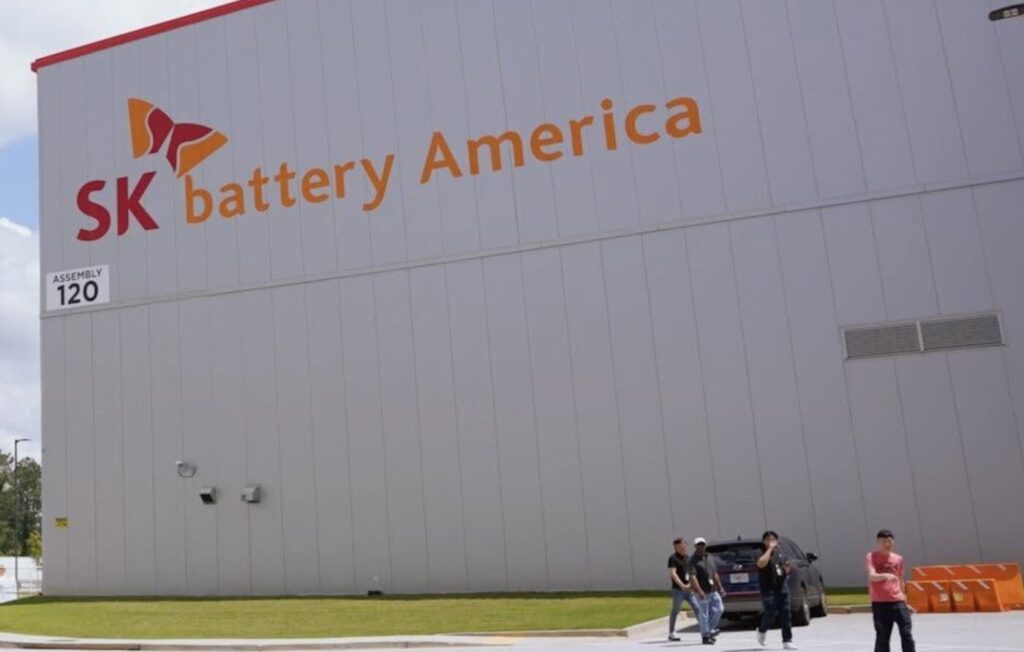
SK Battery America says its Commerce plant has seen no major workforce change since the company’s large round of layoffs in March, offering a clearer picture of how one of Georgia’s biggest battery factories is settling into a more uncertain market.
The company cut 958 positions at the Jackson County plant this spring as electric-vehicle demand slowed. In a response to North Atlanta Star, Christian Bokich, director of communications and government affairs for SK Battery America, said the plant now employs about 1,600 people and that there has been “no major change in workforce since then.”
That confirms the deep reduction announced in March has not, so far, been followed by another major cut.
The update comes days after North Atlanta Star reported that Georgia’s battery industry is moving into a more complicated phase, with some facilities reducing employment while other projects continue to open or expand.
Commerce is staying open, but its role is broadening
SK did not provide a breakdown showing how much of the Commerce plant is now devoted to electric-vehicle batteries and how much is devoted to batteries for energy-storage systems.
But the company made clear that energy storage is becoming an important part of its U.S. strategy.
“Energy storage is a strategic priority,” Bokich said, adding that SK sees strong demand for batteries that can support the U.S. electric grid.
The company said it remains focused on producing advanced batteries for both energy-storage systems, commonly known as ESS, and electric vehicles.
That distinction matters for Commerce. The plant was built during the rapid expansion of electric-vehicle manufacturing in Georgia and supplied batteries for vehicles including the Ford F-150 Lightning. But the U.S. auto industry has since slowed or revised a number of EV production plans, forcing battery makers to look for other sources of demand.
Large-scale energy storage offers one possible outlet. Utilities, businesses and data centers increasingly use battery systems to store electricity, manage peak demand and provide backup capacity.
SK did not say how much energy-storage production is already taking place in Commerce, and Bokich said the company had no new production figures to provide.
Georgia’s battery sector is becoming less dependent on one market
The Commerce plant remains one of the largest advanced-manufacturing employers in northeast Georgia even after the layoffs.
The company’s current headcount of roughly 1,600 also matches the workforce level SK projected after the March reduction, when a state WARN filing showed 958 positions affected.
The broader Georgia battery story is now moving in two directions at once. SK’s Commerce operation is smaller than it was at the start of the year, while a new Hyundai-SK On battery plant in Bartow County has begun production and is expected to employ thousands of workers as it scales.
Hyundai’s Georgia vehicle operations are also adding more flexibility by producing both electric and hybrid vehicles, while Rivian has resumed work on its planned factory east of Atlanta.
For Georgia, the emerging picture is no longer a simple EV boom. Battery manufacturing is becoming tied to a wider mix of electric vehicles, hybrids, grid storage and other power-demand applications.
SK says Commerce will remain part of that shift.
“We remain committed to Georgia and building a robust U.S. supply chain for advanced battery manufacturing,” Bokich said.
That does not erase the impact of losing nearly 1,000 jobs in March. But six months later, the company’s latest update suggests the Commerce plant has reached a period of relative workforce stability while SK works to serve more than one battery market.
Community Voice
A snapshot of reader views, not a scientific survey.
Explore Community Voice →About the Author


In North Atlanta

Norcross Has a Little-Known Place in America’s Supplement Aisle
Suwanee’s Winton Machine Heads to Washington With $400,000 on the Line
Siemens’ Alpharetta Rail Operation Is Hiring From $20 an Hour to $95,000 a Year
UCB plans $2 billion Rowen plant, promising 330 Gwinnett jobs
Socomec’s Suwanee hiring begins with salaries up to $145,000

Siemens starts staffing Pendergrass factory projected to employ about 1,700
IN NORTH ATLANTA