Georgia Tech Hosts Federal Push to Bring New Battery Technology Into U.S. Factories
The U.S. Department of Energy announced a new battery manufacturing strategy at Georgia Tech, aiming to grow domestic production and technology leadership by 2035. Georgia’s battery industry and research community could play a key role in this national effort.
Major local stories and useful updates, once a week.
The U.S. Department of Energy brought its new battery strategy to Georgia Tech on Oct. 28, launching a national manufacturing effort aimed at getting new energy-storage technologies out of laboratories and into American factories.
Assistant Secretary of Energy Audrey Robertson joined Georgia Tech interim President Tim Lieuwen at the Advanced Manufacturing Pilot Facility for the announcement. The strategy sets goals of building a fully integrated domestic battery supply chain by 2030 and achieving U.S. leadership in battery technology and manufacturing by 2035.
For Georgia, the push reaches into an industry already adjusting to changing demand. Battery factories in Commerce and Bartow County sit alongside a university research network working on energy storage for vehicles, the electric grid and other uses.
From laboratory results to factory production
The new Battery Manufacturing Accelerator, known as BattMan, will bring national laboratories, universities and industry together to address a difficult step in battery development: producing promising technologies reliably and affordably at commercial scale.
Pacific Northwest National Laboratory will lead the consortium, with support from DOE’s Advanced Materials and Manufacturing Technologies Office. Its goals include lowering production costs, shortening development timelines and advancing battery materials that use more abundant domestic elements.
The national strategy also calls for investment in materials and processing, manufacturing innovation, grid applications and workforce development. DOE projects U.S. battery demand for transportation and energy storage will grow from 179 gigawatt-hours in 2025 to 707 gigawatt-hours in 2035—nearly four times as much.
A broader market for Georgia’s batteries
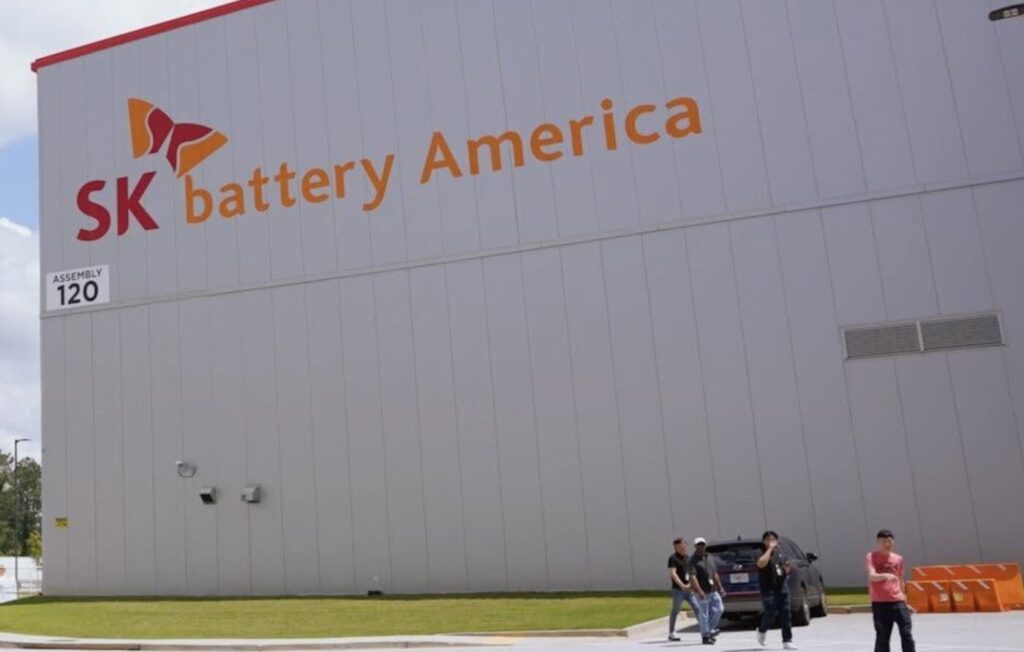
Grid storage is already part of the conversation in Commerce. In a September response to North Atlanta Star, SK Battery America communications and government affairs director Christian Bokich said energy storage was a strategic priority for the company.
At that time, SK said its Commerce workforce stood at about 1,600, with no major change since the plant’s March layoffs. The company did not provide a breakdown of production devoted to electric vehicles versus energy-storage systems. Those figures describe the company’s September update, rather than a new hiring announcement.
Georgia Tech’s Advanced Battery Center brings together more than 20 faculty members and more than 150 researchers working on energy-storage technologies. Its work spans battery materials, fabrication, testing and applications including electric mobility and grid storage.
The federal initiative offers a route for research and manufacturers to work more closely together, but the Oct. 28 announcement did not specify a new Georgia factory, a state-specific funding award or a hiring commitment. Companies and institutions interested in participating can contact the BattMan consortium.
Community Voice
A snapshot of reader views, not a scientific survey.
Explore Community Voice →About the Author

In North Atlanta

Driverless Doritos Trucks Are Now About 550 Miles From Here

Smart Grocery Carts Are Coming. But What Are We Giving Up?

Could North Atlanta Benefit From the Tech Reset?
The $4 Labor Day: Why Sun Belt Families Are Feeling the Gas-Price Surge So Differently

Alpharetta Clears North Point NHL Arena Plan in Narrow 4-3 Vote

The End of the Saturday Dealership Trip? How Online Car Buying Is Starting to Reshape North Atlanta
IN NORTH ATLANTA