When Southern Timber Stops Paying, What Happens to the Land?
Declining pulpwood markets and mill closures in the South are changing how landowners manage pine forests. The traditional timber economy faces pressures, prompting new land-use choices and uncertainty about the future of family-owned forest land.
Major local stories and useful updates, once a week.
 Exclusive sponsor
For generations across the South, pine trees were more than scenery. They were a crop, a savings account and, for many families, one of the reasons land could remain in the family for another generation.
That bargain is becoming harder to sustain.
The market for pulpwood — the smaller and lower-grade trees used for paper, cardboard and other fiber products — has deteriorated across much of the South. In the fourth quarter of 2025, Southern pine pulpwood averaged $5.96 a ton, down 22% from a year earlier and 46% from its 2022 peak. Pine sawtimber, the larger trees used for lumber, averaged $23.23 a ton and was also lower than a year earlier.
The decline is arriving alongside a wave of mill closures and cutbacks stretching across the region. Georgia has become one of the starkest examples. International Paper closed its Savannah and Riceboro mills in 2025 as part of a restructuring that eliminated about 1,100 jobs and roughly 1 million tons of annual containerboard capacity. Georgia-Pacific also closed its Cedar Springs containerboard mill, affecting about 535 jobs.
This spring, Domtar indefinitely idled its Coosa Pines pulp mill in Alabama, reducing annual market-pulp capacity by about 270,000 metric tons and cutting roughly 285 jobs.
For the Southern timber economy, however, the consequences reach well beyond the mill gates.
The First Payday Is Disappearing
A pine forest is not planted and simply left alone for 30 years. Landowners commonly establish hundreds of seedlings per acre, allowing closely spaced trees to grow straight. As the trees mature, some must be removed so the strongest can continue growing into more valuable sawtimber.
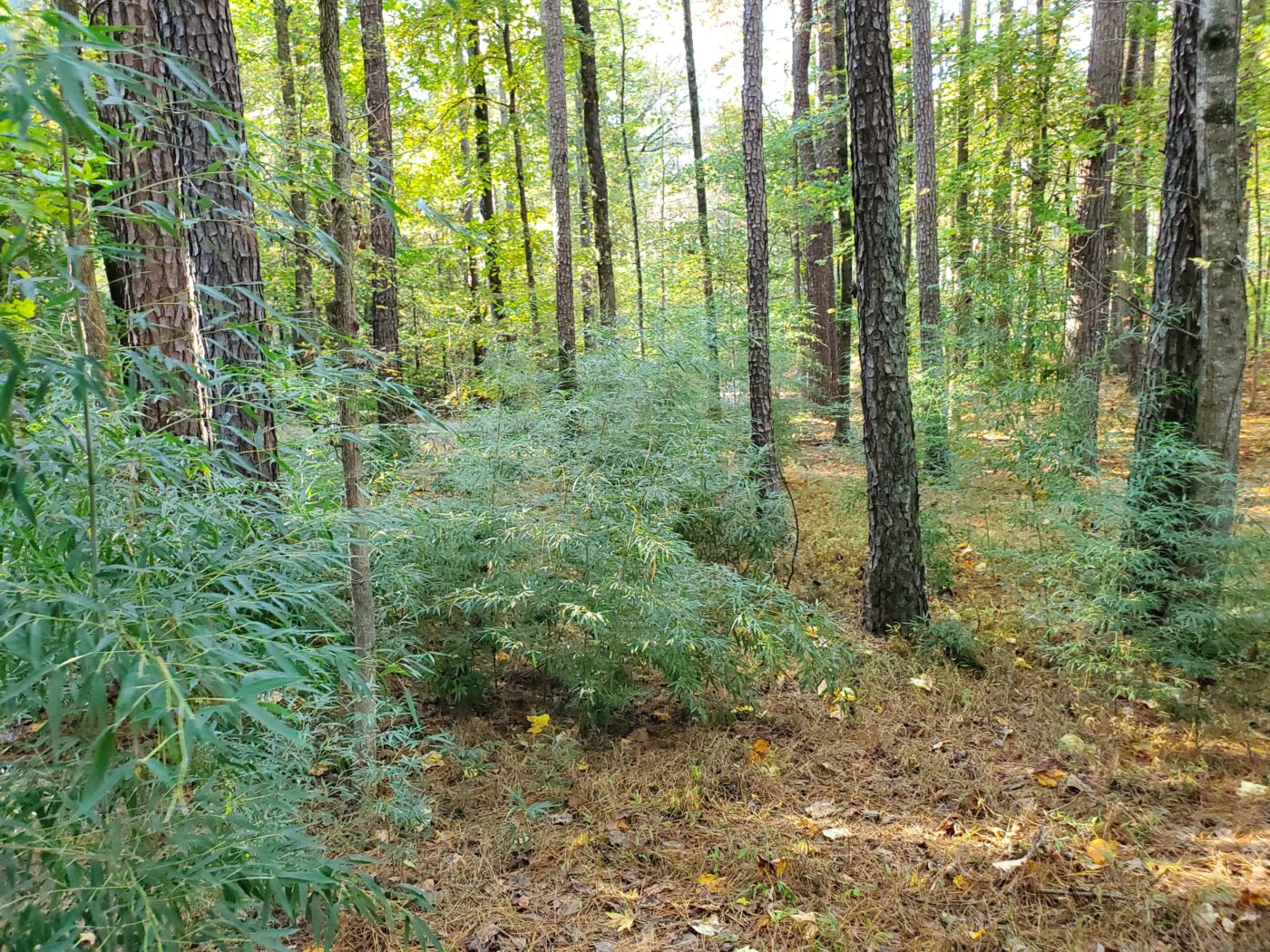
That thinning traditionally produced an important early return. The smaller trees could be sold as pulpwood while the landowner waited years longer for the larger trees to mature.
When pulpwood has few buyers, that equation changes. In portions of the South, prices have fallen so far that landowners can receive almost nothing for material that once generated income. Some have even faced the prospect of paying to have unwanted pulpwood removed.
The concern is not simply losing one timber sale. Thinning is part of maintaining a productive pine stand. If the smaller trees have little value, managing the forest becomes more expensive while one of the intermediate paydays disappears.
That can change the economics of planting the next forest.
ArborGen, a major producer of loblolly pine seedlings, has reported that Southern seedling sales volume dropped more than 20% over its previous two fiscal years. Some landowners are planting fewer trees. Others are reconsidering whether another decades-long timber rotation makes financial sense at all.
Georgia Shows How Quickly a Market Can Change
The transformation is particularly visible in Georgia, historically one of the nation’s dominant timber states.
University of Georgia economists reported that South Georgia pine pulpwood averaged about $9.50 a ton in the third quarter of 2025, down 40% from a year earlier. North Georgia pine pulpwood fell 18% to slightly more than $6 a ton.
At the same time, the closure of three major Georgia facilities — Georgia-Pacific’s Cedar Springs mill and International Paper operations in Savannah and Riceboro — eliminated an immediate market for an estimated 8.3 million tons of timber annually, roughly half of which had been coming from Georgia counties. Georgia lost about 3 million tons of wood-using pulping capacity through recent closures.
The effects also cross state lines. Southern timber markets operate in regional hauling zones rather than neatly along state borders. When a mill disappears, wood that once flowed there competes for space at surviving mills farther away. Trucks travel longer distances. Nearby markets receive additional supply. Prices can weaken well beyond the county where the smokestacks went quiet.
The U.S. Forest Service counted 66 mills drawing pulpwood from 13 Southern states in 2024. Alabama and Georgia were the region’s largest producers, with 9.1 million and 8.7 million cords respectively. Total Southern pulpwood production declined from 52.9 million cords in 2023 to 52.1 million in 2024, even before some of the major closures that followed.
A Century-Old Southern Land Model
The stakes are larger because timber helped shape the modern South itself.
After much of the region’s original forest was cut over in the late 19th and early 20th centuries, pine became an agricultural crop of sorts. Paper mills created demand for fast-growing Southern species, particularly loblolly and slash pine. Families planted former cotton land and worn-out farms. Government programs encouraged reforestation.
Unlike row crops, trees did not require an annual harvest. A family could maintain acreage, periodically sell timber and pass both the forest and the land to children.
Over time, pine became part of the economic landscape from Virginia and the Carolinas through Georgia, Florida, Alabama, Mississippi, Louisiana, Arkansas and Texas.
That history helps explain why today’s pulpwood slump is about more than commodity prices. Millions of privately owned acres are tied to an investment cycle measured not in quarters or even years, but decades.
A landowner planting pine today is making a decision partly for someone who may own the property 25 or 30 years from now.
If that next generation cannot expect reliable markets along the way, the decision becomes different.
The Land Has Other Suitors
Trees are not the only thing Southern acreage can produce. Across the region, timber owners are exploring solar leases, agricultural alternatives and carbon markets. One large Georgia landowner profiled amid the downturn has replaced some pine acreage with blueberries. Others are considering whether selling portions of family holdings provides a better financial return than another timber rotation.
That possibility could become increasingly important across the Sun Belt.
The same Southern states that contain enormous timber resources are also absorbing population growth, housing development, factories, warehouses, data centers, transmission lines and utility-scale solar projects. Land near expanding metropolitan areas, interstate corridors and industrial sites can carry a value that has little connection to the income generated by the trees standing on it.
Timber economics alone will not determine what happens to that land. Families hold forests for recreation, hunting, inheritance and conservation as well as income. Tax programs can also make long-term forest ownership more practical.
But money from timber has historically helped make keeping land in trees economically possible.
When that income weakens, another option can look more attractive.
The Search for a New Use for Small Trees
The industry is not simply waiting for traditional pulp and paper demand to return. Some of the biggest forest-products companies are betting that Southern pine can feed entirely new industries.
Weyerhaeuser is constructing a roughly $500 million TimberStrand engineered-wood facility near Monticello, Arkansas, scheduled to begin production in 2027. The plant is designed in part to convert lower-quality Southern logs and forest byproducts into higher-value structural material.
In Mississippi, the company is also involved in a project intended to turn lower-value logs and sawmill byproducts into biocarbon for metals production, potentially creating another market for material that might otherwise struggle to find a buyer.
Other possibilities being pursued across the industry include wood pellets, engineered panels, cellulose-derived fuels and materials, and new export markets.
Whether these uses can absorb enough wood to replace disappearing pulp capacity remains uncertain.
For now, the South has an unusual problem: it is very good at growing trees.
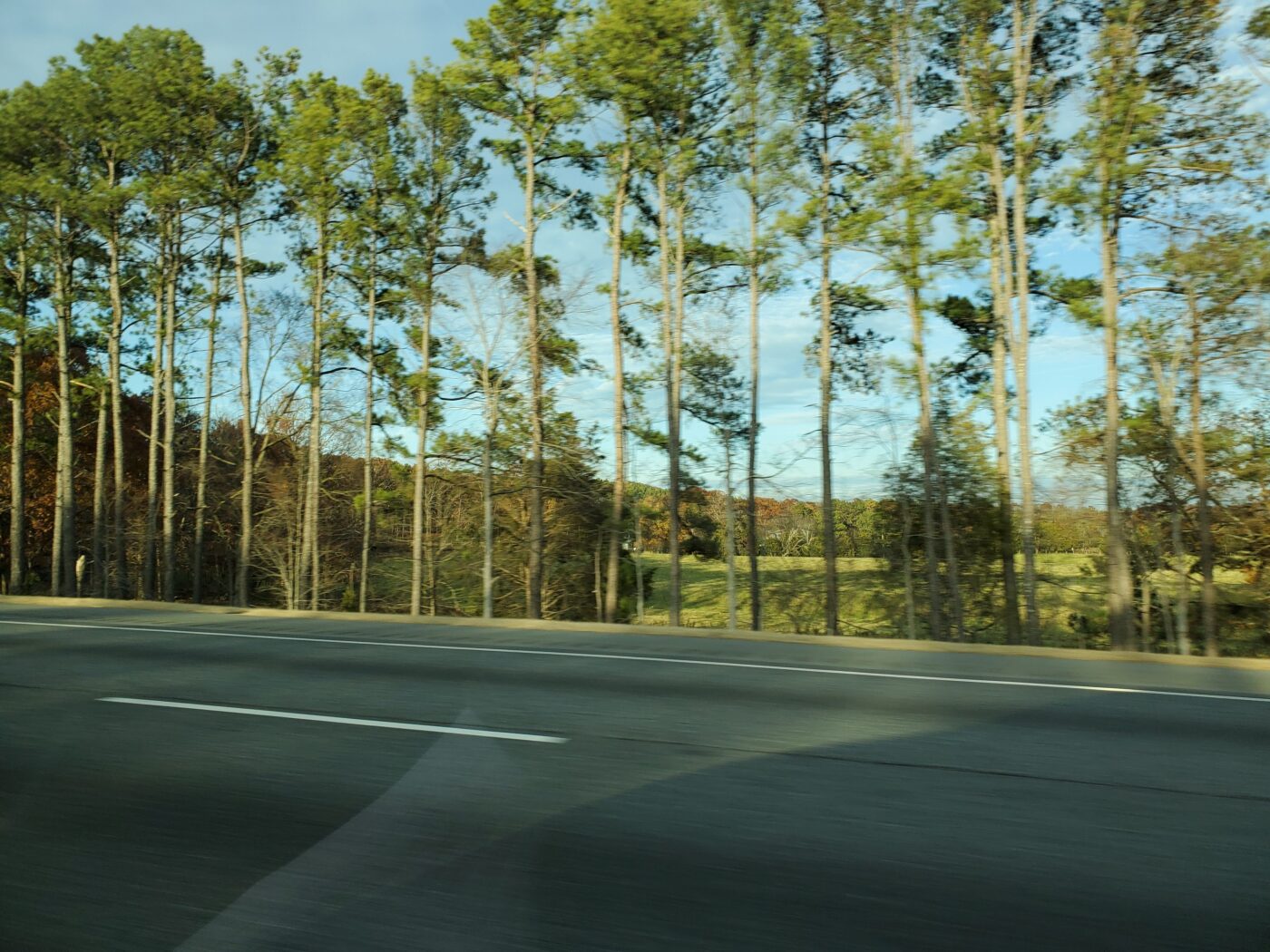
Forests planted during decades of expanding demand continue to mature even as some of the mills built to consume them disappear. University of Georgia economists say Southern wood-using pulping capacity fell to 44.72 million tons in 2025, while competition from recycled fiber and foreign pulp continues to pressure traditional markets.
What Replaces the Pine?
The Southern pine economy has survived transformations before. Timber replaced exhausted cotton fields. Paper and cardboard created markets for trees once considered too small for lumber. Modern sawmills and engineered wood opened new uses. Entire rural economies adapted around forests that could be harvested and planted again.
The current transition may eventually create another market capable of doing the same.
But there is a difference between inventing a promising use for Southern wood and building enough plants, buyers and infrastructure to replace millions of tons of lost demand.
In the meantime, landowners still have decisions to make.
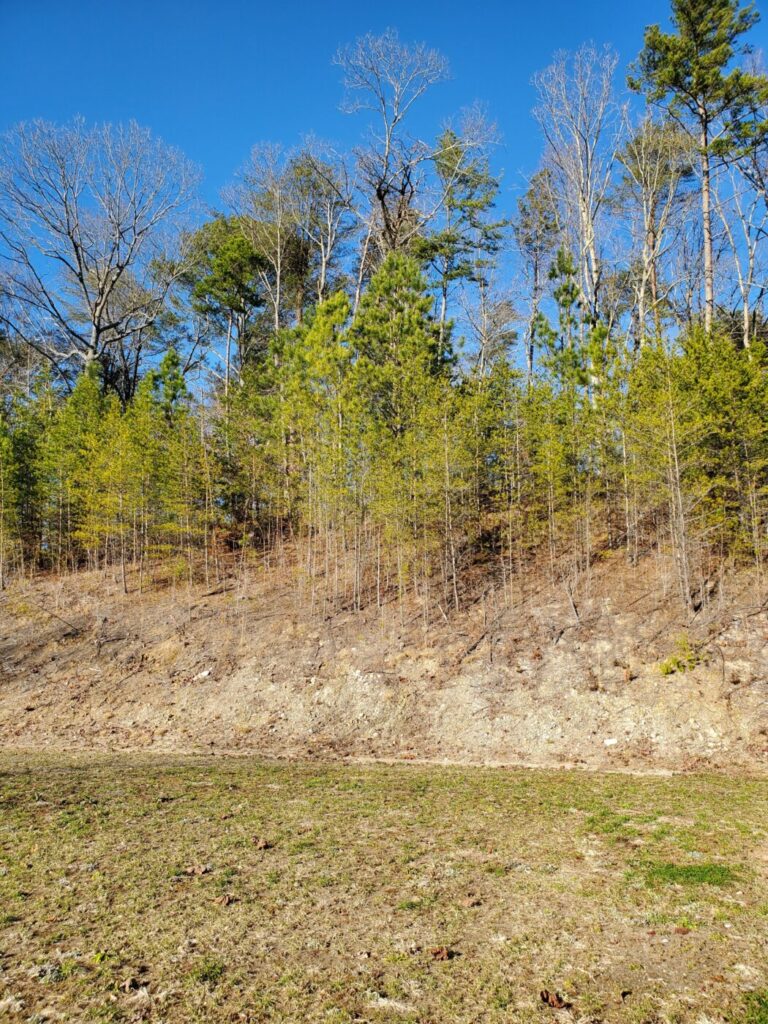
Plant again or wait. Thin the forest or postpone it. Lease acreage for something else. Sell part of the property. Keep the trees because the family always has.
Those individual choices rarely make headlines. Repeated across millions of acres, they can change a region.
For nearly a century, pine helped determine what much of the rural South looked like and how its land was used. If growing those trees no longer provides the economic argument it once did, the next transformation of the Southern landscape may already be beginning.
If you’ve been following growth and change around here, these stories are worth a look too.
About the Author


Community Voice
A snapshot of reader views, not a scientific survey.
Explore Community Voice →In North Atlanta
The South Has Become America’s Buyer’s Market. The Bargains Come With Questions
America Is Losing Children Almost Everywhere. The South Is Gaining Them

More homes are for sale in Forsyth County, and buyers are taking their time
Sugar Hill Preserve Moves Toward Sales With 58 Homes

New Dining, Live Music and Small Shops Planned for Downtown Alpharetta
Two Cumming Homes See Price Cuts Exceeding $160,000 After a Year on the Market
IN NORTH ATLANTA