 Exclusive sponsor
America Is Losing Children Almost Everywhere. The South Is Gaining Them
While most of the US is losing children, Southern metro areas like Atlanta and Houston are seeing growth in their outer counties. Families are moving to exurban communities, leading to more schools and family services being developed in these fast-growing areas.

Major local stories and useful updates, once a week.
America’s child population is shrinking—but not everywhere.
The country had about 72 million residents under age 18 in 2025, down 1.8 million from 2020. The decline reached every major region except the South, which added approximately 304,000 children during the same period.
That 1.1% Southern increase may appear modest. What makes it remarkable is the contrast: The under-18 population fell 3.9% in the Midwest, 4.1% in the Northeast and 5.7% in the West, according to the latest U.S. Census Bureau population estimates.
The numbers reveal more than a regional difference. They show families concentrating in a particular kind of place—the outer counties of growing Southern metropolitan areas.
The strongest growth is beyond the urban core
Children did not increase evenly across the South. In central metropolitan counties, the under-18 population grew just 0.7% between 2020 and 2025. In outlying metro counties—the exurban communities tied economically to a larger city—it jumped 6.5%.
Southern micropolitan counties lost 0.6% of their children, while counties outside metropolitan and micropolitan areas lost 2.2%.
The family-growth story, then, is not simply that people are moving south. It is that many are settling along the expanding edges of Atlanta, Dallas, Houston, Charlotte, Nashville, Raleigh and other metropolitan areas.
The same outlying counties recorded a 16% increase among residents ages 25 to 44, the period when many adults are raising children. Their overall population grew 10.7%, compared with 6.1% in the South’s central metro counties.
These communities are attracting young adults, children, middle-aged residents and retirees at the same time. The region’s outer counties grew faster in every major age group, creating a broad population shift rather than a boom limited to one stage of life.
North Atlanta fits the pattern
Forsyth County offers a familiar example. Its population reached approximately 283,000 in 2025, and about 69,200 residents were under 18 in the latest available age breakdown. Children represented 24.7% of the county’s population, compared with 21.6% nationally.
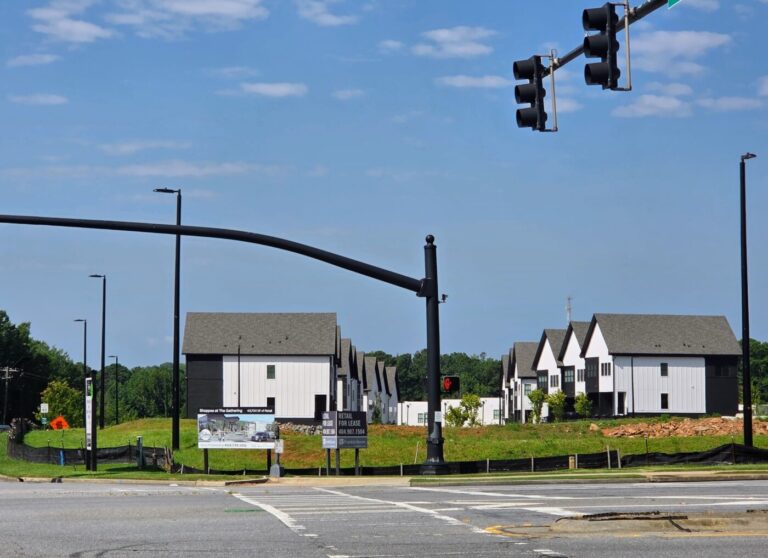
That concentration can be seen in the continued construction of schools, subdivisions, medical offices, youth facilities and family-oriented businesses across South Forsyth and neighboring communities.
Similar patterns appear in fast-growing outer counties around Texas metros and across the Carolinas. Families may still depend on the nearby city for employment, airports, universities and specialized medical care, but increasingly choose to live farther from the center.
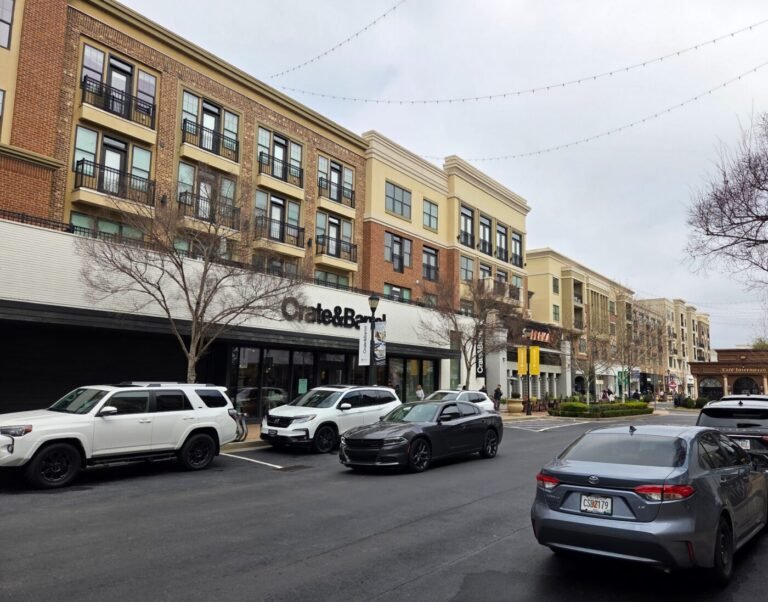
Housing is part of the appeal. Outer counties often provide newer homes, larger lots and highly regarded schools at prices below the most desirable close-in neighborhoods. Remote and hybrid work have also made longer distances from a downtown office manageable for some households.
The tradeoffs arrive quickly: longer drives, crowded arterial roads, limited public transportation and public services that must expand across a larger geographic area.
More children create a different kind of growth
Population growth is often discussed through home construction, property values and business recruitment. A rising child population places a different set of demands on a community.
Children require classrooms, teachers, school buses, parks, pediatric care, libraries, sports fields and child care. A subdivision can be built within a few years; a school district must plan much further ahead while guessing where the next concentration of families will emerge.
The change also matters to businesses. Grocery stores, tutoring services, medical practices, restaurants, entertainment venues and youth programs all make location decisions partly around the presence of families. A sustained increase in children can support commercial activity that would struggle in an aging or shrinking market.
But more children do not automatically guarantee healthy public-school enrollment. Private schools, homeschooling, uneven growth between neighborhoods and differences within the broad under-18 category can complicate the picture. A county may gain toddlers while an established neighborhood loses high school students.
Local officials therefore need more than an overall population projection. They need to know which age groups are arriving, where homes are being built and how quickly those families will require public services.
A national divide is taking shape
The Southern gains have not reversed America’s broader aging trend. The national median age reached 39.4 in 2025, up from 38.6 in 2020, and three-quarters of U.S. counties now have median ages at or above the national figure.
The population 65 and older grew 16.2% nationally over five years. The under-18 population declined 2.4%.
Yet the South was the only region to grow in every major age category. Its total population increased 6%—nearly twice the national rate—and its outlying metropolitan counties are becoming some of the few places combining substantial growth among children, working-age adults and retirees.
That gives these communities an opportunity much of the country no longer has: a growing base of future students, workers, customers and residents.
It also leaves them with a test. Attracting families is one achievement. Building communities that remain affordable, connected and functional as those families arrive will be the harder one.
If you’ve been following growth and change around here, these stories are worth a look too.
Community Voice
A snapshot of reader views, not a scientific survey.
Explore Community Voice →About the Author


In North Atlanta

North Atlanta Added 11,000 Residents, but the Growth Is Concentrated in Three Cities
The Death of the Suburban Discount. Why Living Outside Atlanta Is Now More Expensive Than the City

Paid Parking Is Expanding Across Atlanta. Is North Atlanta Next?

North Atlanta Added 11,184 Residents. Three Cities Accounted for More Than All of the Net Growth
20-Acre Buford Highway Tract Hits Market at $5.08 Million
The South Has Become America’s Buyer’s Market. The Bargains Come With Questions
IN NORTH ATLANTA