From Georgia Farms to South Africa: How Far North Atlanta’s Food Travels
North Atlanta’s grocery stores stock fruits and vegetables from a vast network of farms, both local and international. Many items travel thousands of miles from places like South Africa, New Zealand, and California, reflecting a global and seasonal food supply.
Get major local stories and development updates.
A grocery cart in Johns Creek can cover more ground than most families will travel in a lifetime.
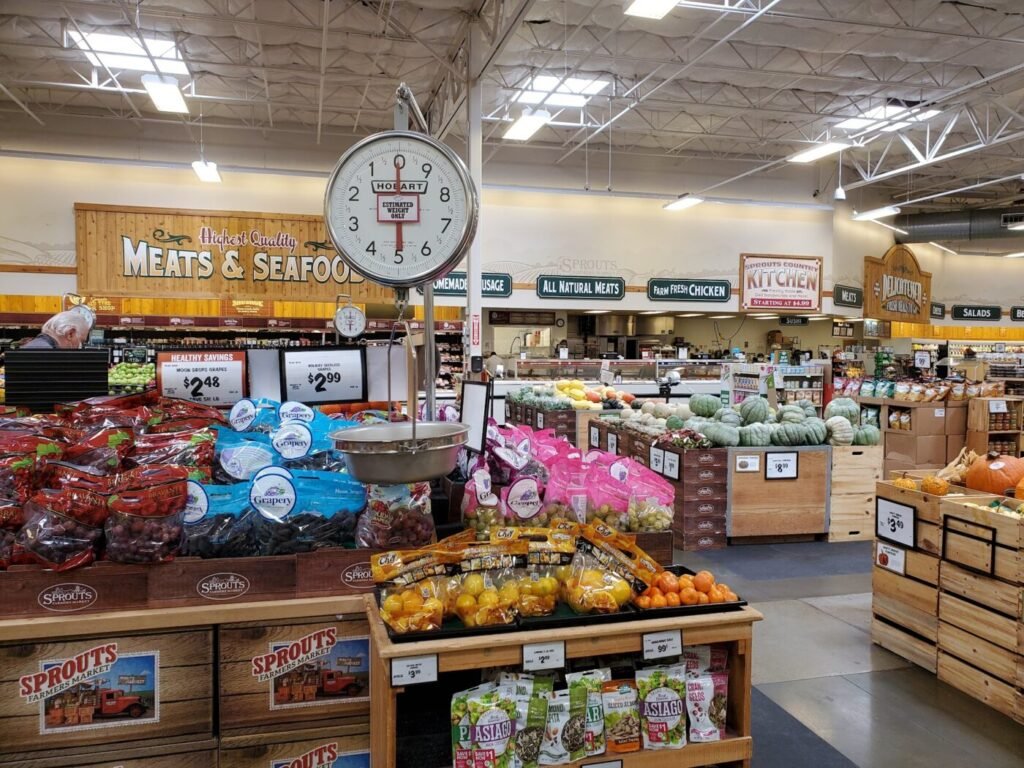
The watermelon may have come from South Georgia. The blackberries might have crossed the state line from Tennessee. Lettuce and strawberries regularly arrive from California, while bananas travel from Central America. Nearby, in the same produce department, there may be citrus from South Africa or a Meyer lemon grown in New Zealand.
The distances are rarely obvious. A small country-of-origin sticker might be the only clue that breakfast has traveled halfway around the world.
A USDA snapshot of produce moving through metro Atlanta on Aug. 3 illustrates the reach of the modern food system. It is not an inventory of any particular Publix, Kroger, Aldi or Costco, but it offers a revealing look at the products entering the region’s wholesale market—and the journeys behind an ordinary North Atlanta grocery run.
The Longest Travelers
Some of the farthest-traveling items in Atlanta’s current produce supply are citrus fruits.
Clementines and oranges from South Africa can travel more than 8,000 miles before reaching Georgia, usually moving by refrigerated ship before continuing inland by truck. Meyer lemons from New Zealand begin at a similarly remarkable distance. Even before warehouse transfers and the final delivery to a suburban store, they have crossed an ocean and much of a continent.
Argentine lemons travel roughly 5,000 miles as the crow flies, and their actual route through ports and distribution centers can be longer. Tangerines from Peru and Chile, dragon fruit from Ecuador and apple pears from Chile also appear in the regional supply.
Fresh grapes tell one of the clearest stories of global seasonality. During the American offseason, supermarket grapes often come from Peru or Chile. In the 2025-26 season, Peru supplied 818 million pounds of fresh grapes to the United States, accounting for 45 percent of all imports. Peru, Chile and Mexico together supplied 99 percent of imported fresh grapes, according to the USDA Economic Research Service.
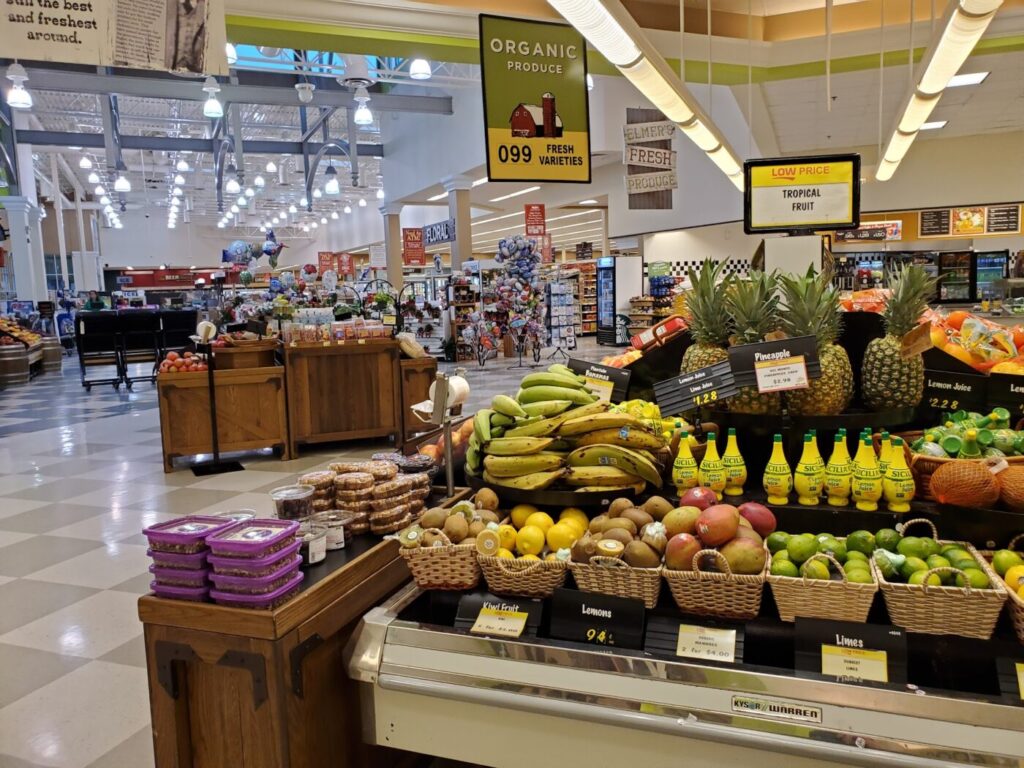
The arrangement allows North Atlanta shoppers to buy grapes throughout winter and spring, long after domestic vineyards have finished harvesting. By August, however, the geography changes. California grapes are moving east, while Georgia muscadines and scuppernongs begin making their much shorter seasonal appearance.
Bananas are another permanent long-distance resident. The Atlanta market currently receives them from Costa Rica, Guatemala, Honduras and Colombia. A Costa Rican banana may travel well over 1,500 miles to reach Georgia, most of it aboard a refrigerated vessel. Yet bananas arrive so routinely that they often cost less than fruit grown only a few counties away.
The Middle-Distance Cart
Not every well-traveled product crosses an ocean. Much of North Atlanta’s food comes from the great agricultural regions of the United States, particularly California.
California strawberries, raspberries, lettuce, celery, carrots, cauliflower and broccoli routinely travel about 2,200 to 2,500 road miles to metro Atlanta. Apples and cherries from Washington state can cover a similar distance. Idaho potatoes generally arrive after a journey of roughly 2,000 miles.
These foods occupy the middle ground between imports from another hemisphere and produce grown in the Southeast. They are domestic, but hardly local.
Mexico also falls into this broad middle range. The current Atlanta supply includes Mexican avocados, limes, coconuts, guava, jackfruit, jicama, peppers and several types of squash. Depending on the growing region, a Mexican avocado can travel 1,500 miles or more before reaching a North Atlanta store.
Produce from Canada, New Jersey, Michigan and Pennsylvania makes a shorter but still substantial trip. Ontario carrots and Quebec vegetables may travel about 1,000 miles. New Jersey blueberries and Pennsylvania apples can arrive after 700 to 800 miles on the road.
In summer, some of those routes become shorter. Blackberries that might come from Guatemala at another point in the year are also reaching Atlanta from Tennessee. Broccoli, beans, greens and squash may come from North Carolina. The seasons do not simply change what shoppers see; they change the map behind it.
Georgia-Grown Does Not Always Mean Nearby
Georgia products are the closest major category in the regional wholesale system, but “Georgia-grown” covers a surprisingly large territory.
Vidalia onions originate in a legally defined production area in southeastern Georgia, roughly 200 to 250 miles from Johns Creek. Many Georgia watermelons come from the south-central part of the state, particularly around Cordele, giving them a journey of approximately 180 to 220 miles. Much of the state’s commercial blueberry crop is grown still farther south.
During the first week of August, the Atlanta market included Georgia cantaloupes, honeydew melons, watermelons, muscadines, scuppernongs, cabbage, collard greens, mustard greens, turnip greens, beans, peppers, squash and heirloom tomatoes. Georgia peanuts, pecans and Vidalia onions were also moving through the regional supply.
That is dramatically closer than South Africa, New Zealand or California, but it is not necessarily neighborhood food. A Georgia watermelon may still spend hours on a truck and pass through a packing operation, wholesaler and distribution center before reaching the store.
The truly nearest products tend to come through smaller channels. Milk bottled at Mountain Fresh Creamery in Clermont, for example, begins roughly 40 miles from Johns Creek. Farms and markets in Cumming, Ball Ground and Cherokee County can put eggs, beef, honey and seasonal vegetables within 10 to 40 miles of local households.
The distance may be even shorter at the Alpharetta Farmers Market, where farmers and small producers sell on Saturday mornings during the growing season. Even there, however, “sold locally” and “grown locally” are not automatically the same thing. The best way to know is to ask where the farm is located.
How to Find the Distance Yourself
Fresh and frozen fruits and vegetables sold by major supermarkets must carry country-of-origin information. The federal Country of Origin Labeling program also covers chicken, lamb, goat, seafood, peanuts and pecans. The information may appear on a sticker, bag, package or display sign.
A “Product of USA” label still does not reveal the state, while “Georgia Grown” does not identify the farm unless the producer is named. Packaged and processed foods can be harder to trace because the place where something was baked, roasted or bottled may not be where its ingredients were grown.
Distance alone also does not determine a food’s environmental impact. A fully loaded ship or tractor-trailer can move food more efficiently per pound than several shoppers making individual trips to a distant farm. Growing methods, refrigeration, packaging and food waste all matter. The USDA notes that transportation method and shipment size can be as important as mileage.
Still, origin tells a story worth noticing. North Atlanta’s abundant grocery shelves depend on a finely timed system connecting local fields, neighboring states, Western farms and distant continents. A winter grape or summer clementine may look ordinary under supermarket lights, but its journey was anything but.
If you enjoy discovering places with local character, these stories are worth a look too.
About the Author


In North Atlanta
Amasa Mexican Kitchen Opens at Alpharetta City Center

Dervish Plans 200-Seat Turkish Restaurant in Johns Creek

Dumpling Master Opens at Peachtree Corners Town Center
Why Honeycrisp Is the $5-a-Pound Apple in North Atlanta

Tavern Off the Green Opens at Cumming City Center With Cajun Menu and Late-Night Hours
Rōti Modern Mediterranean Plans South Forsyth Restaurant at New Whole Foods Center
IN NORTH ATLANTA