Decatur Pushes Into a New Era of Growth, Density and Civic Change
Decatur is undergoing major growth with a revamped downtown square, a large mixed-use project transforming an old mall, and evolving housing policies addressing affordability challenges. The city is also tackling its historical legacy through community engagement and a reparations task force.
Get major local stories and development updates.
Decatur is entering one of the most ambitious growth periods in its modern history, with major public improvements, large-scale redevelopment, new housing experiments and civic debates reshaping one of metro Atlanta’s most recognizable inner-ring cities.
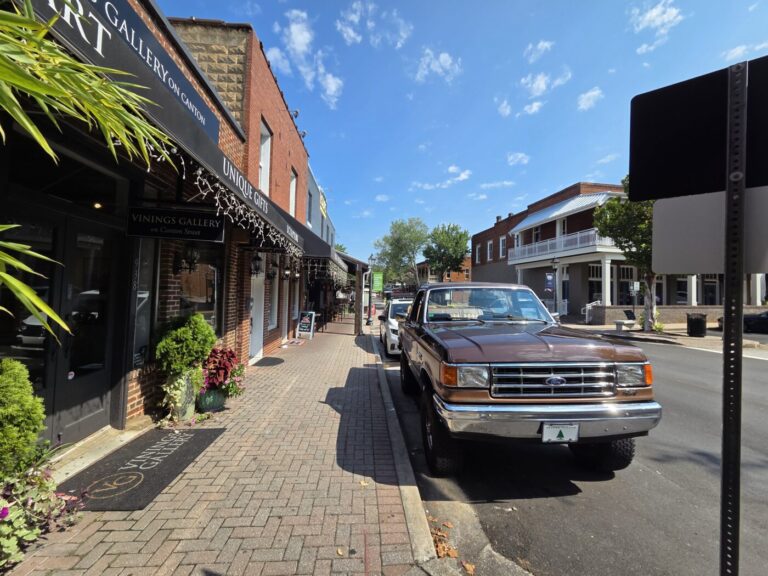
The changes are visible first in the heart of the city. Decatur Square, long a civic and commercial center, is undergoing an $8.5 million transformation known locally as the Square Shakeup. Funded through SPLOST II dollars, the project marks the first major overhaul of the historic square since the late 1980s and is designed to make the downtown center more flexible for concerts, festivals, pedestrian movement and everyday public life.
The renovation removes the aging community bandstand near the Swanton Way MARTA entrance and replaces it with a modern performance stage, green room and large digital viewing screen. The project also adds permanent public restrooms, improves pedestrian corridors near MARTA bus connections, relocates the misting fountain sculpture and adds a colorful hillside playscape intended to keep families downtown longer.
The timing is not accidental. Decatur is preparing for Decatur WatchFest, a 34-day soccer and music celebration running from June 11 through July 19. The event is tied to the 2026 World Cup matches in Atlanta and is expected to bring thousands of visitors a day to downtown Decatur by rail and car. Outdoor screens, live performances and major concerts are expected to turn the square into one of the region’s most active public gathering places this summer.
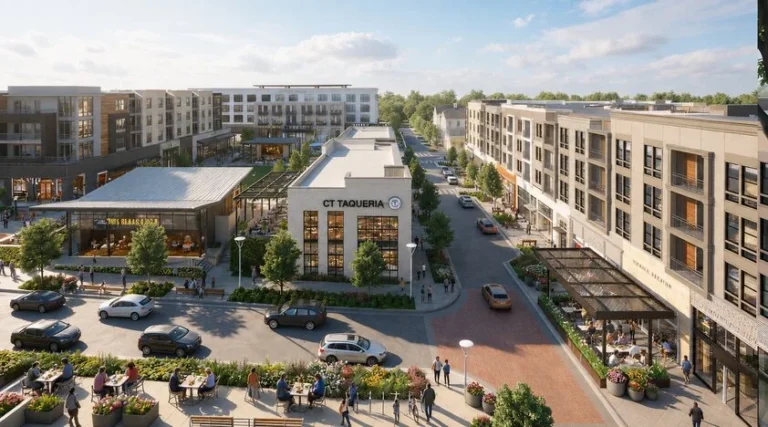
Beyond the square, Decatur’s development story is even larger. The former North DeKalb Mall is being remade into Lulah Hills, an $850 million mixed-use district that could become one of DeKalb County’s most important infill projects. The 78-acre redevelopment, led by EDENS with Crescent Communities, is planned for roughly 2.5 million square feet of residential, retail, restaurant and entertainment space.
The project is expected to include about 320,000 square feet of retail and dining, 1,700 multifamily residences, a new Publix, 92 for-sale townhomes and a reconfigured AMC theater. Vertical construction has begun on Novel Lulah Hills, a six-story apartment community with 303 homes. First-wave retailers and restaurants are expected to begin opening in 2027, with residential deliveries following later.
Lulah Hills reflects a broader shift in suburban and inner-ring retail real estate. The old mall model is giving way to mixed-use districts where groceries, restaurants, apartments, townhomes, fitness concepts and entertainment are built around a more walkable daily rhythm. In Decatur’s case, the project also emphasizes pedestrian and bicycle connections to nearby destinations, including Emory University and Clyde Shepherd Nature Preserve.
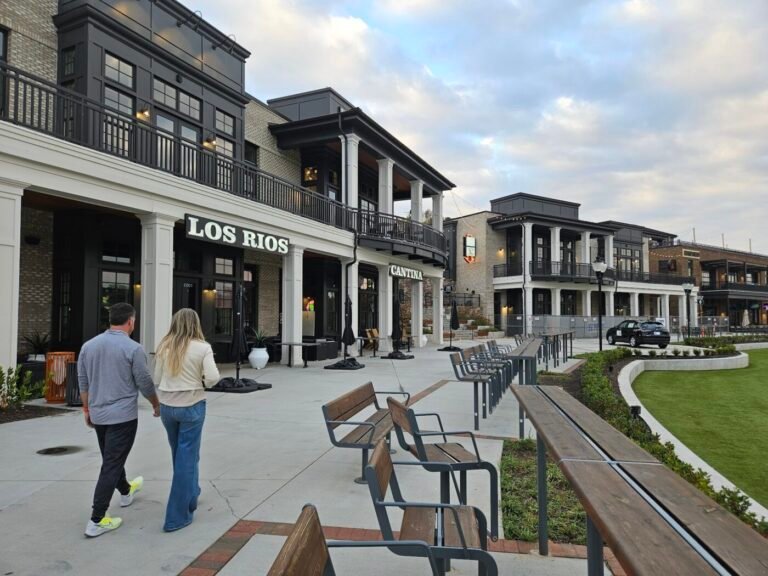
The city’s restaurant and retail scene is also showing new energy in smaller ways. Mellow Mushroom recently reopened on West Ponce de Leon Avenue after a major renovation, returning as a company-owned location with updated design, local artwork and new menu testing. Wine bars, cocktail spots and chef-driven restaurants continue to build on Decatur’s reputation as one of metro Atlanta’s stronger dining districts.
That commercial momentum is spilling into nearby Avondale Estates as well, where The Dale has opened overlooking the Town Green with restaurants and rooftop dining. Together with nearby food hall and mixed-use projects, the area is becoming a denser eastside corridor of restaurants, housing and community gathering spaces.
Housing remains Decatur’s most complicated challenge. Inside the incorporated city, prices remain high, driven by limited land, walkability and access to City Schools of Decatur. The report places the median sale price inside the city at about $702,000, while unincorporated Decatur remains far more attainable, with a median listing price around $299,000.
That gap highlights Decatur’s central tension. The same qualities that make the city desirable also make it difficult for many households to enter. In response, Decatur has become one of Georgia’s more closely watched laboratories for missing-middle housing.
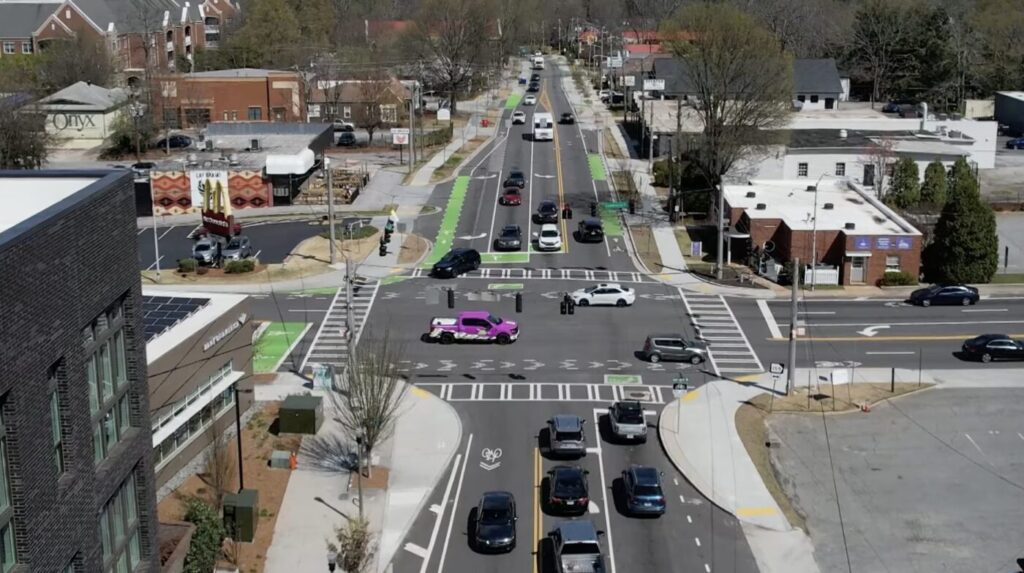
In 2023, the city changed its zoning rules to allow up to four housing units by right on lots once reserved only for single-family homes. City planners and housing advocates are also exploring cottage clusters, row houses and smaller infill models that could add homes without relying only on large apartment buildings. The Cottages at Midway, an 18-home solar-ready development built around shared green space, is one example of the effort to create more attainable housing for teachers, first responders and local workers.
Still, the work is difficult. Early missing-middle concepts have faced cost challenges, and the city is still trying to balance affordability, neighborhood character and the economics of small-scale construction. Decatur may be more open to density than many Georgia communities, but even there, the practical path to affordability remains complicated.
The city is also facing pressure in its public institutions. City Schools of Decatur, long one of the major drivers of the city’s real estate premium, has been under scrutiny following protests and an independent investigation involving Superintendent Gyimah Whitaker. Community concerns have centered on district finances, communication and administrative spending, including controversy over district-funded podcast recordings at a private studio owned by the superintendent’s husband.
Those school-system tensions arrive at a moment when local governance is already under pressure from growth, infrastructure spending and affordability concerns. In a city where families often pay a premium to live inside the school district, public trust remains a critical civic asset.
Decatur is also confronting its past more directly than many Georgia cities. A reparations task force established by the City Commission is examining the city’s historical role in slavery, redlining, racially biased zoning and the displacement of the Beacon Hill community, a historically Black neighborhood that was deeply affected by 20th-century urban renewal.
The task force is expected to spend several years researching land loss, interviewing descendants and developing recommendations for memorialization, equity programs and targeted investment. Its work reflects a broader effort by the city to connect present-day policy with historical decisions that shaped who could live, build wealth and remain in Decatur.
Taken together, Decatur’s current moment is not simply a development boom. It is a test of how a small, desirable city handles success. The square is being rebuilt for larger crowds. A dead mall is becoming a mixed-use district. Housing rules are being rewritten. Restaurants and retail are expanding. Public schools are under scrutiny. Historical redress is becoming part of the civic agenda.
Decatur’s challenge now is whether all of those efforts can fit together. Growth can bring investment, energy and new public life. It can also sharpen questions about affordability, traffic, school capacity, trust and who gets to belong in the next version of the city.
For now, Decatur is moving forward with unusual speed and ambition. The result may define not only the city’s next decade, but also the future of one of metro Atlanta’s most closely watched inner-ring communities.
If this felt close to home, these stories may be worth your time too.
About the Author


In North Atlanta
Roswell Approves Champions Place Expansion for Adults With Physical Disabilities
Medley Opens First Access to 133 Townhomes in Johns Creek
What North Atlanta Should Know Today. Sunday, Sept. 13, 2026
North Atlanta Added 11,000 Residents, but the Growth Is Concentrated in Three Cities
LIIV Atlanta Sets Sept. 27 Opening at Longtime Peachtree Corners Church
North Fulton Is Getting Older. Can the Next Generation Still Afford to Live Here?
IN NORTH ATLANTA