Gas Near $4 in North Atlanta: What the Numbers Say—and What Comes Next
Gas prices in Alpharetta and nearby North Atlanta areas are nearing four dollars a gallon, influenced by tax policies and global oil supply factors. Local drivers and delivery workers feel the pinch as surcharges rise and alternatives gain traction.
Get major local stories and development updates.
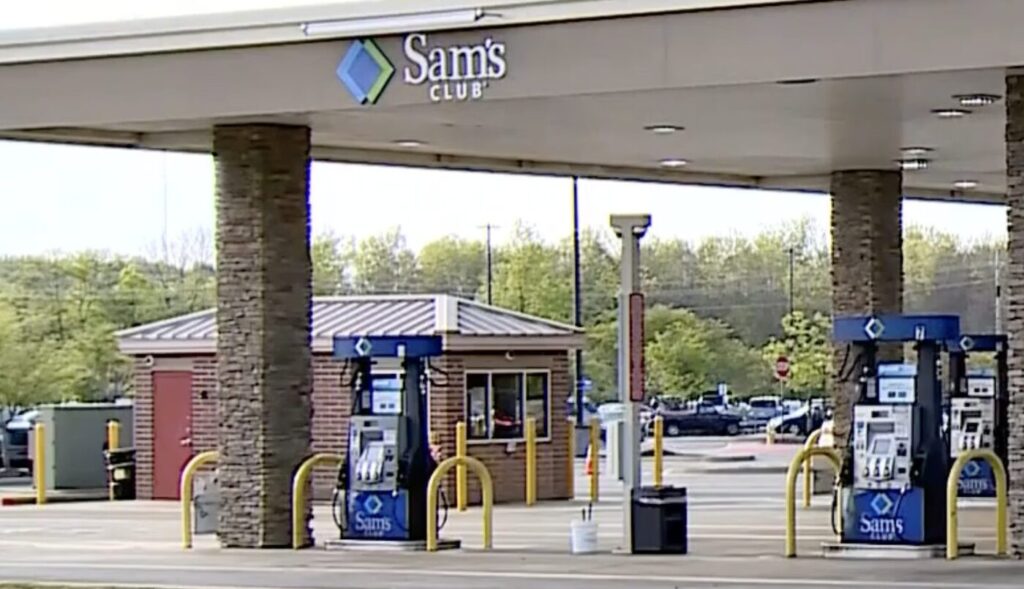
Gas prices across Alpharetta, Johns Creek, Milton, and South Forsyth are now consistently landing between $3.79 and $3.95 per gallon, with some stations briefly touching the four-dollar mark depending on location and time of day. The lowest prices remain concentrated at high-volume retailers. The Costco on Jordan Court in Alpharetta and the Sam’s Club on Davis Drive are both holding near $3.53–$3.54, creating a spread of roughly forty cents per gallon within a short radius. Nearby competitors like QuikTrip and RaceTrac along Windward Parkway are adjusting daily to stay competitive, often clustering in the mid-$3.50s to high-$3.80s depending on payment method.
The next key number is thirty-three cents. That is the amount currently being removed from each gallon through Georgia’s temporary gas tax suspension. The expiration date is May 19. If the tax returns, a station currently selling at $3.85 would likely jump to roughly $4.18 overnight. If crude oil remains elevated at the same time, the realistic working range for North Atlanta becomes $4.20 to $4.50, with some stations potentially exceeding that under peak conditions.
On the supply side, the numbers are unusually stark. Oil has moved above $100 per barrel, with recent trades near $119, while shipping through the Strait of Hormuz has dropped by more than ninety-five percent. That reduction represents millions of barrels per day removed or delayed from the global market, and it is the primary factor keeping prices elevated even before taxes are considered.
The financial impact is most visible among drivers who depend on their vehicles for income. Local operators working through Uber and Lyft report that fuel is now consuming up to fifty percent of their daily revenue. Delivery drivers working with DoorDash, Uber Eats, and Grubhub are seeing similar pressure, with some extending work hours significantly to maintain prior income levels. In response, DoorDash has introduced a fuel support program offering roughly ten percent cash back on gas purchases for high-volume drivers.
The ripple effect is already moving through the broader economy. Amazon has implemented a 3.5 percent fuel surcharge on deliveries, while carriers like UPS and FedEx have added surcharges that can reach into the double digits. These increases tend to filter down quickly, showing up in everything from package delivery to restaurant pricing across North Atlanta.
At the consumer level, the response is becoming more structured rather than reactive. Price-tracking apps such as GasBuddy and Upside are seeing heavier usage locally as drivers compare station-level differences that can now exceed thirty or forty cents per gallon. Even small shifts—choosing Costco over a nearby brand station, or filling up twice a week at lower-cost locations—are producing measurable savings over time.
Carpooling is also returning in a more organized form. App-based platforms like Scoop are reporting usage increases of around forty percent as commuters look to split fuel costs and gain access to HOV lanes on routes like GA-400. At the same time, the Georgia Commute Options initiative is offering direct incentives, including small daily payments and gas card rewards, to encourage shared commuting and reduced single-driver trips.
Public transit is also evolving in response to these conditions. MARTA is launching its “Better Breeze” system, allowing riders to pay directly with contactless bank cards and mobile wallets. While North Fulton remains largely car-dependent, the fixed cost of a transit ride is becoming more predictable compared to fluctuating fuel prices, especially for commuters heading toward Perimeter or Midtown.
The longer-term shift is already visible in Georgia’s industrial landscape. The state has become a major center for electric vehicle production, with large-scale investments from Rivian and Hyundai building manufacturing capacity across the region. For local residents, the comparison is increasingly numerical rather than theoretical. At current prices, the per-mile cost of charging an electric vehicle in Georgia remains significantly lower than gasoline, particularly once fuel moves above four dollars per gallon.

The short-term outlook now depends on a narrow set of decisions and conditions. If Georgia extends the tax suspension and oil stabilizes closer to $100 per barrel, prices could remain in the high-$3 to low-$4 range. If the tax returns while oil stays elevated, North Atlanta is likely to settle into a new band above $4.20. If both move in the wrong direction at once, the five-dollar threshold becomes a realistic scenario rather than an outlier.
Alpharetta to Midtown: Gas vs EV Cost Comparison
For a typical commute from Alpharetta to Midtown Atlanta, the distance runs about 26 to 30 miles one way, depending on the exact starting point and route along GA-400. That places a full round trip near 55 to 60 miles per day.
At current local gas prices, averaging roughly $3.85 per gallon, a standard gasoline vehicle getting about 25 miles per gallon will consume a little over two gallons per day. That brings the daily fuel cost to approximately $8.50 to $9.25. Over a five-day workweek, that totals around $42 to $46, or roughly $170 to $185 per month.
An electric vehicle operating under Georgia Power’s residential rates typically consumes about 30 kilowatt-hours per 100 miles. For the same daily commute, that translates to about 16 to 18 kWh per day. At an average electricity cost near $0.13 per kWh, the daily charging cost lands between $2.10 and $2.40. Over a week, that is roughly $10 to $12, or about $45 to $55 per month.
The gap becomes clearer when viewed monthly. A gasoline commuter on this route is currently spending around $170 to $185, while an EV driver is closer to $50. The difference, about $120 to $130 per month, grows further if gas prices rise above four dollars, or if the state tax suspension ends.
Beyond cost, the EV side of the equation is increasingly practical in this corridor. Charging infrastructure continues to expand along GA-400 and around Midtown, including networks such as Tesla Superchargers and stations operated by ChargePoint and Electrify America.
For many North Atlanta households, especially those considering a second vehicle, the Alpharetta-to-Midtown commute is becoming one of the clearest real-world comparisons between gasoline and electric driving, with the cost difference now large enough to factor directly into buying decisions.
If you’ve been following growth and change around here, these stories are worth a look too.
About the Author


In North Atlanta

What North Atlanta Should Know Today. Friday, Sept. 11, 2026

North Atlanta Courthouse Wedding Price Check: A Legal Marriage Can Start at $16

North Atlanta unemployment fell in July — but employment slipped in several communities
Why Sardines Are Disappearing From Some North Atlanta Shelves

When Are 2026 Property Taxes Due in North Atlanta?
What North Atlanta Should Know Today
IN NORTH ATLANTA