 Exclusive sponsor
Why North Atlanta Became a Surprisingly Strong Seafood Market
North Atlanta’s seafood market has grown with fresh overnight shipments connecting the coast to suburban stores. Local markets now offer premium seafood options reflecting diverse tastes and rising demand for fresh, quality seafood despite higher prices.
Major local stories and useful updates, once a week.
For a suburban region sitting hundreds of miles from the Atlantic coast, North Atlanta has developed one of the South’s more sophisticated seafood shopping scenes.
Across Johns Creek, Alpharetta, Milton, Duluth and South Forsyth, shoppers now routinely buy wild Georgia shrimp, premium salmon, live lobster, sushi-grade tuna and fresh oysters that may have arrived through Atlanta less than a day earlier. Much of that system depends on the massive logistics network surrounding Hartsfield–Jackson Atlanta International Airport, where seafood shipments arrive overnight before moving quickly through regional distributors into suburban markets and restaurant kitchens.
That infrastructure has fundamentally changed what residents in North Fulton and South Forsyth expect from local seafood.
Decades ago, fresh coastal seafood in suburban Georgia often meant limited grocery-store selections and long storage times. Today, boutique fishmongers and specialty markets across North Atlanta receive overnight shipments that bypass traditional warehouse systems entirely, helping fish reach local counters within hours instead of days.
The result is a suburban seafood culture that increasingly resembles coastal cities more than traditional inland grocery shopping.
Seafood Prices Keep Climbing
The rapid improvement in seafood quality has come alongside rising prices that many North Atlanta shoppers now feel directly at the counter.
Seafood costs surged nationally after the pandemic as restaurants reopened, freight costs jumped and global supply chains tightened. While some categories stabilized more recently, premium seafood remains significantly more expensive than it was only a few years ago.
Salmon and shrimp, in particular, have seen notable price increases over the past year, driven by higher fuel costs, stricter fishing limits and ongoing international shipping pressures.
At Kathleen’s Catch, premium Ora King Salmon now sells for around $45.99 per pound, while wild yellowtail snapper reaches roughly $32.95 per pound. Wild Georgia shrimp commonly ranges from the mid-$20s to nearly $30 per pound depending on size and preparation.
Even smaller portions reflect the shift. Individual halibut cuts can approach $24, while shellfish and live lobster continue carrying significant air-freight premiums.
For many suburban households, seafood shopping has become a balance between freshness, sourcing quality and household budgets.
The Markets Defining Seafood Shopping Around Metro Atlanta
Kathleen’s Catch
Kathleen’s Catch has become one of the defining seafood businesses around.
Its Brookhaven location draws customers from across the northern suburbs looking for premium salmon, oysters, snapper and wild Georgia shrimp. Customers from suburbs across North Atlanta often say the Brookhaven shop feels more like a coastal neighborhood fish market than a typical metro Atlanta seafood counter.
Wilkes Meat Market & Deli
Further north in South Forsyth, Wilkes Meat Market has quietly become one of the strongest seafood options outside North Fulton’s boutique fish shops.
The longtime family-owned market combines its well-known butcher operation with a seafood counter that includes Savannah shrimp, Maine scallops, Gulf snapper and salmon.
One reason Wilkes stands out in the current market is pricing. Jumbo Texas Bay shrimp around $14.99 per pound remain notably competitive compared with many premium seafood counters closer to Johns Creek and Alpharetta.
For many families in Cumming and South Forsyth, Wilkes offers a middle ground between grocery-store seafood and luxury fish-market pricing.
Wilkes Meat Market Seafood Counter
H Mart
If Kathleen’s Catch represents Atlanta’s boutique seafood culture, H Mart represents its international evolution.
The Korean grocery chain’s Johns Creek and Duluth stores offer live lobster tanks, whole fish, shellfish and imported seafood products that are difficult to find elsewhere in the suburbs.
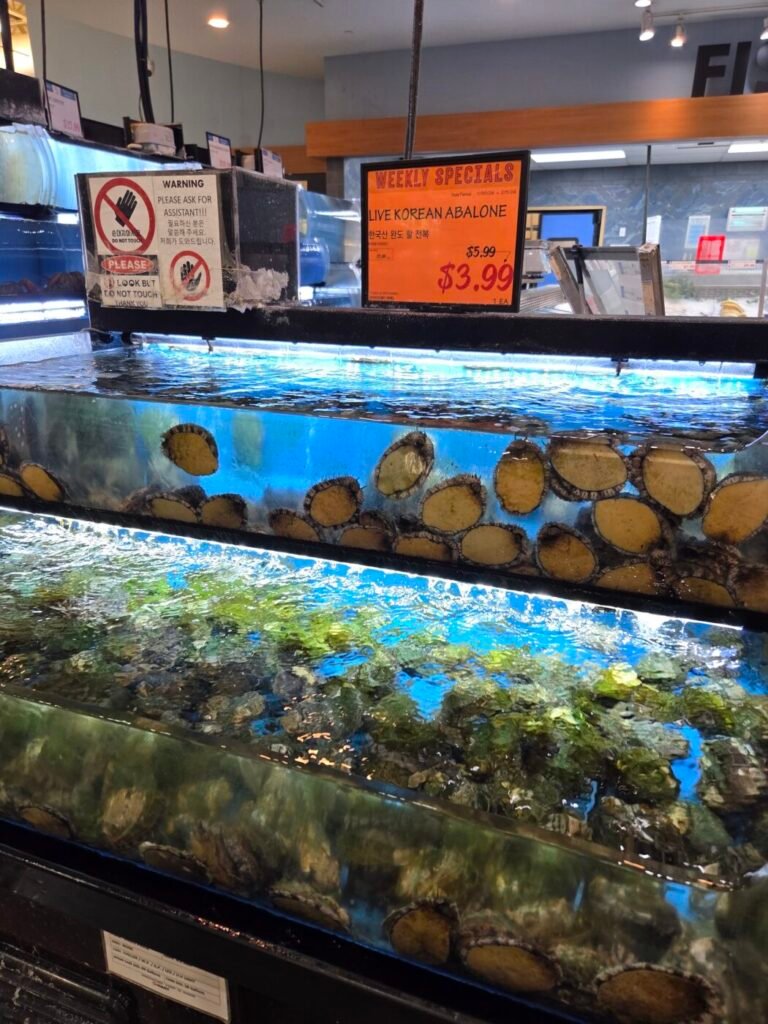
For many residents, particularly those cooking Korean, Japanese or broader Asian seafood dishes at home, H Mart has become an essential destination rather than simply another grocery store.
Its seafood department also reflects the demographic and culinary changes reshaping suburbs across North Fulton and Gwinnett.
Patton’s Meat Market
Patton’s Meat Market in Duluth remains better known for steaks and butcher cuts, but its seafood operation has developed a loyal following in Northeast Gwinnett.
The market regularly carries sushi-grade tuna, Atlantic salmon and prepared seafood items including crab cakes and shrimp specialties.
It fills an important niche for shoppers looking for quality seafood without the scale or intensity of larger international markets.
The Fresh Market
The Fresh Market continues serving a different role in North Atlanta’s seafood ecosystem: convenience with relatively upscale sourcing.
Its Alpharetta, Roswell and Suwanee locations receive seafood deliveries multiple times weekly and remain popular for king salmon, shrimp and snow crab.
For busy suburban households, accessibility and consistency often matter just as much as specialty sourcing.
The Fresh Market Weekly Seafood Features
What About Whole Foods, Publix, Kroger and Sprouts?
Not every North Atlanta shopper wants to make a dedicated stop at a boutique seafood market, and major grocery chains still play a major role in how most suburban families buy seafood week to week.
Whole Foods Market
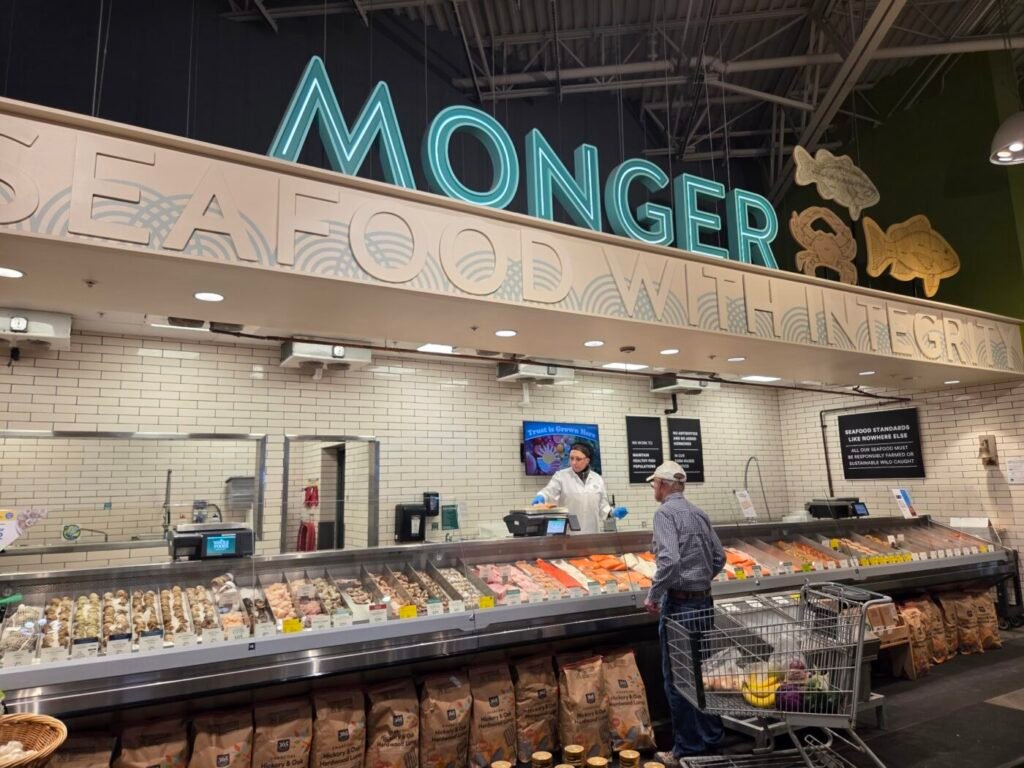
Among the larger grocery chains, Whole Foods remains the closest competitor to specialty seafood markets in terms of sourcing standards and seafood presentation.
Its seafood counters in Duluth, Alpharetta and soon in Cumming, typically emphasize traceability, sustainability certifications and cleaner labeling. Shoppers looking for responsibly farmed salmon, seasonal shellfish or higher-end seafood options often treat Whole Foods as a more convenient alternative to dedicated fishmongers.
Prices, however, can rival boutique seafood shops, particularly for premium salmon and prepared seafood items.
Whole Foods Market Seafood Standards
Sprouts Farmers Market
Sprouts has increasingly positioned itself as a healthier, fresher-feeling alternative to conventional supermarkets, and that carries into its seafood departments as well.
While selection is usually smaller than Whole Foods or H Mart, many North Atlanta shoppers use Sprouts for simpler weeknight seafood purchases — salmon fillets, shrimp and lighter prepared options — particularly when combining seafood shopping with produce-focused grocery trips.
Publix
Publix remains the suburban default for many families across Johns Creek, Milton, Alpharetta and South Forsyth.
Its seafood counters generally prioritize consistency, accessibility and convenience over specialty sourcing. For many households, Publix functions as the practical middle ground: easier and more affordable than boutique fish markets, while still offering dependable shrimp, salmon, crab cakes and seasonal seafood specials.
The chain’s seafood sections also tend to perform better in higher-income North Atlanta suburbs than in many standard grocery markets elsewhere.
Kroger
Kroger still dominates routine grocery shopping across much of North Atlanta, and its seafood departments reflect the chain’s broad suburban reach.
While seafood quality can vary somewhat by location, newer and higher-volume stores in Alpharetta, Johns Creek and South Forsyth often carry stronger selections than many shoppers expect, including salmon, shrimp, snow crab and occasional sushi-grade products.
For budget-conscious households navigating rising seafood prices, Kroger promotions and loyalty pricing remain important factors — especially as premium seafood continues becoming more expensive across the market.
A Landlocked Region That Learned to Eat Like the Coast
North Atlanta’s seafood scene says something larger about how the suburbs have changed.
As Johns Creek, Alpharetta, Milton and South Forsyth became wealthier, more international and more food-focused, demand grew for fresher seafood, better sourcing and broader culinary options.
The airport logistics system made that possible. But the suburban consumer culture built around it — grilling, entertaining, health-conscious eating and restaurant-level cooking at home — helped turn seafood into a serious part of North Atlanta’s food identity.
More worth reading from around here.
Community Voice
A snapshot of reader views, not a scientific survey.
Explore Community Voice →About the Author


In North Atlanta
Why Sardines Are Disappearing From Some North Atlanta Shelves

Whole Foods Moves Closer to Opening in South Forsyth

The Best Dinner Choices in Alpharetta, for Every Kind of Night

Chick-fil-A Is No Longer No. 1. The New Fast-Food Favorite Is Already All Over North Atlanta

Home Sales Just Posted Their Biggest Gain of 2026. Is North Atlanta Next?
North Atlanta After 9 P.M.: Where the Suburbs Stay Awake
IN NORTH ATLANTA