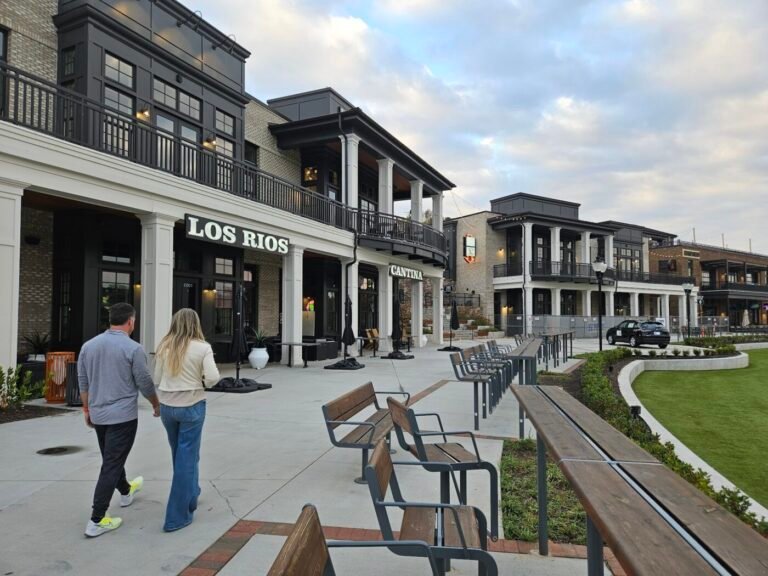
Atlanta Keeps Growing, But One Key Driver Has Faded
Atlanta’s steady population growth is now tempered by a slowdown in international migration, which affects labor and housing markets in expanding counties like Fulton and Forsyth.
Get major local stories and development updates.
Metro Atlanta’s population growth has moderated from the rapid expansion of past decades to a steadier pace, closer to about 1.2% annually.
That still translates into significant gains. Fulton County alone added roughly 18,800 residents in a year, while Gwinnett grew by more than 15,000 and Forsyth continued as one of the fastest-growing counties at 2.4%.
The region remains a magnet for domestic migration, particularly from higher-cost states. Job growth, relatively affordable housing compared to coastal cities, and a strong suburban school system continue to draw families.
But the underlying structure of that growth is shifting.
The missing piece: fewer international arrivals
For years, international migration has been a central driver of metro Atlanta’s expansion. That inflow has now slowed sharply.
Recent federal policy changes, stricter enforcement, and the expiration of work permits have reduced the number of new immigrants entering the workforce. In early 2026, national net migration levels may have even dipped into negative territory — an uncommon development in modern U.S. demographics.
Two migration streams that built the region
In Gwinnett County and parts of Fulton, Latin American and Caribbean communities have formed the backbone of industries such as construction, landscaping, and hospitality. Gwinnett’s population is now about 23% Hispanic or Latino, with nearly half of that group of Mexican origin, alongside growing communities from Honduras, Guatemala, and El Salvador.
At the same time, a different migration pattern has defined North Fulton and South Forsyth.
In Forsyth County, about 23.8% of residents are Asian, many of them highly skilled professionals from India working in technology and healthcare. Fulton County reflects a similar pattern, with 43% of its foreign-born population coming from Asia.
These two streams — one powering physical construction, the other fueling high-skill industries — have worked together to sustain growth across the metro area.
Local impact: North Fulton and South Forsyth
In communities like Johns Creek, Alpharetta, and South Forsyth, the effects of this shift are already beginning to surface.
These areas have been among the primary destinations for high-income, highly educated international families, particularly those working in tech, healthcare, and corporate roles. The rise of what many now call the “Silicon Suburb” along the GA-400 corridor has depended heavily on this talent pipeline.
At the same time, the construction and service workforce that supports this growth has relied on immigrant labor across the region.
When both ends of that pipeline tighten, the local impact becomes more visible.
Housing remains the clearest example. In Forsyth County, median home prices reached about $610,000 in early 2026, and even modest supply constraints can push prices higher. With fewer construction workers available, new housing delivery slows, even as demand from domestic movers remains strong.
The result is a market that feels tight despite a slight increase in inventory.

Local development patterns reflect this tension. Forsyth County has already imposed building moratoriums in parts of the county to manage strain on infrastructure, even as large-scale projects continue moving forward.
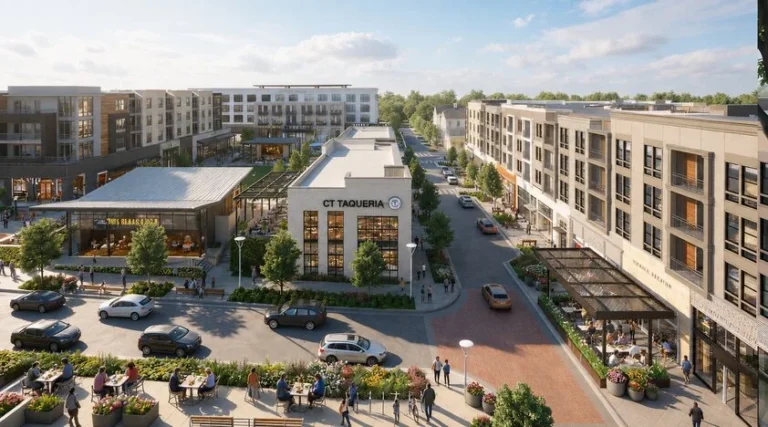
In North Fulton, major mixed-use developments such as Medley in Johns Creek are moving ahead, designed to create more self-contained live-work environments. These projects assume continued population growth — but that growth is becoming less predictable.
Workforce pressure is building quietly
The most immediate effect of reduced immigration is not population numbers. It is labor availability.
Georgia is projected to lose more than 60,000 construction workers annually due to immigration-related policy changes. That shortfall lands directly in fast-growing suburban areas where new housing, retail, and infrastructure are still in demand.
The economic impact extends beyond construction.
Statewide, reduced immigration could cost Georgia up to $7.3 billion per year in economic output, along with roughly $901 million in lost tax revenue.
Even sectors that feel more distant from daily suburban life — such as agriculture and food processing — affect prices at the grocery store, with projections suggesting food costs could rise significantly in the coming years.
Infrastructure is still catching up
Even as growth moderates, the region continues to invest heavily in infrastructure to catch up with past expansion.
The $10.8 billion GA-400 express lanes project, now underway, is designed to move traffic up to 30% faster and support future transit integration.
But the timeline stretches into the next decade, meaning that residents across Alpharetta, Johns Creek, and Cumming will continue to experience congestion in the near term.
Meanwhile, Gwinnett’s repeated rejection of transit expansion funding has left one of the region’s largest counties without a clear path to significantly improve mass transportation, reinforcing dependence on roads.
A different kind of growth cycle
The Atlanta region is not entering a period of decline. It is entering a more complex phase of growth.
Population gains are still strong, driven largely by domestic migration and economic opportunity. But the steady, predictable inflow of international workers and families — a defining feature of the past two decades — is no longer guaranteed.
For North Fulton and South Forsyth, that shift changes the equation.
Growth will likely continue, but with more pressure on housing, tighter labor markets, and a greater need for careful planning. The challenge is no longer simply accommodating more people. It is doing so with fewer of the workers and families who once helped make that growth possible.
Keep reading with a few more stories from around North Atlanta.
About the Author


In North Atlanta
The South Has Become America’s Buyer’s Market. The Bargains Come With Questions
20-Acre Buford Highway Tract Hits Market at $5.08 Million
What North Atlanta Should Know Today

Suwanee’s Winton Machine Heads to Washington With $400,000 on the Line
Medley Opens First Access to 133 Townhomes in Johns Creek
North Atlanta Added 11,000 Residents, but the Growth Is Concentrated in Three Cities
IN NORTH ATLANTA